

Fall in Love with Quest by The Adventure Guild for Your Next RPG Campaign
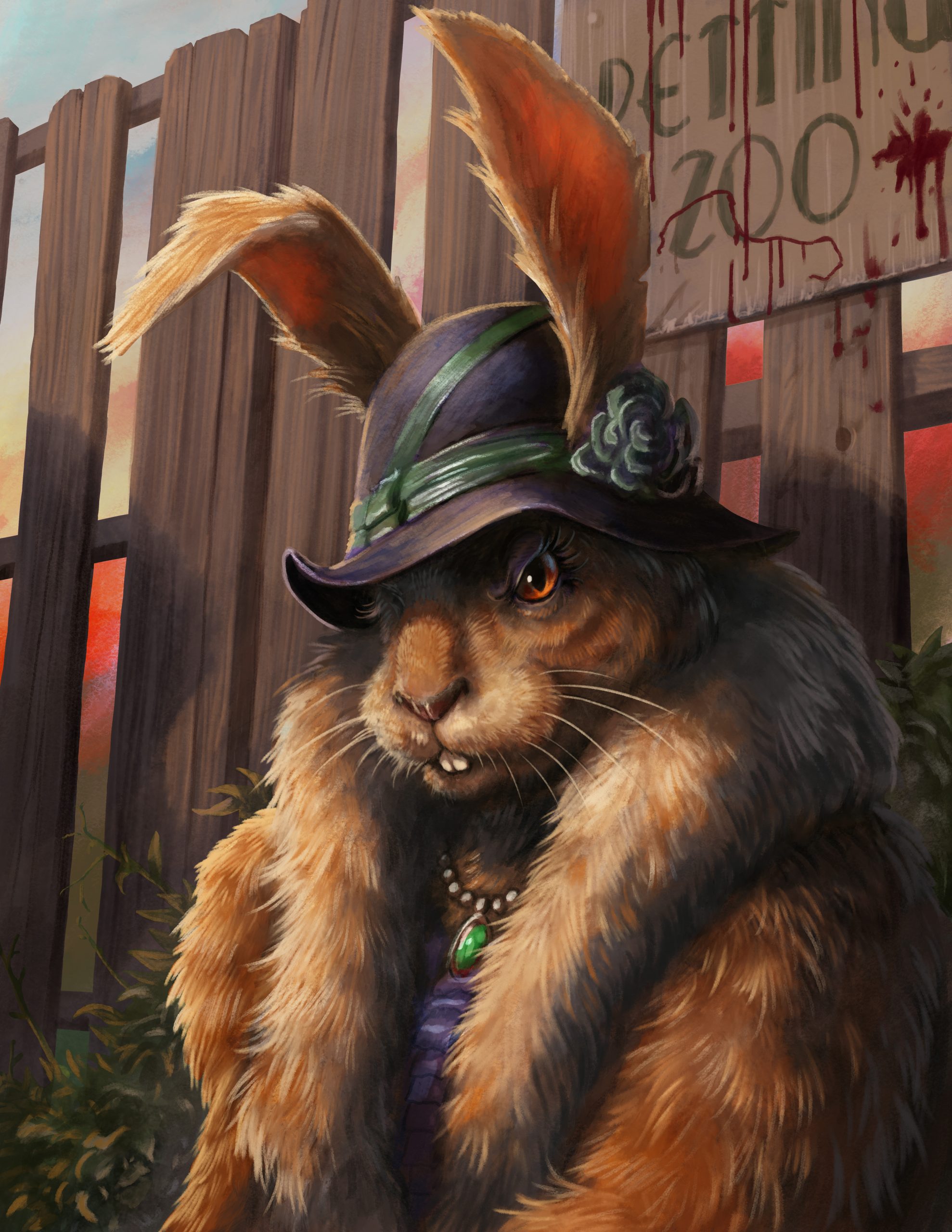
The quest to discover new and exciting approaches to tabletop roleplaying games never ends and to this point a few months ago I came across Quest from The Adventure Guild. Presented as the roleplaying adventure game for everyone Quest enjoyed a successful Kickstarter in 2018 and is now available for digital and (while supplies last) physical purchase. Quest sold me on the simplicity — the RPG system uses only a single d20 — and if I’m honest the art that evokes fun adventure. The team behind Quest, including creator and designer T.C Sottek who is also managing editor at The Verge, freelance comic artist and illustrator Celia Lowenthal and editor Chris Plante who is also a writer, reporter, critic and the executive editor and co-founder of Polygon put together a wonderful RPG. Reading the book was a joy and understanding Quest’s game system couldn’t be easier.


Meet the Deep Diver in Moon Rises Cypher System Live Play
Moon Rises is Nerdarchy’s brand new live play series of Monte Cook Games’ Cypher System! Set in the science fantasy post apocalypse of our own Earth, the heroes must help the charismatic leader Unic Hopebringer in reclaiming Manhattan to rebuild it as New Manhattan. We interviewed the cast of Moon Rises to get some insights into their characters, the world and the TTRPG system breathing mechanical life into this alien yet familiar world. Today, we’re sitting down with the player behind the ancient astronaut with a psychic twist! Today we’re talking about the tanky deep sea diver with an alien wetsuit!


Fall in Love with Cypher System by Monte Cook Games for Your Next RPG Campaign
Nerdarchy’s new live play RPG Moon Rises is a post apocalyptic science fantasy game inspired by action cartoons from the 1980s. This premise is pretty high concept and while most tabletop roleplaying games accommodate fantasy elements the sci-fi and post apocalyptic elements are a bit neglected in many mainstream systems, and devising mechanics (while rewarding at times) is a heavy commitment. But our Game Master for this season of Nerdarchy Live game play, Nerdarchist Dave, had something up his sleeve. He introduced us to Cypher System. When Dave told us intended to use Cypher System by Monte Cook Games my response wasn’t exactly enthusiastic. I’d only heard of the RPG system in passing and when I learned Cypher was the genre agnostic version of Numenera my curiosity was piqued, though I remained skeptical. What I’d heard of Numenera was it was a fun game but had a stigma of being overly simple. So far, not a great setup to the system, huh? I try to keep things positive in my articles, though never at the expense of honesty. That probably has you wondering why I chose to do an article on Cypher System. The reason I’m writing is to say I was wrong. I was very wrong. What’s more I’d bet if I had heard such things about the system at my FLGS, I likely wasn’t alone and I wanted to set the record straight.

Meet the Psychedelic Astronaut in Moon Rises Cypher System Live Play
Moon Rises is Nerdarchy’s brand new live play series of Monte Cook Games’ Cypher System! Set in the science fantasy post apocalypse of our own Earth, the heroes must help the charismatic leader Unic Hopebringer in reclaiming Manhattan to rebuild it as New Manhattan. We interviewed the cast of Moon Rises to get some insights into their characters, the world and the TTRPG system breathing mechanical life into this alien yet familiar world. Today, we’re sitting down with the player behind the ancient astronaut with a psychic twist!

Disaster in Your RPGs!
So, Dungeon Master, your party just defeated the Tarrasque (again!) and are bored with the yet another campaign against the evil archlich Evil McBadguy. They’re so powerful they yawn at any monster you throw at them and you can only use so many two headed, tentacled T-rexes. What to do? My first answer is play an edition of Dungeons & Dragons where the characters aren’t superheroes at 1st level but that’s just me. Get off my lawn.


Create Unforgettable Experiences Through 5E D&D Worldbuilding
Over at Nerdarchy the YouTube channel Nerdarchists Dave and Ted discuss changing up your fifth edition Dungeons & Dragons games through worldbuilding and getting weird with your campaign ideas. According to the 5E D&D Player’s Handbook “the many worlds of the Dungeons & Dragons game are places of magic and monsters, of brave warriors and spectacular adventures. They begin with a foundation of medieval fantasy and then add the creatures, places, and magic that make these worlds unique.” With such a succinct description for the Worlds of Adventure where our campaigns take place and stories emerge we’ve got a great starting point for developing our own ideas for nonstandard games. Since we’ve got a tremendous number of posts here on Nerdarchy the Website exploring nonstandard campaign ideas along with tips and suggestions from the video this feels like a terrific opportunity to mash all these things together. So let’s get into it.

How to Sell Your Soul – A Red Opera Take On Patrons!
Have you ever found yourself simply wanting a shortcut to power? Sorcerers are born with it, Wizards study it, and Clerics get off the hook by simply praying for it. Warlocks though, have taken those shortcuts and gotten their power directly. It doesn’t come free of course, a Patron needs something back (even if it’s something incomprehensible from the Great Old Ones).


Exploring Eberron through the Way of the Living Weapon Monk for 5E D&D
Over at Nerdarchy the YouTube channel Nerdarchists Dave and Ted hail an airship and get starting Exploring Eberron through the character options included in the Dungeon Master’s Guild book produced by the megapopular Dungeons & Dragons campaign setting’s original creator. Eberron is an extremely rich and detailed setting beloved by D&D players from its very beginning. Exploring Eberron illustrates wonderfully how curating character options creates a tremendous opportunity to show, rather than tell, what is special about your world. Exploring Eberron includes several subclasses for 5E D&D characters to choose from specially tailored to the setting, and of course Nerdarchy plans to explore them all. In the case of the Way of the Living Weapon monk I’m going through the book to find the connection points between the Monastic Tradition and the larger world it comes from. So let’s get into it.

Create Your Own Customized RPG Character Art for Physical and Virtual Games
Tabletop roleplaying gamers enjoy unprecedented numbers of add-ons and accessories for the fantastic games we play. Whether you roll your funny shaped dice with friends virtually or gathered around a table the options for enhancing one of the biggest draws for any RPG — customizing your character — offer a huge scope of choices. If you’re like me you might create Pinterest boards to find inspiration for your characters (seriously, try it and see how fun and useful it can be!). As fun and fruitful as it can be to discover evocative artwork to represent your character, it’s way cooler when you can design your own custom character art yourself! Ancient Lair followed up their Campaign Medals Kickstarter with Custom 2D Miniature Website, a new web based application that lets you customize 2D miniatures for use in your physical or virtual table top adventures.

Play Your Next 5E D&D Game as a Pride Warrior Leonin
Over at Nerdarchy the YouTube channel Nerdarchists Dave and Ted feel the magic and hear the roar, discussing the best class for leonin in fifth edition Dungeons & Dragons. Leonin let loose on the 5E D&D scene by way of Mythic Odysseys of Theros, an exciting addition to the multiverse from the planes of Magic: The Gathering. Leonin are lionlike humanoids and in the lore of M:tG developed a culture strongly valuing honor and religion. The leonin of Theros developed differently in terms of culture, making a conscious effort to separate themselves from other races and largely abandoning deity worship. As the second and most recently catlike humanoid official 5E D&D race option it seems to me people gravitate towards leonin over tabaxi and all viewers of the video left lots of great comments with their own leonin character ideas. I got caught up in the fun too so I thought I’d share some of them here and create a very special leonin NPC you can drop right into your game too. So let’s get into it.

Those Bastards Illustrate Different Forms of Intelligence in 5E D&D
Those Bastards is Nerdarchy’s (much less lewd than the title suggests) live stream game of fifth edition Dungeons & Dragons. Every Tuesday from 8 to 10 p.m. EST the Nerdarchy crew comes together to play some 5E D&D. Of course it’s mostly just our excuse as a team to come together with our hobby and have some fun as friends but it’s also a way for you as the community to see how we apply many of the things we talk about, both here on the site and over on the YouTubes!
The current campaign is entitled Those Bastards. The premise is all of our characters are half siblings (same dad, different moms). As we discovered one another and our intertwining destinies we also learn more about one another’s characters. The running joke for most of the campaign has been the barbarian has the highest Intelligence score (at a 14). But make no mistake — our characters are no idiots… probably. Here’s the thing: our characters all get their own times to shine and show off their own skills. While it’s true that Vent (our fire genasi barbarian) is the most intelligent mechanically, there are other ways Those Bastards prove their mental fortitude.

Foot in the Door
One of the reasons I’m writing for Nerdarchy is bribes… I mean, because I worked within the gaming industry for 13 years — at Chessex Game Distributors, TSR Hobbies and Games Workshop US. I’ve had people on Facebook groups ask me about my time at various employers. Today I’m putting pen to paper (I write out everything longhand before typing) to write about my time at Chessex Game Distributors (CGD). My facts about this are from online resources and my own memories. Any errors are my own — after all, it’s been almost thirty years — and no harm is meant by any mistakes, which I’d happily correct if informed.

Play Your Next 5E D&D Game with the Boost System from Octopath Traveler
Many of us tabletop roleplaying game nerds are familiar with video games, particularly RPGs and JRPGs. Even those who don’t play JRPGs are at least aware of many common franchises — Final Fantasy, Tales, Kingdom Hearts, Pokemon and Persona just to name a few. A common theme among JRPGs is their story driven gameplay and novelty game mechanics. For many the name Shin Megami Tensei immediately evokes the idea of rock-paper-scissors style combat involving damage elements. Saying a name like Golden Sun evokes nostalgia and complex magic and class systems. All of this got me thinking about something. JRPGs are renowned for their creativity and innovation in a frankly restrictive game formula. Suppose we tried adopting certain gameplay elements from JRPGs? While a creative setting or feel is pretty easy to accomplish, mechanics get a bit crunchier as Nerdarchist Dave says. As an admitted JRPG addict I love thinking of ways to evoke this sort of feeling and structure in a tabletop RPG and mechanics aren’t nearly so inaccessible as you might think. So today I want to look at a mechanic from one of my recent obsession plays: Octopath Traveler and adapt a boost system into 5E D&D play.

Discover the City of Lost Omens with Exciting New WizKids Miniatures
When you look at prepainted miniatures for tabletop gaming WizKids continues to stay at the top of the game. Whether you are playing Dungeons & Dragons or Pathfinder or any number of other fantasy roleplaying games, miniatures from WizKids are great and the new City of Lost Omens set is no exception. I always look forward to the next set of miniatures from WizKids as each one gives me new options for threats to challenge characters and adventuring parties. In addition to the blind purchase in recent years WizKids began doing the nonblind purchase associated with each set. I am a huge nerd and collector when it comes to miniatures in particular. The minis included with City of Lost Omens inspired tons of ideas to bring to the gaming table already.


Spice Up Boring RPG Fantasy Worldbuilding by Removing Humans
Fantasy is a broad genre when it comes to tabletop roleplaying games. However, it seems that whether it’s Tolkien, Le Guin, Adeyemi or Salvatore, humans are an inescapable staple in settings and conflicts. Don’t get me wrong, I love humans. Most of my friends are human. But I have to wonder if we lose a degree of creativity by presuming fantasy must include humans? Today, I want to explore some ways excluding humans in your RPG worldbuilding can really step up your game.