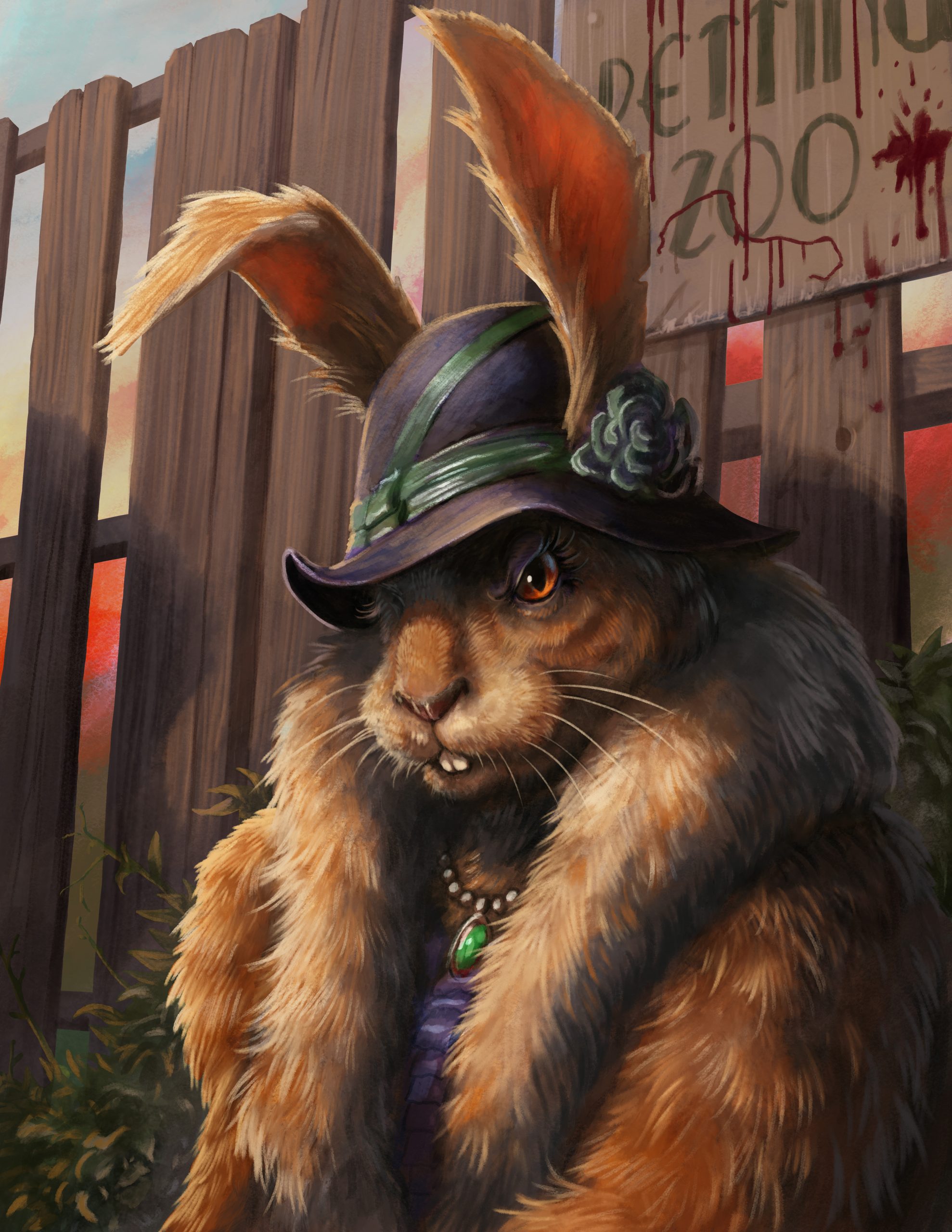


Genres of Horror Inspires Uniquely Terrifying Adventures from Van Richten’s Guide to Ravenloft
The mists of Ravenloft have arisen to envelop fifth edition Dungeons & Dragons and adventurers must overcome their dread or forever be its prisoner! Van Richten’s Guide to Ravenloft makes a dark promise to provide everything 5E D&D players need to craft horror themed campaigns with new story hooks, character options and campaign customization to bring one of the most exciting and beloved D&D settings to life — including a comprehensive look at all the Genres of Horror with tips, tricks and guidance for evoking them at the gaming table. Let’s get into it.


Plane Shift Your 5E D&D Game Into Magic: The Gathering — Kaladesh
In summer 2021 Wizards of the Coast releases Adventures in the Forgotten Realms — the first Dungeons & Dragons themed expansion for Magic: The Gathering. The set lands in place of what would typically be a Core Set and this D&D expansion for MTG represents a true collaboration between the two Hasbro teams. But did you know MTG crossed over into fifth edition D&D six times even before Guildmasters Guide to Ravnica and Mythic Odysseys of Theros? Amonkhet, Dominaria, Innistrad, Kaladesh, Zendikar and Ixalan all Plane Shift-ed over to 5E D&D through terrific titles available free from Dungeon Master’s Guild. Let’s get into it.

RPG Character Backstory — Family
Salutations, nerds! Today I’m taking a closer look at RPG character backstory, specifically what your character’s family looks like. Raise your hand if you’ve played an orphan or a character whose entire village has been burned to the ground. If you don’t have your hand up I very nearly don’t believe you. And you know what? Me too. Avenging loved ones is a totally compelling reason for a character to get out and adventure! But…what if we didn’t do this? Let’s take a look at different kinds of families and the sorts of people who shaped your character’s life. Even if you are playing one for whom everyone is dead these people matter in terms of who your character is now and they would at least remember them, right?


Plane Shift Your 5E D&D Game Into Magic: The Gathering — Ixalan
Are you looking for more fifth edition Dungeons & Dragons content to add to your game? Do you like free stuff? Are you a fan of Magic: The Gathering? Chances are you answered yes to at least one of these questions. Nerdarchy the Website readers know on July 16, 2021 Wizards of the Coast releases Adventures in the Forgotten Realms — the first D&D themed expansion for MTG. This expansion represents a true collaboration between these two Hasbro teams. But MTG crossed over into 5E D&D six times even before Guildmasters Guide to Ravnica and Mythic Odysseys of Theros. Amonkhet, Dominaria, Innistrad, Kaladesh, Zendikar and Ixalan all Plane Shift-ed over to 5E D&D through titles available free from Dungeon Master’s Guild. I am here to share with you Plane Shift: Ixalan.


Plane Shift Your 5E D&D Game Into Magic: The Gathering — Innistrad
Salutations, nerds! You’re probably already aware Wizards of the Coast is releasing Adventures in the Forgotten Realms — the first Dungeons & Dragons themed expansion for Magic: The Gathering — but they’ve already done something similar previously with the Plane Shift supplements for fifth edition D&D even before even before Guildmasters Guide to Ravnica and Mythic Odysseys of Theros. We’ve been revisiting Amonkhet, Dominaria, Innistrad, Kaladesh, Zendikar and Ixalan, which all all Plane Shift-ed over to 5E D&D. So without farther ado let’s get into Innistrad!

Plane Shift Your 5E D&D Game Into Magic: The Gathering — Dominaria
Wizards of the Coast is doing it. They’re finally doing it! After crossing over Innistrad, Amonkhet, Ixalan, Zendikar, Kaladesh and Dominaria, Wizards of the Coast is finally crossing Dungeons & Dragons into Magic: the Gathering with Adventures in the Forgotten Realms. It’s a bit like when Eggo made syrup… though this already sounds worlds more epic! To celebrate this momentous occasion I would like to explore one of the aforementioned crossovers today. Get ready to deep dive into some history and lore because we’re going to Dominaria with Plane Shift: Dominaria for 5E D&D from the Dungeon Masters Guild!


Plane Shift Your 5E D&D Game Into Magic: The Gathering — Zendikar
On July 16, 2021 Wizards of the Coast releases Adventures in the Forgotten Realms — the first Dungeons & Dragons themed expansion for Magic: The Gathering, which lands in place of what would typically be a Core Set. The D&D expansion for MTG represents a true collaboration between these two Hasbro teams. But did you know there’s six times MTG crossed over into fifth edition D&D even before Guildmasters Guide to Ravnica and Mythic Odysseys of Theros? Amonkhet, Dominaria, Innistrad, Kaladesh, Zendikar and Ixalan all Plane Shift-ed over to 5E D&D through terrific titles available free from Dungeon Master’s Guild. Let’s get into it.

Inspire Revolution in Sirens: Battle of the Bards 5E Campaign Setting
One of our earliest friends in the tabletop roleplaying game sphere launched a new crowdfunding campaign recently and we’re thrilled to be a part of the project too! Satine Phoenix partnered with Apotheosis Studios to create Sirens: Battle of the Bards, a 5E campaign setting in a city of artists where bards inspire revolution. The robust and sweeping project encompasses tons of material for Game Masters and players alike to create awesome memorable moments, stories and campaigns together and we couldn’t be more excited to take part in the creation. Let’s get into it.

Plane Shift Your 5E D&D Game Into Magic: The Gathering — Amonkhet
On July 16, 2021 Wizards of the Coast releases Adventures in the Forgotten Realms — the first Dungeons & Dragons themed expansion for Magic: The Gathering. In place of what would be a Core Set Adventures in the Forgotten Realms is a true collaboration between the two Hasbro teams. But did you know there’s six times MTG crossed over into fifth edition D&D? Amonkhet, Dominaria, Innistrad, Kaladesh, Zendikar and Ixalan all walked the planes over to 5E D&D through highly produced Plane Shift documents available from Dungeon Master’s Guild for free. Let’s get into it.

Describing Your 5E D&D Character in Memorable Fashion
Salutations, nerds! Today I’m writing about a moment many fifth edition Dungeons & Dragons players dread — when the Dungeon Master turns to you and says, “Introduce your character. Who are they and what do they look like?” Doesn’t it always kind of feel like there’s no good happy medium between too much detail and not enough? I aim to demystify this process and talk about three important things to remember when called upon to physically describe your 5E D&D character. The idea is to pin down things you’ll remember the next time you get caught unprepared. Fingers crossed this of some use to you but if not the first point is the most important.

5 Reasons Dice Goblins Make the Best D&D Players
Dice Goblin is a term that has emerged within the Dungeons & Dragons community to describe any player who hoards dice like a dragon hoards gold. For some the term rings like “hoarder” but many wear the title as a badge of honor. If I’m being honest I’m much more of a dice minimalist myself. I like to have my dice in neat rows with only a single set for any game at a time. Call me a D&D neat freak. I was recently thinking about dice goblins and if hoarding dice is really so bad a practice. In so doing I came up with five reasons dice goblins could be viewed as the best players to have in a D&D game.
A Never Ending Parade of Characters and NPCs on NeverEnding
By guest poster Jamie Van Doren, Founder/CEO of NeverEnding, Inc
Dungeon Masters and players tend to have hundreds of character ideas living rent free in their head. And that’s just where they’ll stay unless you’re an artist or can afford thousands of dollars in character commissions. At least that’s how it used to be. NeverEnding is a brand new TTRPG company developing an entire digital tool box for DMs, players, streamers and storytellers of all kinds.


Wilderness Adventurer Couture
Going on an adventure in the wilderness? Here are different categories of heroes for wilderness adventures for fifth edition Dungeons & Dragons. Whatever the case may be for you it is best to make sure you are prepared to become one with nature in the fashion sense. Asking around and doing your research is the perfect start!


Incorporating Traps Effectively in 5E D&D
Salutations, nerds! Today I’m writing about traps and how they work in fifth edition Dungeons & Dragons. This is one of those things I don’t see in 5E D&D play as often as I used to and honestly it’s a bit of a shame. In this post I’m thinking about ways of incorporating traps into dungeons and instead of throwing a bunch of traps out for Dungeon Masters to use I’m going to break down what goes into a good one and how to make them satisfying for players. Ready? Let’s do this.

Make RPG Experiences Come Alive Through Finely Crafted Boxed Text
My personal Game Master style has been described to me as descriptive and evocative and this greatly pleases me. Whenever I play a tabletop roleplaying game the juice for me is imagining what it is like for a character existing in whatever settings and surroundings the game entails. So when I’m behind the GM screen it’s important to me to elicit the same immersive experience for the other players. Conjuring vivid imagery of people, places and things helps players put themselves in their characters’ perspectives and brings the world and the game itself to more vibrant life. The folks behind dScryb feel the same way and they’ve put together a terrific resource to help GMs free up their time and create a sensory experience to help set the narrative tone, introduce scenes and spotlight what is important in your worlds of epic fantasy.