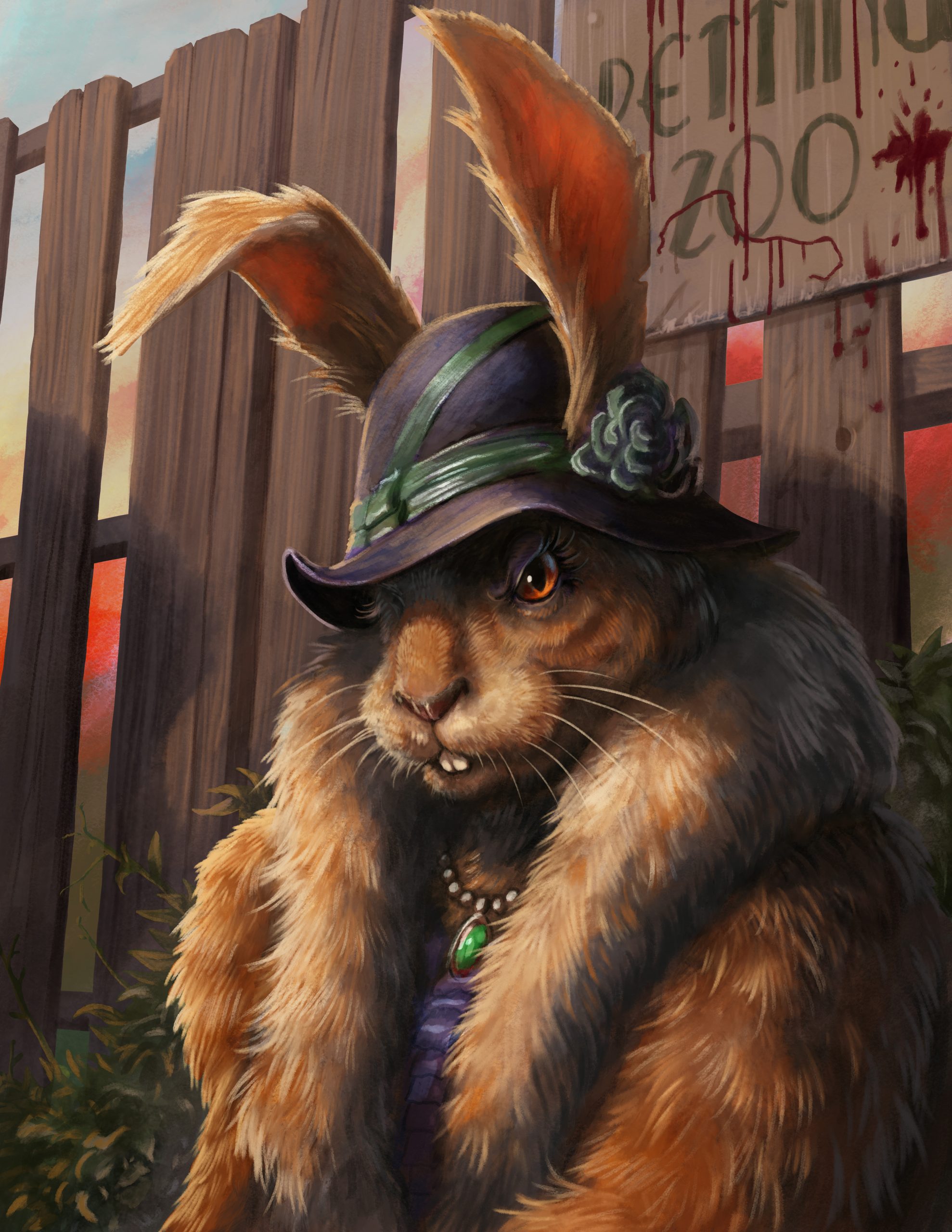


Races of Resistance: Creating Unique Playable Races for a Gritty Setting
How to Build Grounded, Adaptable Species for Darker, Wilder Worlds In gritty, post-apocalyptic, or chaos-wracked settings, traditional fantasy races can sometimes feel out of place. Elves who live for 700 years and perfect art forms don’t always mesh well with rusting spires, toxic rain, and mutant-hunting...


Character Creation Spotlight: Picking the Perfect Playbook in Zoo Mafia
In Zoo Mafia, your Playbook defines your character’s skills, strengths, and place in the criminal underworld. Whether you're a fast-talking Grifter, a sharpshooting Button, or a hard-hitting Goon, your choice impacts not only your playstyle but how your gang operates as a team. So, how do...

Building Floating Cities: Worldbuilding in the Sky
In a world where magic keeps cities aloft and the ground below is teeming with horrors, worldbuilding doesn’t just mean mapping streets and markets—it means rethinking gravity itself. Floating cities in Aether Skies aren't just marvels of arcano-engineering, they are pressure cookers of political tension,...

7 Ways to Reimagine Dragonmarks in Your D&D Campaign (Inspired by the New Unearthed Arcana)
The latest Unearthed Arcana just dropped, offering new character options and expanding the toolkit for customizing your 5E Dungeons & Dragons experience. While it doesn’t focus directly on Eberron’s iconic dragonmarks, it does open the door to more flexible ancestry and lineage mechanics—making this the...

Chaos Magic and You: Designing Unique Magical Mechanics for Your Campaign
Chaos magic introduces an element of delightful unpredictability to any tabletop RPG campaign. It upends player expectations, sparks creative problem-solving, and can shift a carefully orchestrated scene into unexpected chaos. Inspired by the Under the Dome campaign, where chaos magic shapes much of the world,...

Running a D&D Adventure with War as a Backdrop
Sometimes it is amusing watching some old movies. But as you probably know me by now, if you are a fan of the channel that is, I am always looking to gain D&D inspiration from real life and the [caption id="attachment_89560" align="alignright" width="300"] What is looks...

The Game Master’s Book of Traps, Puzzles, and Dungeons – A Review with Bonus Content
Every great dungeon is more than just a collection of monsters and loot—it’s filled with deadly traps, devious puzzles, and chambers designed to test the wits and resilience of any adventuring party. The Game Master’s Book of Traps, Puzzles, and Dungeons is a fantastic resource...

Faction Wars: Integrating Gang Politics into TTRPG Gameplay
How Gang Rivalries Shape Player Choice, Storytelling, and the World of Crystalia In many tabletop RPG settings, factions act as power players in the world’s social, economic, and criminal ecosystems. Whether they’re noble houses, religious sects, corporate overlords, or underground crime syndicates, factions provide conflict, intrigue,...

Meet the Families: Designing Memorable NPCs in Zoo Mafia
Every great crime story has its iconic families—the powerful bosses, the loyal underlings, and the ambitious outsiders trying to carve out their own piece of the pie. Zoo Mafia thrives on these dynamics, bringing the world of organized crime to life through its colorful cast...

The Game Master’s Book of Non-Player Characters – A Review with Bonus Content
In any great RPG, the world is more than just the main characters—it’s filled with shopkeepers, mercenaries, nobles, rogues, and all the colorful individuals who give the setting its depth. The Game Master’s Book of Non-Player Characters provides over 500 fully realized NPCs, each with...

The Zookeeper’s Guide: Running the Perfect Zoo Mafia Session
Welcome to the world of Zoo Mafia, where the fur flies, the drinks flow, and crime rules the jungle. As a Zookeeper (Game Master), your job is to craft a compelling, high-stakes underworld filled with rival gangs, daring heists, and the ever-present risk of attracting...

How to Safely Explore Romance in a Role-Playing Game
Happy Valentine's Day to those of you who celebrate. In relation to the holiday I thought it fitting to talk about romance in your Tabletop RPG. Romance in role-playing games (RPGs) can add depth, drama, and emotional investment to the story. However, it must be...

Rolling the Dice: Luckhaven, the City of Chance
In a far-flung corner of your D&D world lies Luckhaven, a dazzling city built on the unpredictable tides of fortune. Here, dice and cards rule every interaction, from bartering goods to determining [caption id="attachment_77819" align="alignright" width="300"] Art from Dreams of Fire: An Illustrated Fantasy Novel by...

Symbiotes in D&D: A New Twist on Magical Items
When it comes to creative storytelling and world-building, drawing inspiration from sources like Marvel Comics can breathe life into your D&D campaign. One particularly fascinating concept is the symbiote—an alien lifeform that bonds with a host to grant incredible powers, often at a significant cost....

The Game Master’s Book of Astonishing Random Tables: A Review and Creative Expansion
If you’re a Game Master (GM) looking to spice up your tabletop adventures with the unexpected, then The Game Master’s Book of Astonishing Random Tables is a must-have. This book is packed [caption id="attachment_51220" align="alignright" width="244"] A water weird as seen in the fifth edition Dungeons...