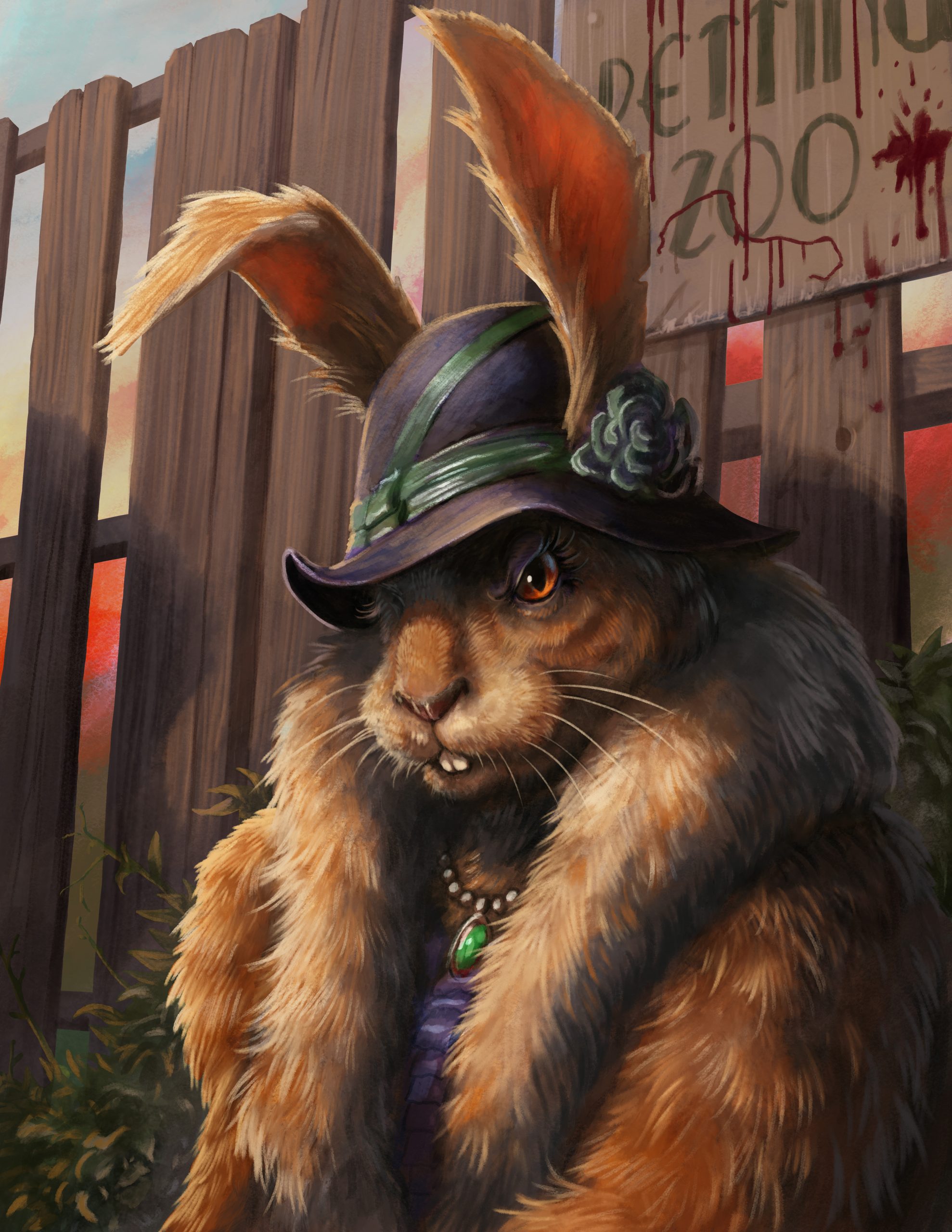


Critter Compendium brings D&D monsters of the past into the present, with creative new creatures
Critter Compendium by Tobias Beis is a collection of monsters for 5th edition Dungeons & Dragons, available now as a PDF through the Dungeon Masters Guild for $15. The hefty book presents a wide variety and number of creatures from earlier D&D editions converted to the current ruleset, along with original creations that includes artwork by the author. With 135 entries and appendices describing additional creatures and templates, Critter Compendium has enough creatures to populate several campaigns across the whole gamut of challenge ratings.

Five Life Lessons Learned From Gaming

A group of role playing gamers enjoying a night session. (Photo credit: Wikipedia)
There’s no lie that we nerds have our own little niche subculture. Get a couple of us together and we will just start geeking out and enthusing about things we love, and for those not in the know, it can sound as though we’re speaking an entirely different language. Sometimes, we have whole conversations in letters.
“Let me tell you about this amazing RPG experience I had where we almost TPK’d and I was hanging on by like 1 HP and we won anyway. The loot drop was amazing ftw.”

D&D Design diary: Blue Magic primal path
[The ongoing live stream RPG review series is on hiatus this week because reasons. In their place enjoy a peek behind how I sussed out my idea for a new primal path for 5th edition Dungeons & Dragons barbarians.]
With my first foray into creating content for Wizards of the Coast’s Dungeon Masters Guild, I offered my own take on a popular concept: the blue mage from Final Fantasy lore.
Top 10 Things I Want to See In 5E D&D
Well, it has been awhile since I did a top ten, and I always loved doing them, so let’s have some fun! I recently started playing in a Fifth Edition D&D game and that has inspired me to think on all the things I want to see in this amazing edition. Maybe we can get a vote on what people like and I will try to bring it to reality. Who knows, the sky is the limit with writers on the loose. These will be pulled from pop culture or roleplaying games, especially earlier editions of Dungeons & Dragons. Without further delay, here is my list in no particular order.


Covering Each Other with Teamwork in RPGs
So, I happen to be blessed and burdened with glorious purpose, and a great team of writers that work alongside me here at Nerdarchy. The fun part is, sometimes we need to live our lives. That is what inspires this article here. See, I am filling in for the intractable Joshua Brickley, and this fits the theme of how teams need to be able to cover each other in times of need. Like the USMC and SEAL teams who train each other in the basics of other necessary jobs, a gaming group needs to be able to do more then fill a single role. Let me go over a few things that may help in such an endeavors.

A sampling of cities from Nerdarchy’s Open Legend live game
 Beginning today, April 28, Nerdarchy will host a weekly live stream Open Legend game starting at noon EST on Fridays. Nerdarchist Dave will be at the GM helm, and players Nerdarchist Ted, Nerdarchy.com web editor-in-chief Ty Johnston, staff writer William C (aka Professor Bill of Comic Book University), and staff writers Megan Miller and Doug Vehovec will form a party of adventurers to take on this exciting game system.
A Patreon-exclusive poll helped shape the game world by choosing the theme and genre for the setting, and there will be additional ways for Patreons and viewers to interact and engage with the game as it continues each week. Be sure to check out Nerdarchy’s Patreon to discover all the ways you can support Nerdarchy and get cool gaming tips and learn how to game with Nerdarchy, get exclusive offers, ask priority questions to guests during the daily live chats and more.

D&D AARPG IS your grandparents’ Dungeons & Dragons
For this week’s look into streaming RPG programs, there’s a wonderful series put together by Geek & Sundry called D&D AARPG. In this series, writer and actress Amy Vorpahl guides a group of older players through a D&D adventure. Vorpahl handles Dungeon Master duties, while seniors Annie Coty, Bobby Reed and Art are joined by younger players Hector Navarro and Josh Flaum.
Advice on Security and Gaming from an Expert
“Vice may triumph for a time, crime may flaunt its victories in the face of honest toilers, but in the end the law will follow the wrong-doer to a bitter fate, and dishonor and punishment will be the portion of those who sin.”
― Allan Pinkerton
 Security, at its basic concept, is the effort and mindset to keep those people and things one cares about safe. It is a goal I have dedicated over a decade of my life to as my “day job” is that of a security officer. In fact, on this day I continued my training with a defensive tactics, baton, handcuffs, and OC spray refresher course. This brings me to the very point I wish to convey with this article. Security is not the complacent thing that is portrayed in Hollywood and video games. In fact, in my time I have found that most security officers fit into one of very few categories that will be discussed later in this article. None the less, this is the first of what I feel will be many articles on security in gaming.

Help Me Create a City for Nerdarchy
 Hey guys, Professor Bill here from Comic Book University, and two things happened on last Friday’s live chat with Nerdarchy. First off, I was promoted. Dave invited me to be a fill-in player for the “Open Legend” game we’ll start playing this Friday (weekly – noon EST) and I said, sure.


10 Things You Don’t Need to Know About Your RPG Character
There’s a certain kind of player, and I myself am one, who just wants to know everything about their character and has a tendency to overthink it. If you’re one of those, this article is for you. None of these are things you absolutely have to know the answers to, but they can be fun to think about. So if you’re the kind of player who spends way too much away-from-table time thinking about your PC, have fun with this.
1 – What does your character smell like?

Scarlet Sisterhood is a different kind of streaming RPG
Moving closer to home this week, I’m taking a look at a live streaming RPG show that has grown to become one of my favorites to watch. The Scarlet Sisterhood of Steel & Sorcery is streaming live every Wednesday evening at 7 p.m. EST on Nerdarchy’s YouTube channel. Each week, DM Nerdarchist Dave hosts Staff Writers Megan Miller and Samantha Karr with gamer girl and Nerdarchy fan Vex on their D&D 5E adventures in and around Gryphongaffe, Nerdarchy’s homebrew campaign setting.

Open Legend kobold character concept
 Hey, guys, Professor Bill here, and I’m playing in the Nerdarchy “Open Legend” game on Friday’s at noon Eastern Standard Time. Actually, I’m the auxiliary player, so when someone else can’t make the game, then I show up last minute. Nonetheless, I want my character to be on point and I figured I’d share my concepts with you. And, of course, I made him with superheroes in mind.

Villains are the RPG Gift That Keeps on Giving
Greetings and salutations, Nerdarchy readers!

Jim Carrey as Count Olaf in the 2004 film, Lemony Snicket’s A Series of Unfortunate Events.”(Photo credit: Wikipedia)
I was watching a show on Netflix while I was deathly ill (or so it felt to me) and could not help but be inspired to write on a subject I seem to be gathering a reputation for. Namely, villains who inspire the protagonist to excel into feats of legend. You see, like the villainous Count Olaf, a good villain will be a thorn in the protagonist’s side for a long time and alter their lives on every level. The thing is, in gaming it is too easy to create a villain who is a one trick pony or is killed in a single fight. For this reason, I am going to list a few things to keep in mind and a few things to avoid all together. Let’s dive right in, shall we?

The Name Game, Part III: Last Names, Titles and Sobriquets
 I’ve talked about naming characters before in a previous article (the second one was about places, in case you were wondering), but I neglected to cover last names, so that’s what we’re going to talk about right now. Mind you, my advice before regarding making up names still applies if you want something super fantasy sounding like “Arthainas” or “Cerdoth,” but this one is all for the more naturally occurring names.

The TitansGrave role-playing game show is a top-notch production
Returning readers might make me eat crow for the RPG encounter planned for this session. D&D is hiding in shadows and moving silently this week while the Fantasy Adventure Game Engine sets the stage for Geek & Sundry’s TitansGrave: The Ashes of Valkana. There is a huge variety of live streamed and recorded RPG play sessions out there. The merits, value and impact are debatable among many, but not me – I enjoy them as entertainment and believe they add value to the hobby. For those reasons, I’m taking a closer look at my favorite programs and sharing not only what makes each program fun to watch, but what gamers can take away and bring back to their gaming tables.