

Voices from Below (Aether Skies & undercities A D&D campaign setting)
Rumors, Myths, and Urban Legends of the Underside Every city has rumors. In Aether Skies, they don’t just spread through taverns and trade routes—they travel through metal beams, along tensioned cables, and across the hollow spaces beneath the world. In the underside, stories aren’t just told. They are passed...


10 Creative Ways to Level Up Your Next Tabletop RPG Campaign
Tabletop RPGs are mainly about using one's imagination, telling stories with others, and having memorable adventures. If you want to become a game master working on a long campaign or a player seeking to enhance the gaming experience, new ideas can add a lot of...

How Modern Gaming Culture Is Influencing Tabletop RPG Communities
Tabletop role-playing games (RPGs) have long been a medium for unleashing creativity, storytelling, and teamwork. Even though in their oldest forms these games were about rolling dice, getting through rulebooks, and depending purely on one's imagination, over the years, they have changed their appearances to...

Under the Dome: Grind (A D&D resource from a post apocalyptic fantasy setting)
Fuel, Currency, and Control in a Post-Apocalyptic D&D Campaign In Under the Dome, survival runs on a single substance: Grind. Every light that flickers back to life after a storm.Every engine that roars across a broken district.Every desperate deal made in shadowed alleys. It all traces back to the...

D&D Background Spotlight: The Noble
Privilege, Power, and the Burden of Expectation [caption id="attachment_89447" align="alignright" width="300"] "Go forth my noble steed"![/caption] The Noble background is about more than wealth or titles. Nobles are raised inside systems of power, tradition, and reputation. Every action reflects on a family name, a house, or a...

The Underside: Life Beneath the Sky Cities (Aether Skies TTRPG Setting)
Shadows, Survivors, and Stories Below the Platforms Every sky city has a face it shows the world. Gleaming towers. Docking spires. Carefully maintained markets and controlled aether systems humming with purpose. And then there is everything beneath it. The underside. A maze of hanging structures, exposed beams, forgotten maintenance corridors,...

The Duplicate Dungeon: Turning Your D&D Party Against Themselves (and Their Past)
If you’ve ever looked at your campaign notes and thought, “I wish I could reuse that dungeon, that boss, or that incredible terrain piece…”—this adventure concept is your answer. [caption id="attachment_59222" align="alignright" width="300"] In Shadow of Your Former Self, adventurers come face to face with the...

Under the Dome: Unusual Monsters (A post Apocalyptic fantasy D&D setting)
When Survival Makes Room for the Unacceptable Under the Dome, mutation is feared. It is monitored, cataloged, quarantined—and when necessary, destroyed. Chaos-touched creatures are reminders that the storms outside the barrier never truly went away. They are evidence that the Dome’s protection is imperfect. Officially, the policy is...

D&D Background Spotlight: The Hermit
Isolation, Revelation, and the Truths Found in Silence The Hermit background is about stepping away from the world—and returning changed. Hermits are not simply loners; they are people who chose isolation for a reason. Whether driven by faith, fear, guilt, or curiosity, Hermits sought answers where...

The New Exhibit (A Zoo Mafia RPG adventure)
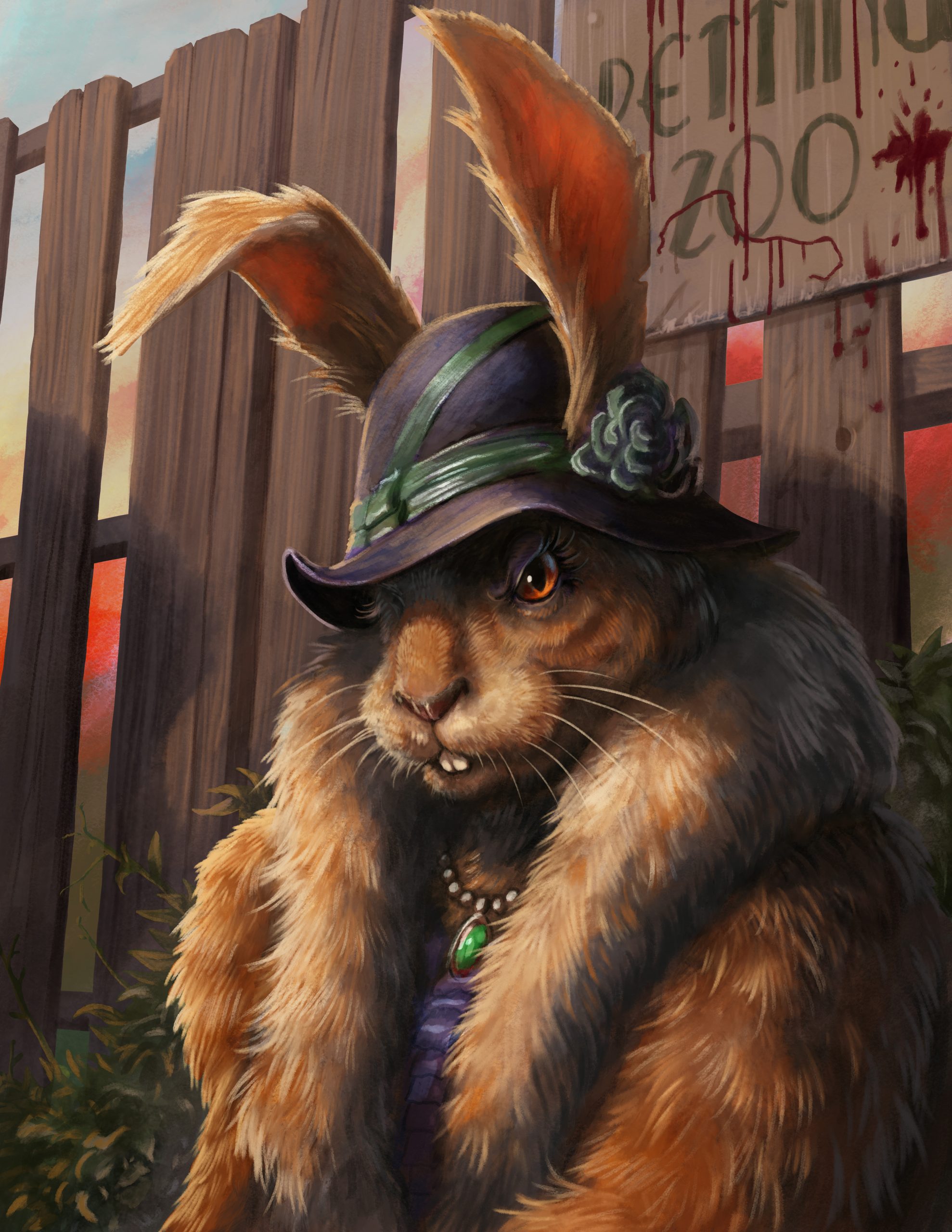
When Construction Threatens the Underworld in Zoo Mafia The zoo is always changing. Humans call it improvement. Animals know better. In Zoo Mafia, our animal mafia tabletop RPG set inside a living zoo, construction projects are more than an inconvenience. They are a direct threat to the hidden criminal...

The Cleric Whose God Went Silent (A D&D 5E character build with background)
An Aasimar Cleric Character Build for D&D 5e Faith is supposed to be a conversation. You speak.A god listens.And sometimes… something answers back. For this cleric, that conversation ended without warning. This character explores what happens when divine power still flows—but the presence behind it is gone. The prayers...

Creature-Touched Heroes: Elementals (D&D & RPG Guide)
Mortals Shaped by Fire, Storm, Stone, and Sea Some heroes draw power from bloodlines or gods.Others are shaped by raw forces of reality. In the Creature-Touched Heroes series, we explore how the great creature types of Dungeons & Dragons leave their mark on mortal adventurers. Elementals represent...

Mimics & Doppelgangers: A Shared Heritage of Deceit in D&D
What if mimics and doppelgangers weren’t separate monsters at all—but distant relatives born from the same terrible origin? [caption id="attachment_89373" align="alignright" width="212"] Mimic and Otyugh BFFs[/caption] Both creatures are iconic Dungeons & Dragons shapeshifters. Both thrive on deception. Both weaponize trust. And both leave players permanently suspicious...

Under the Dome: The Value of Names (A D&D post apocalyptic fantasy setting)
Identity, Records, and Social Control in a Post-Apocalyptic D&D Campaign In Under the Dome, identity isn’t just personal. It’s administrative. A name is not simply what people call you.It’s a record in the system. Your name connects you to housing permits, ration allocations, work contracts, education tracks, and compliance...

D&D Background Spotlight: The Guild Artisan
Craft, Reputation, and the Price of Mastery The Guild Artisan background is about people who build the world. Long before heroes arrive, artisans shaped cities, forged tools, brewed ale, stitched banners, and kept civilization functioning. Guild Artisans don’t just have a job—they belong to an organization...