




Everyone Is Wearing a Mask: 8 Ways to Turn a Festival into an RPG Horror Story
There’s something wonderfully unsettling about a crowded festival. Music fills the streets, colorful decorations hang from every building, people dance and celebrate, and everyone seems to be having a wonderful time. But what happens when the music never stops? What if the people wearing masks aren’t actually wearing costumes? And what if the festival organizers insist that everyone must remain until the final bell rings, even though nobody can remember what happens when it does?
Festivals are fantastic opportunities for Game Masters to bring their worlds to life. They give characters a chance to relax, interact with NPCs, participate in competitions, enjoy local traditions, and experience something beyond the usual dungeon crawl. They’re also excellent settings for horror adventures because festivals are already full of distractions, unfamiliar faces, strange customs, and crowds of people who might not be what they seem.
For this installment of Nerdarchy’s Halloween week, we’re exploring how to turn an ordinary celebration into an unforgettable RPG horror story. Whether you’re running Dungeons & Dragons, a modern supernatural investigation, a science fiction campaign, Zoo Mafia, or a post-apocalyptic survival game like Under the Dome, a festival can become the perfect backdrop for something deeply unsettling.
The trick is to begin with something fun and familiar, then slowly introduce details that make the players question whether they should be celebrating at all.
Here are eight ways to turn a festival into a horror adventure your players won’t soon forget.
1. Everyone Must Wear a Mask

A masquerade is an obvious choice for a Halloween adventure, but masks become much more interesting when they serve a purpose beyond hiding someone’s identity.
Imagine a festival where everyone wears a mask representing an animal, mythical creature, historical figure, or local legend. The tradition is centuries old, and the townspeople insist that removing your mask before midnight is considered terribly rude. Visitors are encouraged to participate, and anyone who refuses is treated with suspicion.
At first, this seems like harmless local culture. Then the characters begin noticing that the masks are remarkably lifelike. Some appear to move when their owners aren’t looking. Others seem to change expression depending on who is wearing them. A character might even discover that their mask has developed features they didn’t remember being there when they first put it on.
The real horror begins when someone removes their mask and discovers that their face underneath has changed.
You could make the masks magical, allowing their wearers to temporarily assume the identity or abilities of the creature represented. Perhaps a fox mask grants extraordinary cunning, a wolf mask encourages aggression, or an owl mask allows someone to see in darkness. The catch is that the mask gradually replaces the wearer’s personality with the characteristics of its namesake.
For a more sinister version, the masks might not be disguises at all. They could be vessels containing the spirits of former festival participants, and each year the spirits seek new bodies to inhabit.
The adventure hook: One of the characters is given a mask that looks exactly like their own face. When they put it on, everyone at the festival recognizes them as someone else. The townspeople insist this person attended the festival many years ago, but nobody can explain why the character looks exactly the same.
2. The Festival Never Ends
Every celebration eventually comes to an end. Vendors pack their belongings, performers leave the stage, and people return to their homes. That’s part of what makes a festival feel like a special occasion.
Now imagine a festival where nobody leaves.
The characters arrive in a bustling settlement during its annual celebration. There are games, music, food, decorations, and plenty of opportunities for entertainment. The locals are welcoming, and the party is encouraged to enjoy everything the festival offers.
But when the characters decide it’s time to move on, they discover something strange. The roads leading out of town all seem to return to the festival grounds. Travelers who attempt to leave find themselves walking back into the same marketplace. A character who climbs a nearby hill discovers that the settlement stretches in every direction, with no visible countryside beyond it.
Even stranger, the festival never seems to change. The same musicians play the same songs, the same vendors offer the same food, and the same performers repeat their routines. The locals insist that everything is normal, and anyone who questions the celebration is encouraged to relax and enjoy themselves.
Perhaps the festival exists inside a supernatural time loop. Maybe an ancient entity feeds on the happiness of its participants, preserving the celebration forever. Alternatively, the people attending the festival might already be dead, trapped in a repeating memory of the last celebration they ever experienced.
The adventure hook: The characters discover a guestbook containing the names of everyone who has attended the festival over the last century. Their own names appear on the list, alongside dates from decades before they were born. The final entry reads, “The festival ends when everyone remembers why they came.”
3. The Parade Has Something Following It
Parades are full of spectacle. Giant floats move through crowded streets, performers dance in elaborate costumes, musicians play, and spectators cheer as the procession passes. They’re also excellent opportunities for something frightening to hide in plain sight.
Imagine a Halloween parade featuring enormous monster costumes, elaborate puppets, and performers dressed as local legends. The characters might be participating, watching from the sidelines, or working security for the event.
As the parade progresses, they notice something unusual. One of the performers never changes position. A massive creature costume appears to be breathing, despite the fact that nobody is operating it. A float depicting an ancient battle contains figures that seem to move independently of the machinery.
Then someone disappears.
At first, the organizers assume the missing person has wandered off. But other spectators begin reporting similar incidents. People disappear from the crowd, and nobody seems to remember seeing them leave. Eventually, the characters notice that the parade is getting larger. There are more performers than there were at the beginning, and some of the new arrivals are wearing costumes that look suspiciously like people who have gone missing.
The parade might be a supernatural procession collecting people as it travels. Perhaps an ancient creature has disguised itself as one of the floats, feeding on spectators who become too fascinated by its performance. Maybe the entire procession is a ritual designed to transport the participants somewhere else.
The adventure hook: The characters discover a float depicting a scene from their own campaign. It shows the party standing in a location they’ve never visited, surrounded by creatures they haven’t encountered. One of the figures on the float turns its head and looks directly at them. Then the float begins moving toward the characters, even though the parade is supposed to be traveling in the opposite direction.
4. The Games Are Not What They Seem
Festival games are a great way to encourage player participation. Archery contests, pie-eating competitions, strength challenges, races, riddles, and carnival games can all provide a welcome break from the usual adventuring routine.
But what if the games have consequences nobody understands?
A festival might feature a series of traditional competitions, each associated with a local superstition. The winner of the archery contest receives a beautiful silver arrow. The champion of the footrace is given a pair of enchanted shoes. The person who wins the strength competition receives a ceremonial hammer.
At first, these prizes seem like ordinary rewards. Then the winners begin experiencing strange effects.
The archer finds that every arrow they fire eventually strikes something they didn’t intend to hit. The runner cannot stop moving, even when exhausted. The champion with the hammer begins hearing voices whenever they strike something.
Perhaps the prizes are cursed, and the games are designed to distribute them to unsuspecting participants. Alternatively, the competitions might be tests designed to identify people with particular qualities. The festival organizers could be selecting champions for an ancient entity, and the games are simply a way to determine who is worthy of being taken.
You can make this especially interesting by allowing the characters to participate willingly. Players love opportunities to test their characters’ abilities, and they might eagerly pursue the prizes without realizing what they’re getting themselves into.
The adventure hook: A young child wins a seemingly harmless ring-toss competition and receives a wooden toy crown. The festival organizers immediately begin treating the child like royalty, while several masked figures quietly surround the family. The crown isn’t a prize. It’s a symbol identifying the next ruler of something that should never have a ruler.
5. The Locals Are Afraid of One Particular Tradition

Every festival has traditions. Some are amusing, some are meaningful, and others are simply strange customs that have survived long after anyone remembers their original purpose.
This provides a fantastic opportunity for a Game Master to introduce a seemingly harmless tradition that hides something much darker.
Perhaps the locals insist that everyone must leave a place setting at the dinner table for an unseen guest. Maybe every household must extinguish its lights at a particular hour, or every participant must leave a small offering beneath the oldest tree in town.
The characters might initially treat these traditions as charming local customs. But the locals become visibly uncomfortable when someone refuses to participate.
A particularly effective approach is to have the locals become frightened when the characters accidentally violate a tradition. Someone might drop a piece of food, break a ceremonial object, or accidentally speak a forbidden name. The reaction is immediate. Music stops, conversations end, and everyone turns toward the person responsible.
Nobody explains what happens next. Instead, the locals insist that the character must apologize before sunset.
The tradition might exist to appease a supernatural creature, maintain a magical barrier, or prevent something from entering the settlement. Perhaps the festival was originally created to celebrate the defeat of an ancient monster, but the locals have gradually forgotten that the celebrations are actually part of the ritual keeping it imprisoned.
The adventure hook: The characters discover that the festival’s oldest tradition requires one person to remain behind when everyone else leaves. The locals insist that the chosen individual is receiving a great honor. An elderly resident quietly tells the party that nobody who has accepted the honor has ever been seen again.
6. The Music Is Controlling Everyone
Music is one of the easiest ways to establish atmosphere during a tabletop RPG session. It can make a celebration feel lively, create tension during an investigation, or signal that something terrible is about to happen.
Now imagine a festival where the music never stops.
The celebration features musicians playing traditional songs throughout the day and night. The melodies are catchy, the performers are talented, and everyone seems to know the words. Characters might find themselves tapping their feet or humming along without thinking about it.
Then the music changes.
A new melody begins, and everyone in the crowd stops what they’re doing. People turn toward the stage, their expressions becoming blank. They begin moving in perfect synchronization, dancing to a rhythm that seems impossible to resist.
The characters might initially assume this is part of the performance. Then they notice that the musicians aren’t moving their hands. The instruments are playing themselves.
Perhaps the music is a form of enchantment that places listeners under the control of something hiding beneath the festival grounds. Maybe the performers are actually spirits, using their music to draw living people into a supernatural realm. Or perhaps the melody is an ancient communication signal that awakens something sleeping beneath the town.
This idea works particularly well in science fiction campaigns, too. The festival music could be an alien transmission, a technological signal, or a sound frequency that influences the minds of anyone who hears it.
The adventure hook: One character recognizes the melody as a lullaby they heard during childhood, despite having no memory of anyone teaching it to them. As the song continues, they begin remembering places they’ve never visited and people they’ve never met. The final verse contains their name.
7. The Festival Has a Guest Who Was Never Invited

Crowded celebrations are full of strangers, making them excellent settings for mysterious NPCs. A festival can introduce someone who seems perfectly ordinary at first but gradually reveals that they don’t belong.
Perhaps there’s a fortune teller who predicts events with uncomfortable accuracy. A masked performer appears at every location the characters visit, even when the group changes direction. A vendor offers unusual items that seem specifically chosen for each character.
The mysterious guest might be friendly, helpful, or even entertaining. That’s part of the appeal. Players are naturally curious about unusual NPCs, and a character who offers information or assistance can quickly become someone the party wants to understand.
The unsettling details should emerge gradually. The guest might refer to events that haven’t happened yet, know things the characters have never told anyone, or insist that they’ve met before when they clearly haven’t.
Perhaps the guest is a supernatural being that attends every festival in the region. Maybe they’re an ancient trickster who collects secrets, or a creature that feeds on the memories of people who speak with it.
For a particularly creepy twist, the guest might be someone the characters know. An old enemy, a missing ally, or a deceased NPC could appear at the festival, behaving as though nothing unusual has happened.
The adventure hook: The mysterious guest approaches the party and offers to tell them how the festival ends. Before they can answer, the guest reveals that they have already attended this celebration with the characters many times. They claim that every previous version ended with the party making the same terrible mistake.
8. The Final Bell Changes Everything
Every festival needs a conclusion. There might be fireworks, a final performance, a ceremonial speech, or the announcement of the winners. The characters might even be looking forward to the end of the celebration so they can return to their adventures.
That’s the perfect moment to turn everything upside down.
The festival organizers announce that the final bell will ring at midnight. Everyone is encouraged to gather in the central square for the traditional closing ceremony. The atmosphere becomes increasingly excited, and the locals begin preparing for something they describe as the most important part of the celebration.
When the bell rings, everything changes.
Perhaps every person wearing a mask suddenly becomes something else. The festival decorations transform into strange organic growths, and the streets rearrange themselves into an impossible maze. Maybe the people of the town vanish, leaving the characters surrounded by empty buildings and abandoned festival equipment.
Another possibility is that the bell signals the arrival of something that has been waiting beneath the settlement. The locals have spent the entire festival preparing for its return, and the celebration was never intended for the living.
The characters might discover that the festival itself is a protective ritual, and the final bell marks the moment when the barrier holding back an ancient threat becomes vulnerable. Alternatively, the bell might be a signal to something beyond the town, announcing that the offerings have been collected and the feast can begin.
The adventure hook: The final bell rings, and everyone removes their masks at exactly the same moment. Every face in the crowd is identical. They all look like one of the characters. Then the entire crowd begins walking toward the party.
Putting It All Together: The Festival of Forgotten Faces
Let’s combine several of these ideas into an adventure you can use in almost any tabletop RPG.
The characters arrive in a settlement preparing for its annual Festival of Forgotten Faces. The celebration is famous throughout the region, attracting visitors who come to enjoy music, food, games, and elaborate costumes. Every participant receives a mask upon entering the festival grounds, and tradition requires that nobody remove their mask until the final bell rings at midnight.
The locals are friendly, the food is excellent, and the festival seems like a wonderful opportunity to relax.
The characters might participate in competitions, meet interesting NPCs, and enjoy the festivities. But as the evening progresses, strange events begin occurring.
A performer disappears during a musical performance, but the audience continues applauding as though nothing happened. A child approaches one of the characters and asks why they’re wearing the wrong face. A vendor offers to sell the party a collection of masks, each representing a different member of the group.
Then the characters discover something disturbing.
The masks are not decorations. They are created from the memories of people who attended previous festivals. Every year, the settlement holds the celebration to honor an ancient entity that protects the community. In exchange for its protection, the entity takes the memories and identities of several participants.
The festival organizers have known about the arrangement for generations. They believe the sacrifices are necessary, and they carefully select visitors who won’t be missed.
Unfortunately, this year something has gone wrong. The entity is no longer satisfied with a few memories. It wants everyone attending the festival, and the masks are beginning to take control of their wearers.
The characters have until midnight to discover how the ritual works, identify the entity’s weakness, and decide whether to save the festival participants or destroy the source of the town’s protection.
The final bell is approaching, and the locals are beginning to realize that their beloved tradition might be the reason their entire community is in danger.
Adapting the Festival to Different RPG Settings
For a fantasy campaign, the Festival of Forgotten Faces could be an ancient celebration honoring a forgotten fey lord, a powerful spirit, or a deity whose name has been erased from history. The masks might be enchanted objects, and the festival grounds could become a supernatural realm when midnight arrives.
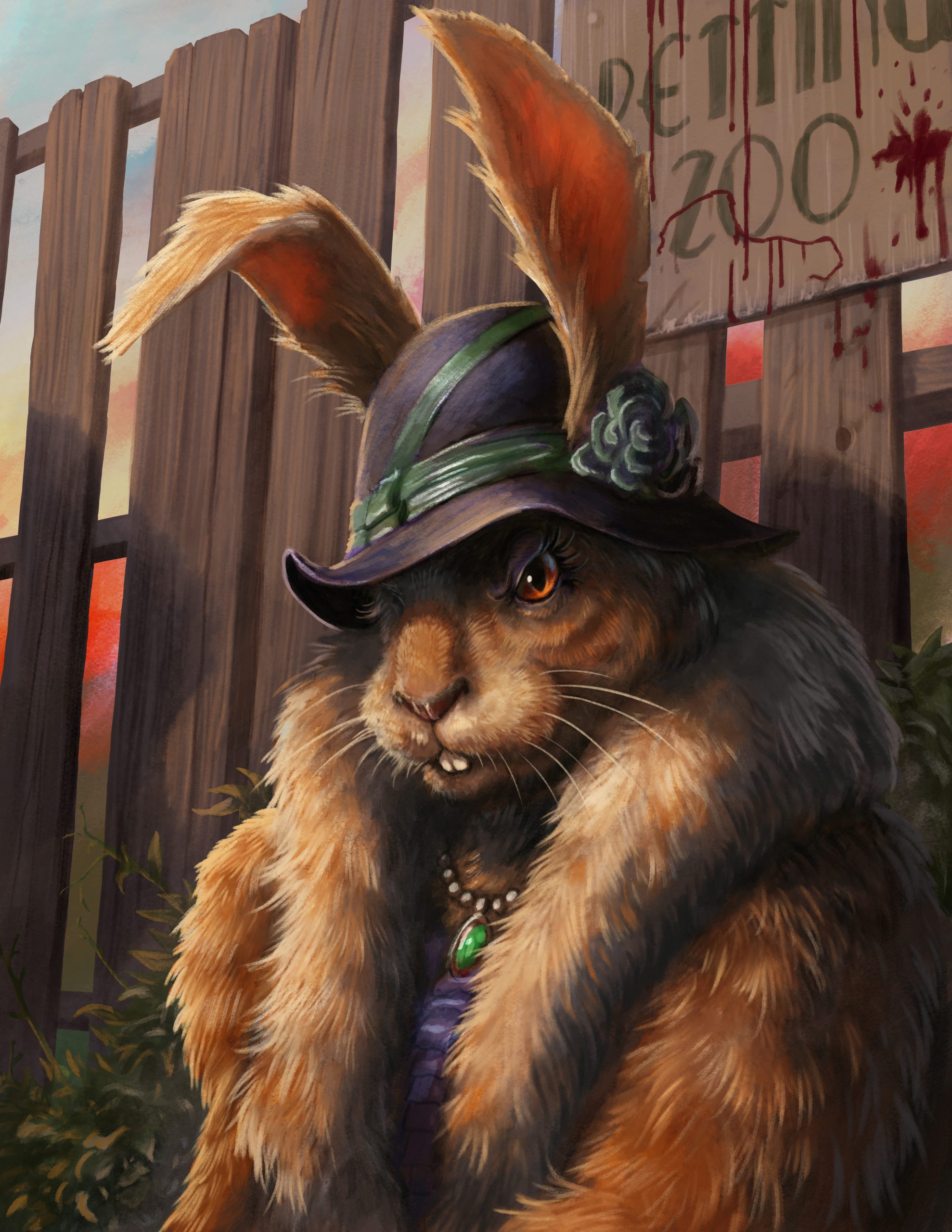
For Zoo Mafia, the celebration could take place in a bustling district where criminal organizations use the festival as cover for a major operation. The masks might identify members of different crews, while the mysterious festival organizers are using the festivities to recruit, manipulate, or eliminate members of rival organizations.
For a modern supernatural RPG, the festival could be an annual Halloween event in a small town where residents have been disappearing for decades. Investigators might discover that the celebration is connected to an urban legend that becomes real every year.
For a science fiction campaign, the festival could take place on a space station or isolated colony. The masks might be part of an alien cultural exchange, except the visitors have begun experiencing memories belonging to people who died before the colony was established.
And for Under the Dome, a festival inside an isolated community could take on an entirely different meaning. When people cannot easily leave their settlement, traditions become especially important. A celebration that once brought everyone together might conceal a dark history, and the people responsible for maintaining order may be more concerned with preserving the festival than protecting its participants.
The beauty of this adventure structure is that you can change the nature of the entity, the purpose of the masks, and the reason for the celebration without losing the central mystery.
Making Horror Festivals Work at Your Table

The most important thing to remember when running a horror-themed festival is that the celebration should feel enjoyable before it becomes frightening. Give the characters opportunities to participate in games, meet interesting NPCs, enjoy unusual food, and experience the local culture. Let them become comfortable with the setting before introducing anything truly disturbing.
When the strange events begin, don’t rush to explain them. A festival where everyone wears masks is interesting. A festival where nobody remembers putting their mask on is unsettling. A festival where the masks begin whispering the names of people who haven’t been born yet is something your players will remember.
Use the crowd as part of the atmosphere. A hundred people cheering can be just as intimidating as a hundred monsters charging toward the party, especially when the characters realize that everyone in the crowd is watching them.
Most importantly, give the players something to investigate and decisions that matter. Horror works best when the characters have opportunities to understand the danger and find ways to confront it, even if the solution isn’t immediately obvious.
You don’t need to turn every festival into a supernatural nightmare. Sometimes a single strange NPC, an unsettling tradition, or an unexplained event is enough to create an adventure that stands out from the usual campaign routine.
The Last Dance of Halloween Week
Festivals are supposed to bring people together. They celebrate traditions, create memories, and give communities a reason to come together and enjoy themselves. That’s precisely what makes them such effective horror settings. When something goes wrong, the characters aren’t simply dealing with a dangerous location. They’re watching a community, its traditions, and its sense of safety unravel around them.
Whether you use mysterious masks, endless celebrations, supernatural music, strange competitions, or a final bell that signals something terrible, these ideas can transform an ordinary festival into a memorable RPG horror adventure.
Halloween is the perfect excuse to experiment with these concepts, but don’t be afraid to bring them into your regular campaigns. A fantasy kingdom’s harvest festival, a modern town’s annual parade, a criminal organization’s masquerade ball, or a colony’s founding celebration can all become the setting for something sinister.
And remember, the best horror doesn’t always come from what the characters see. Sometimes it’s what everyone else seems perfectly comfortable ignoring.
As our Halloween week at Nerdarchy continues, we’ll be heading into Under the Dome territory, where isolation, strange traditions, and the challenges of living in a confined community can create some fascinating opportunities for tabletop storytelling. When the world outside is inaccessible and everyone knows everyone else, secrets have a way of becoming dangerous.
Until then, enjoy the festivities, keep an eye on the people behind the masks, and whatever you do, make sure you know what happens when the final bell rings.
Stay nerdy!


No Comments