




Zoo Mafia: Carlo Hambino — The Warthog Who Turns Business Into Power
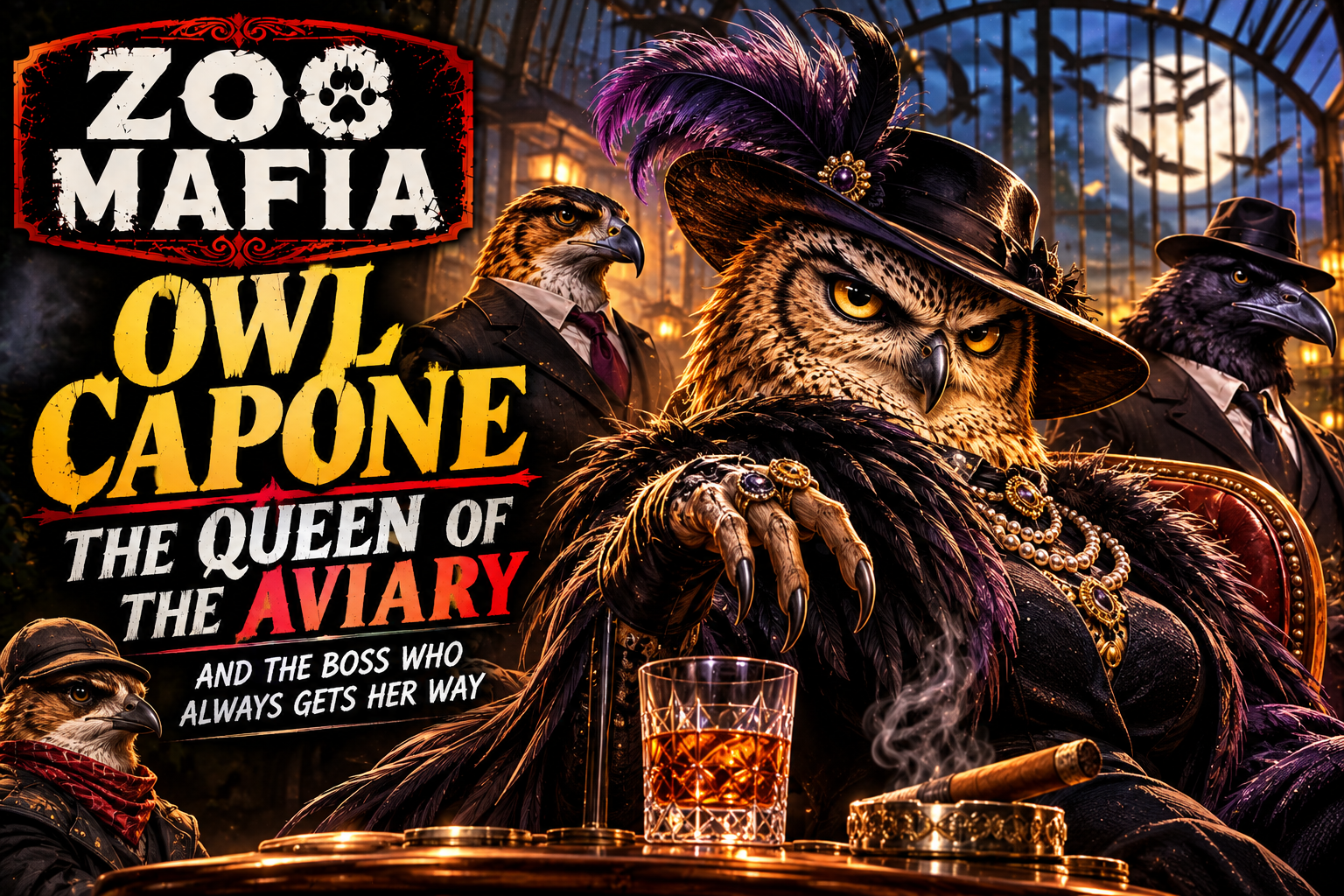
The Mob Bosses of Zoo Mafia can be anything you want them to be. Last week we did a deep dive with Zoo Mafia Boss Owl Capone. In the animal underworld, there are plenty of bosses who believe power comes from fear. Others think it comes from having the biggest territory, the sharpest claws, or the most loyal gang of muscle. Carlo Hambino understands something different. Power comes from controlling what everyone needs.
Food, supplies, information, transportation, contraband, and favors all have value. Whoever controls the flow of those things can make even the most dangerous criminals come asking for help. Carlo has built his influence around that simple truth. He is a businessman first, a crime boss second, and a warthog who has never been mistaken for an easy mark.
Carlo Hambino is a warthog with a taste for the finer things in life. He favors well-tailored pinstripe suits, a polished gold pocket watch, and the sort of expensive drink that most animals only hear about. His tusks and bristling mane make him an imposing figure, even when he is sitting comfortably behind a desk discussing a business arrangement. He doesn’t need to raise his voice to remind someone that he is dangerous.
Carlo would much rather make a deal than start a fight. But don’t mistake that preference for weakness. He knows exactly how much violence is worth, and he has no problem spending it when the situation demands it.
The Business of Being Carlo Hambino
Carlo’s philosophy is simple: everyone needs something, and everyone has a price. That doesn’t necessarily mean money. Sometimes the price is a favor, a promise, a shipment, or a little cooperation at the right moment.
He has built his organization around making himself useful. Other crime families might control a particular exhibit or rely on a reputation for violence, but Carlo’s influence follows the routes that keep the zoo running. He knows who handles deliveries, where food is stored, which maintenance passages are rarely watched, and which animals can get something moved without attracting attention.
He understands that a criminal organization needs more than muscle. It needs dependable suppliers, reliable couriers, places to hide goods, and people who know how to keep their mouths shut. Carlo has spent years building those relationships.
His organization is not built around a single species. Warthogs, raccoons, ferrets, salamanders, beavers, and plenty of other animals can find a place in his operation. Carlo doesn’t care what an animal looks like or where it comes from. He cares whether that animal can do the job, keep a promise, and understand the value of being part of something bigger.
That doesn’t mean he is a soft touch. Carlo is proud, and he takes his reputation seriously. A business rival who cheats him might find themselves permanently removed from his list of preferred associates. Someone who publicly humiliates him could discover that Carlo has a much longer memory than his easygoing manner suggests.
The infamous Last Call Job is a perfect example. When Vinnie Velvet boasted that Carlo couldn’t get his hands on a particular supply of premium apple brandy without asking permission, Carlo didn’t simply shrug off the insult. He arranged for a crew to sneak into the Midnight Molt and take the brandy. The job wasn’t only about acquiring a luxury product. It was about reminding everyone that Carlo Hambino does not need permission to do business.
[Link to: The Last Call Job]
The Hambino Organization
Carlo’s crew is organized more like a legitimate business than a traditional gang. There are schedules, responsibilities, territories, and expectations. Everyone has a role, and Carlo expects those roles to be taken seriously.
His inner circle includes animals who understand that keeping the business running is just as important as winning a fight. They handle negotiations, logistics, acquisitions, distribution, and security. Carlo trusts them to make decisions on his behalf, but that trust has been earned through results.
Louie “The Ledger” Ledgerwood is a beaver and Carlo’s underboss. Louie manages the day-to-day operation, keeping track of money, shipments, debts, schedules, and business arrangements. He is methodical, organized, and rarely surprised. If Carlo is the face of the operation, Louie is the machinery that keeps it moving. He knows where every crate is supposed to go and who is supposed to pay for it. Animals who try to cheat the Hambino organization often discover that Louie has already noticed the discrepancy.
Frankie “The Smile” Ferret handles negotiations and collections. Frankie is charming, quick-witted, and exceptionally good at making an unpleasant conversation sound like a friendly business meeting. He can convince an animal to accept a terrible deal while making them believe they came out ahead. When someone refuses to honor an agreement, Frankie is usually the first to arrive and explain the consequences. He prefers words, but he knows when to bring along someone who speaks a different language.
Rosie “Quickpaws” Raccoon oversees acquisitions. If Carlo needs something that cannot be purchased openly, Rosie is the animal who figures out how to get it. She specializes in theft, burglary, procurement, and locating unusual goods. Her network of contacts reaches into nearly every part of the zoo. Rosie is resourceful, ambitious, and always looking for the next opportunity. Carlo appreciates her ability to find things that other animals insist are impossible to obtain.
Sal “The Dockmaster” Salamander handles distribution and smuggling. He knows the service corridors, drainage routes, hidden passages, and delivery schedules that make moving contraband possible. Sal is patient and dependable, with a knack for getting goods from one place to another without attracting attention. He understands that a shipment is only valuable if it reaches its destination.
Bruno “Big Barrel” Bear serves as Carlo’s primary security chief and enforcer. Bruno is an imposing presence, but he is not simply a walking wall of muscle. He understands that his job is to prevent trouble before it starts. He escorts Carlo to important meetings, protects shipments, and makes sure that anyone considering violence understands the potential cost. Bruno is loyal to Carlo because he respects the warthog’s ability to build something lasting.
Together, these lieutenants give Carlo a well-rounded organization. He doesn’t need to personally oversee every shipment or every negotiation. He has built a team that can keep the business running while he focuses on expanding his influence.
Where Carlo Hambino Operates

Carlo doesn’t rule a single exhibit in the way some other bosses might. His territory is defined by commerce, supply routes, and access.
Food storage areas, delivery zones, maintenance passages, and service corridors are all important parts of his operation. These are places where animals and supplies move constantly, making them ideal for smuggling, theft, and quiet exchanges. Carlo understands that the animals who control these routes can influence nearly every other part of the zoo.
His organization has connections throughout the zoo, but its strongest presence is wherever goods are stored, moved, or exchanged. A shipment of food can become a bargaining chip. A missing crate can become an opportunity. A delivery schedule can reveal when an area is vulnerable.
Carlo’s influence can also extend beyond the zoo’s boundaries. Connections with outside traders, scavengers, and independent criminal groups give him access to items that other bosses cannot easily acquire. These relationships make him valuable to other families, even those who would rather not admit it.
This is one of Carlo’s greatest strengths. He doesn’t necessarily need to control another boss’s territory if he can control something that boss needs.
The Crimes of the Hambino Family
The Hambino organization is involved in a wide range of criminal activities, but most of them connect to the movement of goods and the exchange of favors.
Smuggling is one of Carlo’s most important businesses. Food, medicine, luxury items, information, and unusual contraband can all be valuable commodities. Carlo’s organization has the contacts and transportation network necessary to move these goods across territory lines. Some shipments are hidden in plain sight, while others travel through forgotten passages and carefully timed deliveries.
Theft and burglary are another major source of income. Rosie Quickpaws and her associates specialize in acquiring goods that are difficult to purchase or that belong to someone who doesn’t want to sell. Sometimes the goal is profit. Sometimes the goal is to obtain leverage over a rival. Occasionally, it is simply about proving that something can be stolen.
Carlo also operates protection arrangements with smaller businesses and independent traders. These deals are often presented as legitimate partnerships. In exchange for a percentage of profits or regular payments, Carlo’s organization helps protect a business from thieves, aggressive competitors, and other criminal groups. Of course, refusing the arrangement can sometimes make those problems seem much worse.
Black-market sales and gambling provide additional income. Carlo enjoys a good business opportunity, and he knows that animals will always be willing to gamble when they believe they can win something valuable. His organization can arrange private games, sell hard-to-find goods, and connect buyers with sellers who would rather remain anonymous.
Debt collection is another part of the business. Carlo believes agreements should mean something. If an animal borrows money, accepts a shipment, or promises a favor, Carlo expects the terms to be honored. He generally prefers to settle disputes through negotiation, but he has no problem using Bruno or another trusted associate to make sure an agreement is respected.
Finally, Carlo understands the value of financial manipulation and strategic sabotage. A rival doesn’t always need to be attacked directly. Sometimes a delayed shipment, a missing supply, or a sudden shortage is enough to put pressure on an enemy. Carlo can hurt a rival’s operation without ever showing up at their door.
What It Takes to Work for Carlo Hambino
Animals seeking employment with Carlo need to understand that they are joining a business, not simply signing up with a gang.
Carlo values reliability above almost everything else. He needs animals who show up when expected, deliver what they promise, and understand that one careless mistake can affect the entire organization. Someone who cannot be trusted with a simple delivery will never be trusted with something important.
He also appreciates ambition. Carlo wants associates who are interested in improving their position and helping the organization grow. He has no objection to someone wanting more money, greater responsibility, or a better place in the family. What he cannot tolerate is someone who becomes so greedy that they jeopardize everyone else’s success.
Discretion matters just as much. Carlo’s business depends on relationships, and those relationships depend on trust. Animals who gossip, brag, or reveal private information are liabilities. A good employee knows when to speak, when to listen, and when to pretend they never saw anything.
Teamwork is essential. Carlo’s organization works because its members understand how their individual jobs fit into the larger operation. A talented thief who refuses to cooperate with the smugglers or a courier who constantly ignores schedules can cause problems far beyond their own assignment.
And then there is respect.
Carlo doesn’t demand that everyone like him. He knows that some animals will work for him because they need the money, while others want the opportunities he can provide. But he expects everyone to understand that his word carries weight. He offers fair deals when possible, rewards useful service, and expects loyalty in return.
Those who work hard and prove themselves can find a comfortable place in the Hambino organization. Those who betray him may discover that the warthog’s patience has limits.
Playing Carlo Hambino at the Table

Carlo offers a different kind of crime boss for a Zoo Mafia campaign. He is not necessarily the animal who sends a crew out to start a fight. He is the one who sends them to retrieve a shipment, negotiate a deal, recover a debt, or make sure a business arrangement goes according to plan.
Player characters working for Carlo might be asked to transport a valuable shipment through rival territory, recover stolen merchandise, investigate a missing delivery, or convince an independent trader to honor an agreement. They might also be sent to a private gathering where Carlo suspects someone intends to steal an item or sabotage a negotiation.
Carlo can also serve as an interesting employer for characters who don’t want to be involved in constant violence. His jobs often involve planning, social maneuvering, stealth, and creative problem-solving. Of course, a simple business arrangement can become complicated when another family decides to interfere.
There is also plenty of room for tension within Carlo’s organization. What happens when a lieutenant makes a deal without permission? What if a shipment disappears and everyone blames a different member of the crew? What if Carlo’s desire to avoid a gang war puts one of his employees in danger?
Most importantly, Carlo should never be mistaken for harmless. He is a warthog who has built an organization capable of reaching across the zoo. He might prefer to settle a dispute over a glass of expensive liquor, but if the other party insists on violence, Carlo has the tusks and the resources to make that decision very expensive.
The Warthog’s Way
Carlo Hambino is a boss who understands that crime is about more than taking what you want. It is about building a system where other animals need what you have. His organization thrives because it provides access, opportunity, protection, and goods that are difficult to find elsewhere.
He is a businessman with a criminal empire, a negotiator with a dangerous reputation, and a warthog who knows exactly when to smile and when to show his tusks.
In the animal underworld, there are plenty of animals who can take something by force. Carlo Hambino has built a business that makes others ask him for it.
And that might be the most dangerous kind of power of all.
Next Time in Zoo Mafia: Machine Gun Otto
Not every boss believes in careful planning, profitable arrangements, or keeping violence to a minimum. Some animals are perfectly happy to let chaos do the talking.
Next time, we’re meeting Machine Gun Otto, a crazy otter with a bloodthirsty reputation and absolutely no concern for how dangerous, reckless, or insane his actions might be. Where Carlo sees violence as a business expense, Otto sees it as an opportunity to have a little fun.
Until next time, stay nerdy and keep building unforgettable stories.


No Comments