




Under the Dome: When the Safest Place in the World Becomes a Horror Story
There is something uniquely unsettling about realizing you cannot leave. A monster in the woods is frightening, but a monster in the woods becomes considerably more terrifying when the road home is blocked, the bridge has collapsed, and every person you meet insists everything is perfectly normal. Isolation is one of the most powerful tools in a Game Master’s horror toolbox, and few situations put it to better use than a community trapped beneath an enormous dome.
For the final entry in our Halloween week series, we’re looking at how to turn an enclosed setting into a source of dread, mystery, and memorable roleplaying. This idea fits naturally into an Under the Dome campaign, but it works just as well in a fantasy city sealed behind magical walls, a space station drifting beyond communication range, a village surrounded by an unnatural forest, or a frontier settlement cut off by an endless winter. The important ingredient isn’t the dome itself. It’s the realization that the characters are trapped with everyone else, and whatever is happening inside might be much worse than anything waiting outside.
Why Isolation Makes Such Effective RPG Horror
Horror thrives on uncertainty. When characters can retreat to a nearby town, call for reinforcements, or simply walk away from a dangerous situation, they have options. Those options are important in most adventures, but removing them can create an entirely different kind of tension.
An enclosed community changes the stakes of every encounter. A suspicious shopkeeper isn’t just someone the characters can avoid. That shopkeeper might be the only person who knows where to find medicine. A dangerous creature lurking in an abandoned building isn’t merely a threat to the party if the building is surrounded by homes full of innocent people. Even a seemingly harmless disagreement between neighbors can become dangerous when everyone knows they will still have to live beside one another tomorrow.
The dome also creates a powerful contrast between the familiar and the unknown. People still go to work, children still play, businesses remain open, and community leaders continue making announcements. Life attempts to carry on as though nothing has changed, even as the characters begin to notice that something is deeply wrong. That contrast makes the horror feel personal. The setting isn’t an abandoned dungeon full of monsters. It’s a place people call home.
1. Make the Community Feel Like Home Before You Threaten It
One of the easiest mistakes to make when running a horror adventure is introducing danger before players have a reason to care about what is being threatened. If the characters arrive in a settlement and immediately discover that everyone is suspicious, miserable, and probably hiding something, the players have little reason to become emotionally invested.
Give the community some personality first. Introduce the friendly merchant who remembers everyone’s favorite purchases, the neighborhood troublemaker who is always getting into harmless mischief, the local performer who brings people together, and the older resident who knows stories about the community going back generations. Let the characters have ordinary interactions and discover the little things that make the place worth protecting.
Then begin changing those details.
The merchant stops opening his shop. The troublemaker disappears. The performer begins repeating the same song every evening, even though nobody remembers hearing it before. The older resident insists that the community has experienced this exact situation previously, despite there being no record of it.
When something threatens a place the players have come to care about, the horror becomes more than an obstacle to overcome. It becomes something personal.
2. Turn Everyday Resources into Sources of Tension
An isolated community cannot rely on outside assistance indefinitely. Food, clean water, medicine, fuel, power, ammunition, and other necessities become increasingly important as time passes. Even in a fantasy setting, the same principle applies to healing supplies, spell components, magical protection, livestock, and the people capable of repairing essential equipment.
You don’t need to turn every adventure into a detailed inventory-management exercise. Instead, use shortages to create difficult decisions. The local healer has enough medicine for one more patient, but three people need it. The settlement’s water supply has become contaminated, and the only remaining clean source is inside a building nobody has entered since the dome appeared. A storm damages the community’s power generator, and the characters must decide whether to risk a dangerous expedition or leave an entire neighborhood in darkness.
These situations create tension without requiring every threat to be a monster. They also give players opportunities to demonstrate what kind of heroes their characters are. Do they prioritize the people they know, help strangers, protect vulnerable residents, or search for a solution that benefits everyone?
Resource scarcity becomes especially effective when it reveals character. A person who seemed generous might become selfish when supplies run low, while someone previously considered unpleasant may risk everything to help their neighbors.
3. Give the Dome Rules Nobody Understands

A mysterious barrier is more interesting when it has consistent properties but an uncertain purpose. Perhaps it blocks physical passage but allows sound to travel through. Maybe magic behaves strangely near its surface, or objects sent through the barrier arrive somewhere entirely different. Technology might fail within a certain distance, while living creatures experience strange dreams when they approach it.
The trick is to give players enough information to investigate without immediately explaining everything.
Let them test the boundaries. They might throw stones, send messages, use magic, launch drones, or attempt to dig beneath the barrier. Some experiments should produce predictable results, while others reveal something unexpected. Perhaps the dome reacts to certain individuals, changes color when someone lies nearby, or briefly displays images of places that do not exist.
The dome should feel like a mystery the characters can interact with, not an invisible wall that exists solely to prevent them from leaving. Every discovery should give them another piece of the puzzle, even if that discovery raises more questions than it answers.
And remember that the barrier doesn’t have to be malicious. It might be protecting the community from something outside, containing something inside, or serving a purpose that has nothing to do with the people trapped beneath it. The most unsettling possibility may be that nobody designed it with humanity in mind at all.
4. Let Fear Change the Community
When people are frightened, they don’t all respond in the same way. Some become more generous and protective. Others look for someone to blame. Some attempt to maintain normal routines, while others become obsessed with finding an explanation. A few may see the crisis as an opportunity to gain influence.
This gives the Game Master an opportunity to turn the community into an evolving collection of competing interests. A local leader might impose strict rules in the name of public safety. A religious organization could claim the dome is a divine warning. A group of residents might organize their own patrols, while another faction insists the only way to survive is to abandon the existing social order.
None of these groups needs to be entirely right or wrong. In fact, the most interesting conflicts happen when everyone has a reasonable concern but different ideas about how to address it.
A leader who restricts movement might genuinely believe doing so will prevent panic. Residents who defy those restrictions might be trying to deliver food to people who need it. A group hoarding supplies might be preparing for a disaster nobody else believes is coming.
The characters can become mediators, investigators, allies, or enemies depending on how they approach these conflicts. In a long-running campaign, the relationships they build during the crisis can become just as important as discovering the dome’s origin.
5. Make the Threat Something the Characters Cannot Simply Kill
A monster is a perfectly good ingredient for a horror adventure, but a monster that can be defeated with a few successful attacks might not create the atmosphere you’re looking for. Consider making the central threat something that cannot be solved through combat alone.
Perhaps something is influencing people’s memories, causing residents to forget loved ones or remember events that never happened. Maybe an unseen presence moves through the community using familiar voices, calling people into empty buildings or convincing them that someone they trust is in danger. Perhaps the dome itself is changing the environment, slowly transforming familiar locations into something alien.
The characters might encounter physical creatures, but those creatures should be part of a larger mystery. Destroying one could reveal that it was only a symptom of the problem. Defeating another might make the situation worse, perhaps because it was actually keeping something more dangerous contained.
This approach works particularly well when the players are accustomed to solving problems through combat. It challenges them to investigate, gather information, protect others, and think about the consequences of their actions.
6. Make Familiar Places Feel Wrong
You don’t need an elaborate haunted mansion or an ancient underground temple to create a memorable horror location. Sometimes the most effective setting is somewhere the characters have visited several times before.
A familiar diner is suddenly empty except for one person sitting at the same table every night. A school hallway seems longer than it was yesterday. A public building has a door nobody remembers seeing, and behind it is a room containing objects belonging to people who have been missing for years.
Use small changes to make the familiar unsettling. A streetlight that flickers in a particular pattern. A radio announcement that repeats a message from several days earlier. A neighbor who greets the characters by a name they have never used. A photograph that changes when nobody is looking.
The advantage of this approach is that you can create horror without constantly introducing new locations or complicated set pieces. The players already understand the geography of the community. When that geography begins behaving strangely, they recognize the change immediately.
7. Make the Characters Choose What They Are Willing to Sacrifice

Jovan Ukropina‘s illustration of Stingy Jack, a man who is considered for the inventor of Halloween pumpkin carving.
A strong horror adventure eventually puts the characters in a situation where there is no perfect answer. They may discover that the dome can be opened, but doing so will expose the community to whatever it was protecting them from. They might learn that the barrier is powered by something living, and destroying it will kill someone who has become important to the party. Perhaps the only way to stop the growing threat is to abandon a section of the community and leave its residents behind.
These decisions should not be arbitrary punishments. The players need information, opportunities to investigate, and enough time to understand what is at stake. The goal isn’t to trick them into making the wrong choice. It’s to create a situation where their values matter.
One of the most effective ways to do this is to make multiple outcomes possible, each with different consequences. Saving the community might require sacrificing the opportunity to escape. Destroying the dome might free everyone but unleash something dangerous. Preserving the barrier might mean accepting that the community will remain trapped for the foreseeable future.
Whatever they choose, let the decision change the campaign. Horror becomes memorable when the consequences remain after the immediate danger has passed.
8. Don’t Reveal Everything Just Because the Adventure Is Ending
Players love solving mysteries, and GMs naturally want to provide satisfying answers. However, horror can lose some of its power when every strange event is explained in precise detail.
Give the players enough answers to understand what happened and make meaningful decisions, but consider leaving some questions unanswered. Perhaps they discover who created the dome but never learn why. Maybe they find evidence that the community has been trapped before, but nobody can explain what happened to the previous inhabitants. They might escape only to discover that the world beyond the barrier is not quite what they expected.
This doesn’t mean withholding information simply to be mysterious. The players should be rewarded for their investigation, and the central conflict should reach a meaningful conclusion. But a little uncertainty can make the ending linger in everyone’s imagination long after the dice are put away.
Sometimes the most frightening discovery isn’t learning what the monster is. It’s realizing that the monster was never the whole problem.
Adventure Hook: The Last Night Beneath the Dome
Imagine the characters have spent weeks or months living in an isolated community beneath an enormous barrier. They’ve seen shortages, disagreements, strange occurrences, and the gradual erosion of the routines that once made life comfortable. Then, one evening, something changes.
Every clock in the community stops at the same moment. Lights flicker out across entire neighborhoods, and every radio, television, computer, or magical communication device begins broadcasting the same message. A voice calmly announces that the dome will open at sunrise.
There is only one problem: nobody knows who sent the message, and the last time anyone attempted to open the barrier, an entire neighborhood disappeared.
The characters have until morning to investigate. They must determine whether the announcement is a promise of rescue, a warning, or a threat. As they search, familiar residents begin behaving strangely, the barrier develops visible cracks, and people who have been missing for weeks start returning home.
Some of them look exactly as they did when they disappeared. Others are carrying memories of events that haven’t happened yet.
The characters must decide whether to trust the message, prevent the dome from opening, or find another way to protect the community. By sunrise, they will have to make a choice that determines what happens to everyone beneath the barrier.
This adventure can work in almost any genre. In fantasy, the dome might be an ancient magical prison. In science fiction, it could be a failed containment system. In a modern supernatural campaign, it might be an inexplicable phenomenon surrounding an otherwise ordinary town. In a game like Under the Dome, it can become a major turning point in the ongoing story, testing the community and the characters who have become part of it.
Bringing Horror into Your Regular RPG Campaign
The best part about these ideas is that you don’t need to run a dedicated horror game to use them. Horror is a collection of tools that can enhance almost any roleplaying experience. A fantasy party can discover that the village they are protecting is hiding something terrible. A group of spacefaring adventurers can become stranded on a station where the crew insists everything is normal. A modern crime campaign can introduce an isolated neighborhood where everyone seems to know something the characters don’t.
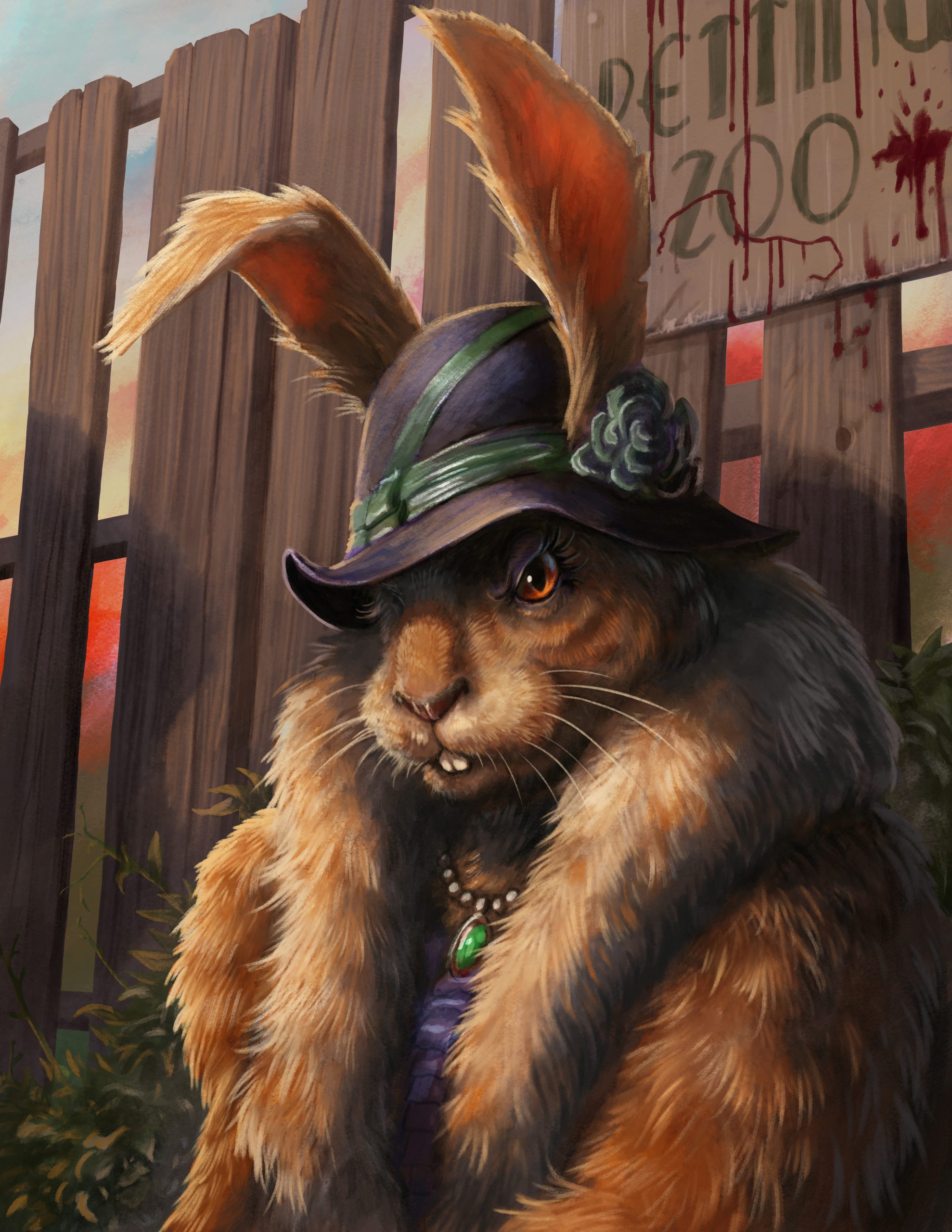
Even a game focused on comedy can benefit from a little horror. In Zoo Mafia, an ordinary community event could become increasingly strange as familiar animal characters begin behaving in ways that make no sense. In Aether Skies, an airship crew might discover that the storm surrounding their vessel is not merely weather, but something that has been following them for days. The setting changes, but the underlying principles remain the same: establish something familiar, introduce an unsettling change, limit easy escape, and give the characters meaningful choices.
For GMs, the most important lesson is that horror doesn’t require constant danger or an endless supply of monsters. Sometimes it comes from an ordinary person acting strangely, a familiar place becoming unfamiliar, or the creeping realization that the characters have nowhere else to go.
Closing the Halloween Week Series
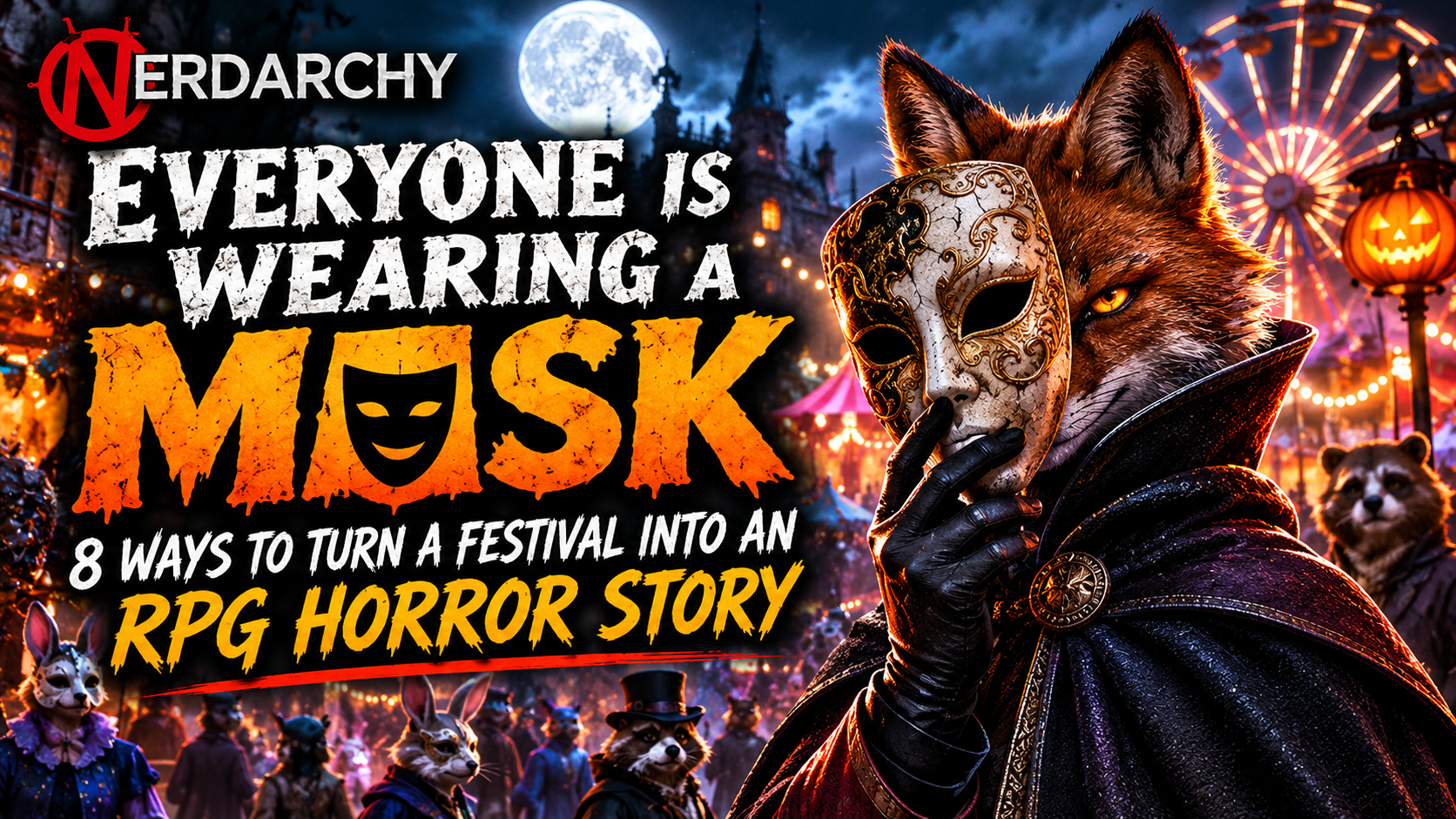
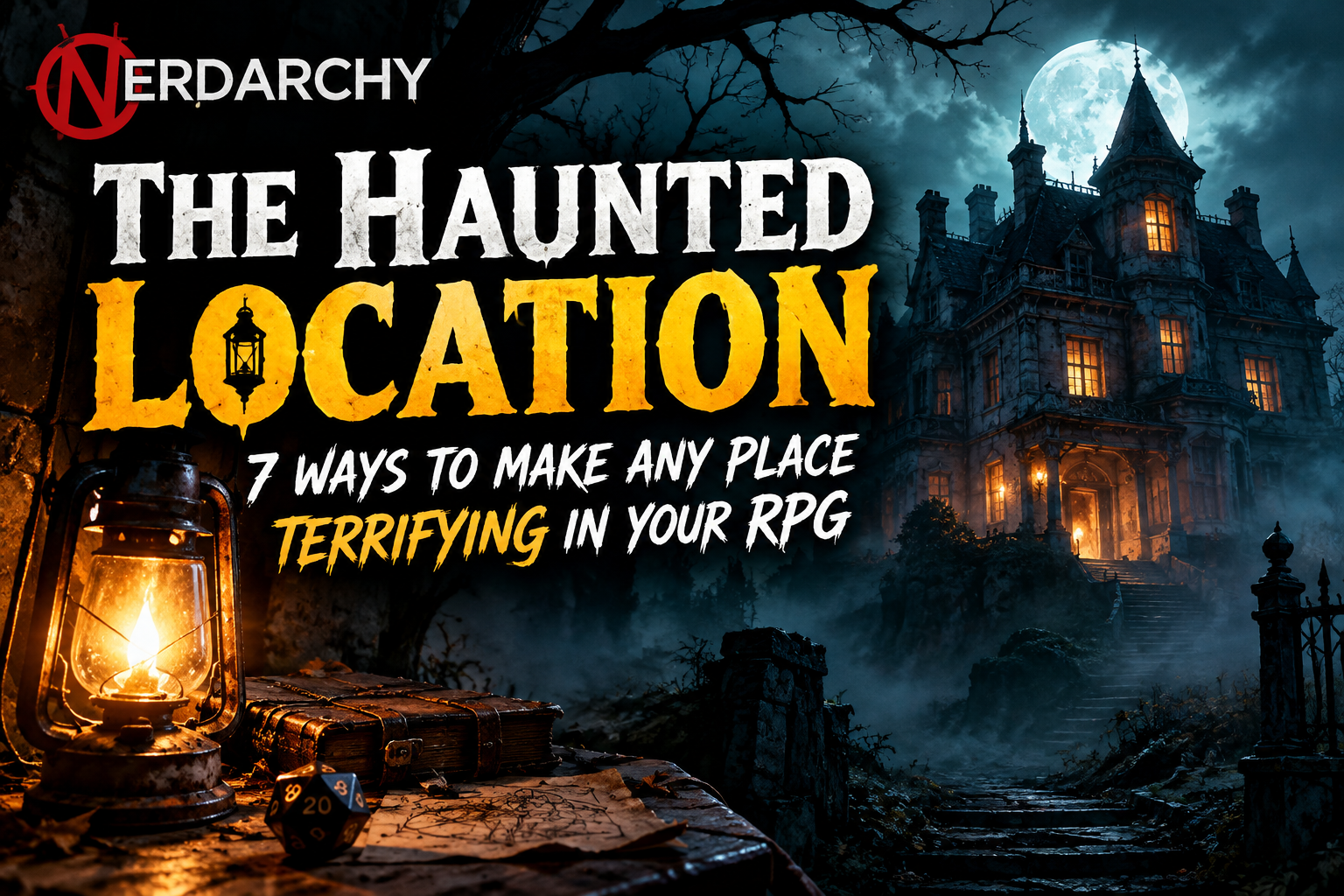
Over the course of this Halloween week series, we’ve explored several ways to bring horror into tabletop roleplaying games. We’ve looked at haunted environments, mysteries involving masked revelers, unsettling festivals, strange creatures, and the challenges of surviving when the world itself becomes hostile. Each approach offers something different, but they all share one important idea: horror works best when it gives players something to care about before putting it in danger.
You don’t need to abandon your usual campaign, switch systems, or build an entirely new world to create a memorable horror experience. A few carefully chosen details, a community with something to lose, and a mystery that keeps players asking questions can transform an ordinary session into something unforgettable.
And that’s the real trick of horror in RPGs. The goal isn’t simply to scare the characters. It’s to give the players a reason to remember what happened long after the adventure is over.
Stay Nerdy!!

No Comments