




The Night the Zoo Went Dark: A Halloween Mystery for Zoo Mafia
Halloween is a night when people expect strange things to happen. Costumes hide familiar faces, shadows seem a little darker, and everyone has an excuse to behave in ways they normally wouldn’t. It’s also an excellent opportunity for a criminal organization to make a move while everyone else is distracted by candy, decorations, and spooky festivities. After all, when half the population is wearing a disguise, how difficult can it really be to sneak a few criminals into a place they don’t belong?
Welcome to Halloween in Zoo Mafia!
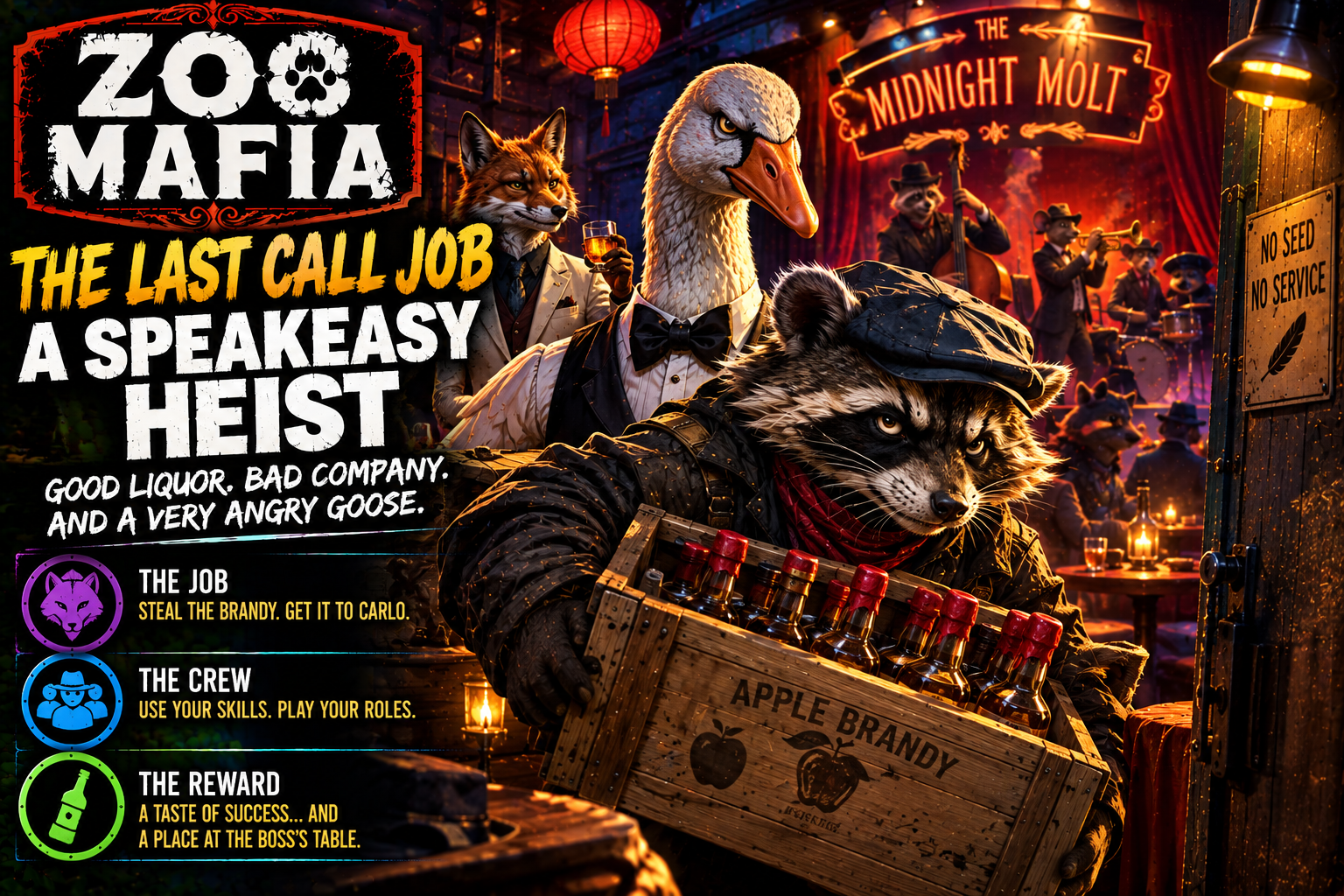
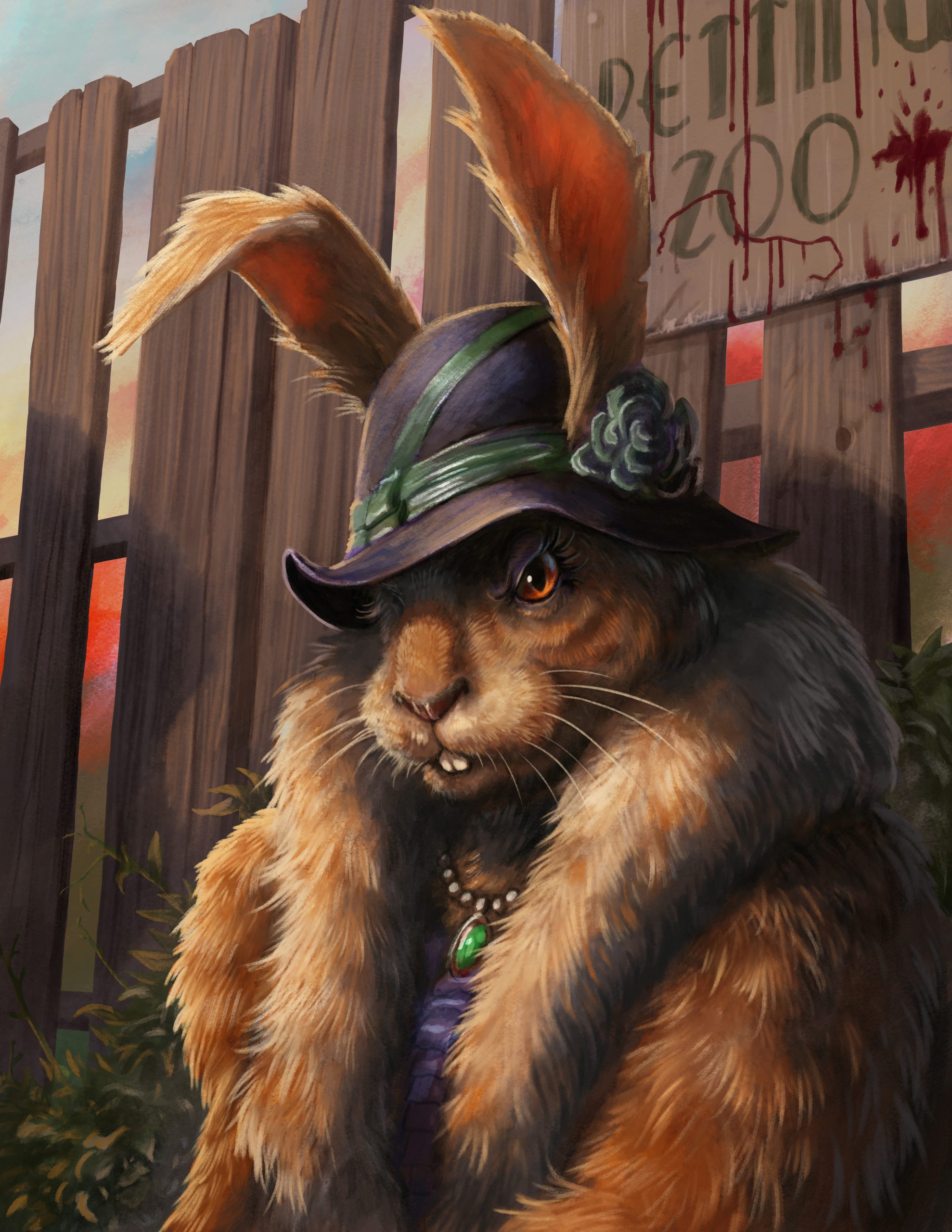
For this installment of Nerdarchy’s Halloween week, we’re heading into the world of anthropomorphic animals, organized crime, shady deals, and criminal ambition. Halloween is practically made for a game like Zoo Mafia, where disguises, deception, rival gangs,

Jovan Ukropina‘s illustration of Stingy Jack, a man who is considered for the inventor of Halloween pumpkin carving.
and questionable business arrangements are already part of the fun. What better time to plan a heist than when everyone is expecting a little mischief?
But this isn’t just an adventure idea for Zoo Mafia. A Halloween-themed mystery or heist can work in almost any tabletop RPG. Whether your characters are fantasy adventurers infiltrating a masquerade ball, modern investigators chasing a criminal organization, science fiction smugglers stealing classified technology, or a group of anthropomorphic animals trying to climb the criminal ladder, the ingredients are the same: a valuable target, competing interests, suspicious characters, and a plan that is almost certainly going to go wrong.
Let’s take a look at how to build a Halloween mystery your players won’t forget.
A Perfect Night for a Criminal Enterprise
The streets are decorated with pumpkins, storefronts are covered in cobwebs, and costumed citizens are wandering everywhere. Children are collecting candy, adults are attending parties, and the local authorities are busy keeping an eye on the usual Halloween troublemakers.
It’s the perfect cover for a criminal operation.
A valuable item has disappeared from a supposedly secure location, and several criminal organizations are suddenly interested in finding it. Nobody knows exactly who took it, but everyone has a theory. Some believe a rival gang is responsible. Others suspect an inside job. A few particularly paranoid individuals are convinced the entire theft is a setup designed to eliminate anyone foolish enough to get involved.
The party is brought into the situation because someone needs their particular talents. Maybe they’re trusted members of a crew, hired specialists, undercover investigators, or simply the unlucky individuals who happened to be standing nearby when everything went wrong.
For Zoo Mafia, the stolen item could be a ledger containing the names of corrupt officials and criminal associates, a collection of valuable jewels, a shipment of contraband, or an object that could shift the balance of power between rival animal crime families.
The important thing is that multiple groups want the same thing, and nobody is being completely honest about why.
The Setup: The Halloween Heist
Here’s the scenario.
Every year, the city hosts a massive Halloween celebration known as the Midnight Masquerade. The event takes place in a sprawling entertainment district filled with costume contests, street performers, food vendors, haunted attractions, and parties that continue well into the night. Everyone wears a mask or costume, making it nearly impossible to identify someone by appearance alone.
This year, one of the city’s wealthiest residents has arranged a private exhibition during the celebration. The centerpiece is an extremely valuable collection of rare artifacts, jewels, and historical treasures. Security is tight, invitations are limited, and several prominent members of the criminal underworld have found ways to attend.
Unfortunately, someone has stolen the most valuable item in the collection before the exhibition even begins.
The owner wants it recovered quietly. The police have been informed, but the situation is politically sensitive, and nobody wants the theft becoming public knowledge. Several criminal organizations have already heard rumors about the missing treasure, and at least one of them believes the theft was committed by a rival crew.
The party receives an offer: find the missing item, identify the thief, and return the treasure before midnight. The reward is substantial, but the client is very clear about one thing. Nobody can know they were involved.
Of course, the characters are not the only ones looking.
Building the Mystery: Everyone Has Something to Hide

A good mystery needs more than a missing object. It needs people with reasons to lie, conflicting information, and clues that allow players to work out what actually happened.
The Midnight Masquerade provides an excellent opportunity to introduce a collection of interesting NPCs. Each one should have a motive, a secret, and some connection to the missing treasure.
The Wealthy Collector: The owner of the stolen item insists that it was taken by a professional thief. They claim the treasure is worth a fortune and that its disappearance would ruin their reputation. What they aren’t telling anyone is that the item may have been acquired illegally in the first place. If the police investigate too closely, the collector could lose much more than a valuable possession.
The Rival Gang Leader: A powerful criminal figure has arrived at the celebration wearing an elaborate costume. They insist they’re there to enjoy the festivities, but their people have been asking questions about the missing treasure. They may genuinely want it recovered, or they might be hoping to use the situation to discredit a rival organization.
The Security Chief: The individual responsible for protecting the exhibition claims that every security measure was functioning properly when the theft occurred. They know more than they’re admitting, however. Perhaps someone paid them to look the other way, or perhaps they are concealing an embarrassing mistake that allowed the thief to get inside.
The Mysterious Partygoer: Nobody seems to know who invited this guest, but they appear to know everyone. They have information about the theft, the collector, and several of the criminal organizations involved. They might be an undercover investigator, an independent thief, or someone who has been manipulating events from the beginning.
The Inside Contact: Someone working at the exhibition has access to information the party needs. They might be a bartender, a musician, a caterer, a security guard, or an employee responsible for maintaining the exhibits. They are willing to help, but they want something in return. That something might be money, protection, or assistance escaping from the criminal organization that has been threatening them.
These characters give the GM several avenues for investigation and roleplaying. Players can question them, follow them, bargain with them, threaten them, or attempt to discover what they’re hiding. More importantly, none of them needs to be completely innocent or completely guilty.
A good mystery becomes much more interesting when the characters discover that everyone involved has something to lose.
The Clues: Let the Players Work for It
One of the biggest mistakes GMs make when running mysteries is hiding all the important information behind a single successful skill check. If the party fails that roll, the adventure stalls, and everyone spends the next twenty minutes trying to figure out what they’re supposed to do.
Instead, give the players multiple ways to discover the important information. Different clues should point toward the same conclusion, while optional discoveries reveal additional details or shortcuts.
For the Halloween heist, consider introducing clues like these:
A broken piece of costume jewelry is discovered near the display case. It matches a distinctive costume worn by someone at the party, but the person wearing it insists they’ve never been near the exhibition.
A security recording shows the thief entering the room several minutes before the theft was reported. Unfortunately, the footage reveals that the person appears to be wearing the same costume as three other guests.
A member of the cleaning staff remembers seeing someone carrying a large decorative pumpkin through a restricted hallway. The pumpkin was much heavier than it should have been.
An anonymous message warns the party that the missing treasure is not the only thing that disappeared from the exhibition. A second item was taken, but nobody has reported it missing.
A bartender overheard two guests arguing about a shipment that was supposed to arrive before midnight. One of them mentioned that the Halloween celebration provided the perfect distraction.
None of these clues needs to solve the entire mystery. Instead, they give players pieces of a larger picture. The broken jewelry might identify someone who had access to the display. The security recording could reveal that the thief had an accomplice. The missing second item might suggest that the real target was something other than the treasure everyone is searching for.
Let players connect the dots. When they develop a theory, give them opportunities to test it.
And if they come up with a clever solution you never anticipated, consider rewarding that creativity rather than forcing them back onto the path you originally planned.
The Twist: The Treasure Was Never the Real Target

Here’s where the adventure gets interesting.
The missing treasure is valuable, but it isn’t what the thief actually wanted. Hidden inside the display case is a small ledger containing information about several prominent members of the criminal underworld. It records payments, secret agreements, bribes, and business arrangements that could expose an entire network of corruption.
The thief wasn’t interested in the jewels. They wanted the ledger.
The theft was arranged to look like an ordinary robbery, and the missing treasure was taken as a distraction. Unfortunately, someone else discovered the real purpose of the operation and decided to use the chaos to their advantage.
Now the party has a much bigger problem. Several criminal organizations want the ledger, the collector wants to keep its existence secret, and someone is willing to do almost anything to prevent the information from becoming public.
The party might discover that their original employer knew about the ledger all along. The rival gang leader might actually be trying to protect the people listed inside. The mysterious partygoer could be the person who arranged the theft in the first place.
Suddenly, the characters aren’t simply recovering stolen property. They’re holding information that could change the criminal landscape of the entire city.
This is an excellent opportunity to introduce a difficult decision. Do the characters return the ledger to their employer, sell it to the highest bidder, use the information to gain influence, or expose everyone involved?
There isn’t necessarily a correct answer, and that’s exactly what makes the situation interesting.
When the Lights Go Out
Every good Halloween adventure needs a moment when everything goes wrong.
As the celebration reaches its peak, the lights suddenly go out across the exhibition district. The music stops, the crowd begins shouting, and emergency lighting flickers to life. Somewhere nearby, an explosion sends smoke pouring into the street.
When the lights return, several things have happened simultaneously.
The treasure has disappeared again. The security chief is missing. Someone has been injured, and a member of the rival gang has been found unconscious beside the exhibition entrance.
The characters now have to decide what to do. They might pursue the thief, protect the injured individual, search for the missing security chief, or attempt to recover the ledger before it disappears for good.
This is where the adventure can shift from investigation into a chase, a fight, or a complicated negotiation. The party’s earlier decisions should influence what happens next. If they made friends with the security staff, perhaps someone helps them escape through a service corridor. If they threatened the rival gang leader, that organization might arrive looking for revenge. If they discovered the identity of the thief, they may have a chance to intercept them before they escape.
The goal isn’t to punish the players for making choices. It’s to let those choices create consequences that make the adventure feel alive.
Making Halloween Mysteries Work in Any RPG
Although this scenario is designed with Zoo Mafia in mind, the structure works in almost any tabletop roleplaying game.
In a fantasy campaign, the Midnight Masquerade could become a royal Halloween ball where a magical artifact disappears. The characters might be hired by a noble, investigate rival political factions, and discover that the theft was part of a plan to expose a conspiracy within the kingdom.
In a modern crime campaign, the exhibition could take place at a wealthy collector’s private mansion. The characters might be undercover investigators, professional thieves, or members of a criminal organization trying to recover stolen information before it reaches the authorities.
In a science fiction RPG, the Halloween celebration could take place aboard a massive space station. The missing treasure might be an experimental power source, an alien artifact, or classified technology capable of changing the balance of power between competing corporations.
Even a traditional dungeon adventure could use the same structure. A group of treasure hunters might discover that several factions are searching for the same relic, and the party must determine who stole it before the competing groups turn on one another.
The important elements remain consistent: a valuable target, several interested parties, clues that reveal conflicting information, and a complication that changes the nature of the mission.
Halloween simply provides an excellent excuse to add disguises, suspicious costumes, unusual celebrations, and plenty of opportunities for deception.
A Few More Halloween Complications for Your GM Toolkit

If you want to make the adventure even more unpredictable, consider introducing a few complications during the session.
The party discovers that one of their own contacts is wearing someone else’s costume and has been impersonating them throughout the evening. A valuable witness disappears just as the characters are about to question them. The thief leaves behind a message suggesting that the party has been hired by the wrong person. A rival gang offers to help recover the treasure, but only if the characters agree to betray their employer.
You could even have the characters discover that the original theft was a setup designed to lure them into the exhibition. Perhaps someone knows their reputation and wants to recruit them, frame them, or eliminate them.
These complications don’t all need to happen. Choose the ones that fit your group and let the players’ decisions determine how the night unfolds.
One particularly fun option for Zoo Mafia is to make the identity of the thief a surprise. Perhaps the culprit is a seemingly harmless animal who has been overlooked by everyone else. The tiny mouse working as a server might be the mastermind behind the entire operation, while the enormous bear security guard is simply trying to keep everyone from discovering how badly he messed up.
Sometimes the most dangerous criminal in the room is the one nobody thinks to suspect.
Halloween Is the Perfect Time for a Little Criminal Mischief
Halloween gives tabletop RPGs an opportunity to explore a different kind of adventure. Instead of focusing entirely on monsters, combat, or supernatural threats, you can create tension through secrets, deception, competing motives, and characters who aren’t quite what they appear to be.
For Zoo Mafia, these themes are already part of the setting’s appeal. Costumes and disguises make it easier to hide identities, crowded celebrations provide cover for criminal activity, and rival organizations have plenty of reasons to take advantage of the chaos.
But the same ideas work in fantasy adventures, modern mysteries, science fiction campaigns, and just about any RPG where characters have to deal with people who want something they shouldn’t have.
The next time your players attend a festival, masquerade, or crowded celebration, consider giving them a mystery to solve. Put a valuable item in the wrong hands, introduce a few suspicious characters, and let the players decide who they can trust.
Just remember to give them a way out when the lights go dark.
And if they’re playing Zoo Mafia, maybe remind them that the police aren’t the only ones watching the streets tonight. Rival crews have their own plans, and Halloween is far from over.
Tomorrow, our Halloween week continues with a different kind of horror. We’ll explore how to turn a seemingly harmless festival into a nightmare, where everyone wears a mask, nobody remembers the rules, and the characters might discover that the celebration isn’t meant to end at sunrise.
Until then, keep your friends close, your enemies guessing, and your Halloween candy somewhere the mob can’t find it.
Until Next Time, Stay nerdy!!

No Comments