




What The Princess Bride Teaches Dungeon Masters About Building Memorable NPCs
In my opinion, The Princess Bride is a perfect movie.
I honestly can’t think of a single thing I would change about it. It has adventure, comedy, romance, sword fights, revenge, memorable villains, unforgettable heroes, and perhaps the most quotable dialogue ever put on film. I quote it all the time, and if someone suggested watching it tonight, I wouldn’t hesitate. I’ve seen it more times than I can count, and somehow it never gets old.
That’s an incredible achievement.
As a Dungeon Master, I’ve often wondered why.
The answer isn’t just the story. It isn’t the action, either. It’s the characters.
Nearly every person who appears on screen steals the scene they’re in. Some of them only have a handful of minutes of screen time, yet decades later people still remember them by name, quote their dialogue, and smile when they think about them.
That’s exactly the kind of NPC every Dungeon Master hopes to create.
The wonderful thing is that The Princess Bride shows us how.
Every NPC Wants Something

One of the reasons every character in The Princess Bride feels alive is because each of them has a clear motivation.
Inigo Montoya isn’t simply “the swordsman.” His entire life has been devoted to avenging his father’s murder.
Vizzini believes he is always the smartest person in the room.
Fezzik simply wants friends who appreciate him.
Westley will do anything for Buttercup.
Even Prince Humperdinck isn’t evil for the sake of being evil. He has political ambitions that drive every decision he makes.
None of these characters exist solely to move the plot forward.
They have goals that would exist even if the audience wasn’t watching.
Too many NPCs in Dungeons & Dragons exist only to hand out quests or answer questions before fading into the background.
Instead, ask yourself one simple question.
What does this character want today?
The answer doesn’t have to be world-changing. Maybe the tavern owner dreams of buying the neighboring building. Perhaps the town guard desperately wants a promotion. A wizard might be obsessed with proving an ancient theory. Even small motivations make characters feel like real people instead of exposition machines.
Flaws Make Characters Lovable
Nobody in The Princess Bride is perfect.
Inigo drinks too much.
Fezzik is gentle to a fault.
Vizzini’s arrogance constantly undermines his intelligence.
Miracle Max would rather argue with his wife than help save the kingdom.
Those imperfections are what make them memorable.
Many Dungeon Masters accidentally create NPCs who are too competent. Every sage knows every answer. Every king is endlessly wise. Every legendary hero is flawless.
Real people aren’t like that.
The NPCs players remember are usually the ones with quirks and shortcomings. They mispronounce words. They forget names. They become distracted by unusual hobbies. They have irrational fears or embarrassing habits that have nothing to do with the adventure.
Those details make them feel human.
Great Dialogue Is Better Than Great Descriptions

Think about how many lines from The Princess Bride have become part of popular culture.
“Hello. My name is Inigo Montoya.”
“As you wish.”
“Inconceivable!”
“You keep using that word. I do not think it means what you think it means.”
Most of us can hear those lines in our heads without even trying.
Dungeon Masters sometimes spend several minutes describing an NPC’s appearance while giving almost no thought to how they actually speak.
Players are far more likely to remember a distinctive voice, a favorite phrase, or an unusual manner of speaking than the exact color of someone’s cloak.
You don’t need to become a professional voice actor.
Simply give important NPCs a verbal signature.
Perhaps a dwarf constantly compares everything to stonework. A merchant ends every sentence by reminding people that time is money. An elderly wizard refuses to answer questions directly, preferring riddles that only make sense hours later.
Players begin recognizing characters from a single sentence.
That is powerful storytelling.
Every Supporting Character Gets Their Moment
One of the remarkable things about The Princess Bride is that nobody feels wasted.
Even characters with very little screen time receive moments that define who they are.
The Albino is unsettling despite appearing only briefly.
The Ancient Booer becomes unforgettable because of a single running joke.
The Impressive Clergyman appears for only a few minutes and somehow remains one of the funniest parts of the entire film.
None of these characters overstay their welcome.
They arrive, accomplish exactly what the story needs, and leave behind a lasting impression.
Dungeon Masters often assume memorable NPCs require dozens of sessions.
Sometimes all they need is one great scene.
The eccentric shopkeeper who insists every magic item has feelings.
The retired adventurer who refuses payment because the party reminds him of his old companions.
The goblin courier who somehow knows everyone in the kingdom.
One memorable interaction is often enough for players to become invested.
Relationships Matter More Than Statistics

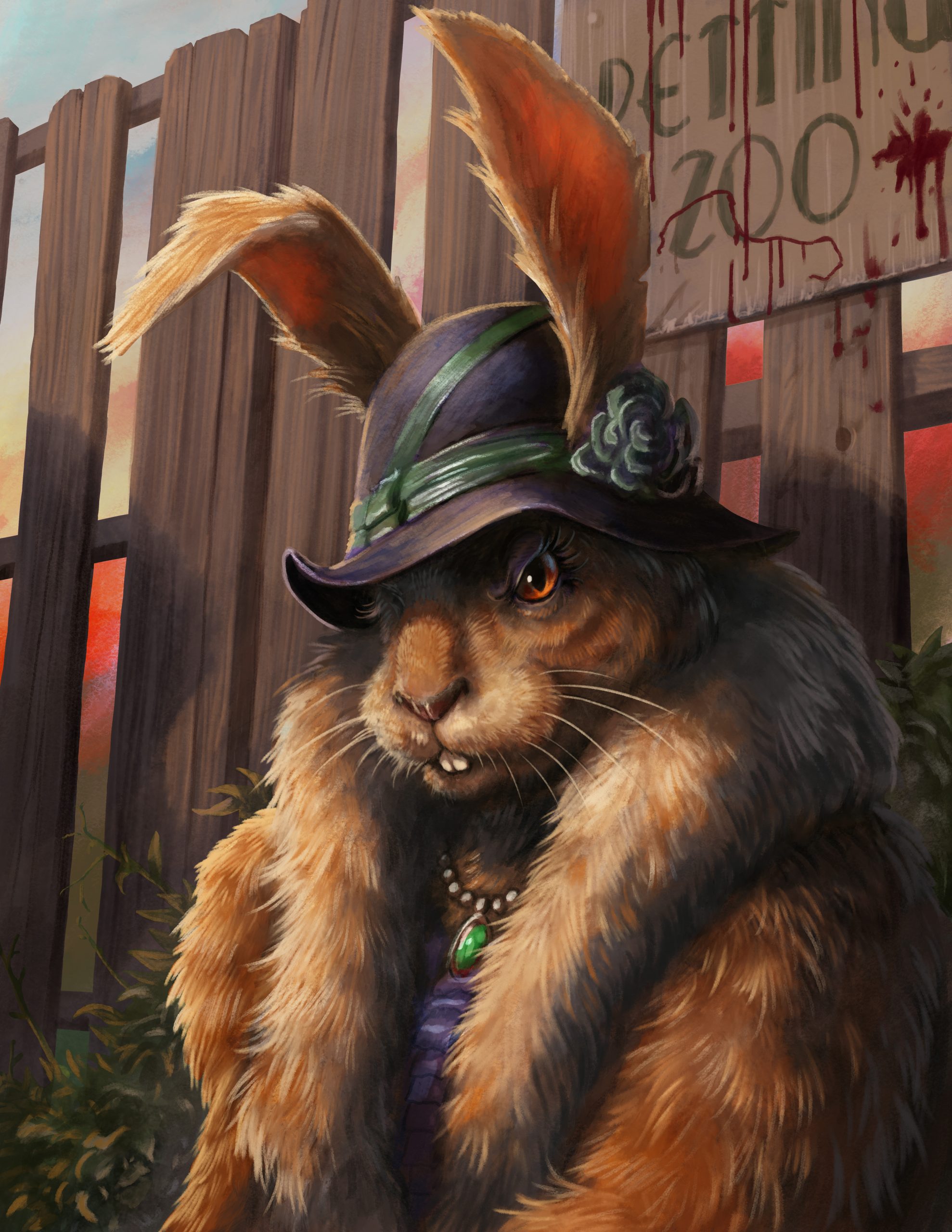
Oreamnos, or goatfolk, g0t the spotlight in Nerdarchy’s Patreon rewards for June 2018. A new player race, monster, magic items, NPC, organization, background and complete adventure ready to drop into your 5E games awaits! One of these unusual folk would certainly make a memorable NPC. [Art by Nelson Vieira]
People love him because of his loyalty.
Fezzik isn’t memorable because he’s strong.
He’s memorable because he’s kind.
Westley isn’t defined by his combat abilities.
He’s defined by his devotion.
Dungeons & Dragons sometimes falls into the trap of measuring NPCs by what they can do instead of who they are.
Players rarely ask about an NPC’s Armor Class.
They remember how that character treated them.
The innkeeper who quietly packed extra food for the journey.
The old knight who admitted he was afraid before the final battle.
The young stable hand who looked at the adventurers with absolute admiration.
Those emotional connections matter far more than impressive statistics.
Let the Players Love Your NPCs
One of the greatest compliments a Dungeon Master can receive is hearing players talk about NPCs years after the campaign ends.
Not because those characters had the highest Challenge Rating.
Not because they possessed legendary magic items.
Because they felt real.
Because they made the players laugh.
Because they inspired them.
Because losing them mattered.
That is exactly what The Princess Bride accomplishes.
Every character feels like they had a life before the movie began and will continue living after it ends.
The world feels larger because everyone inside it has dreams, flaws, friendships, and stories of their own.
The next time you create an NPC, spend less time deciding what level they are.
Spend more time deciding who they are.
Because long after your players have forgotten the villain’s hit points or the treasure they recovered from the dungeon, they’ll still remember the old swordsman with one impossible dream, the giant who simply wanted a friend, or the eccentric merchant who always greeted them with the same familiar smile.
That’s the real magic of The Princess Bride.
It reminds us that great adventures are remembered because of the people we meet along the way.
Thanks for reading. Until Next Time, Stay Nerdy!!

No Comments