




The Aegis: Athena’s Divine Shield Reimagined as a D&D Artifact
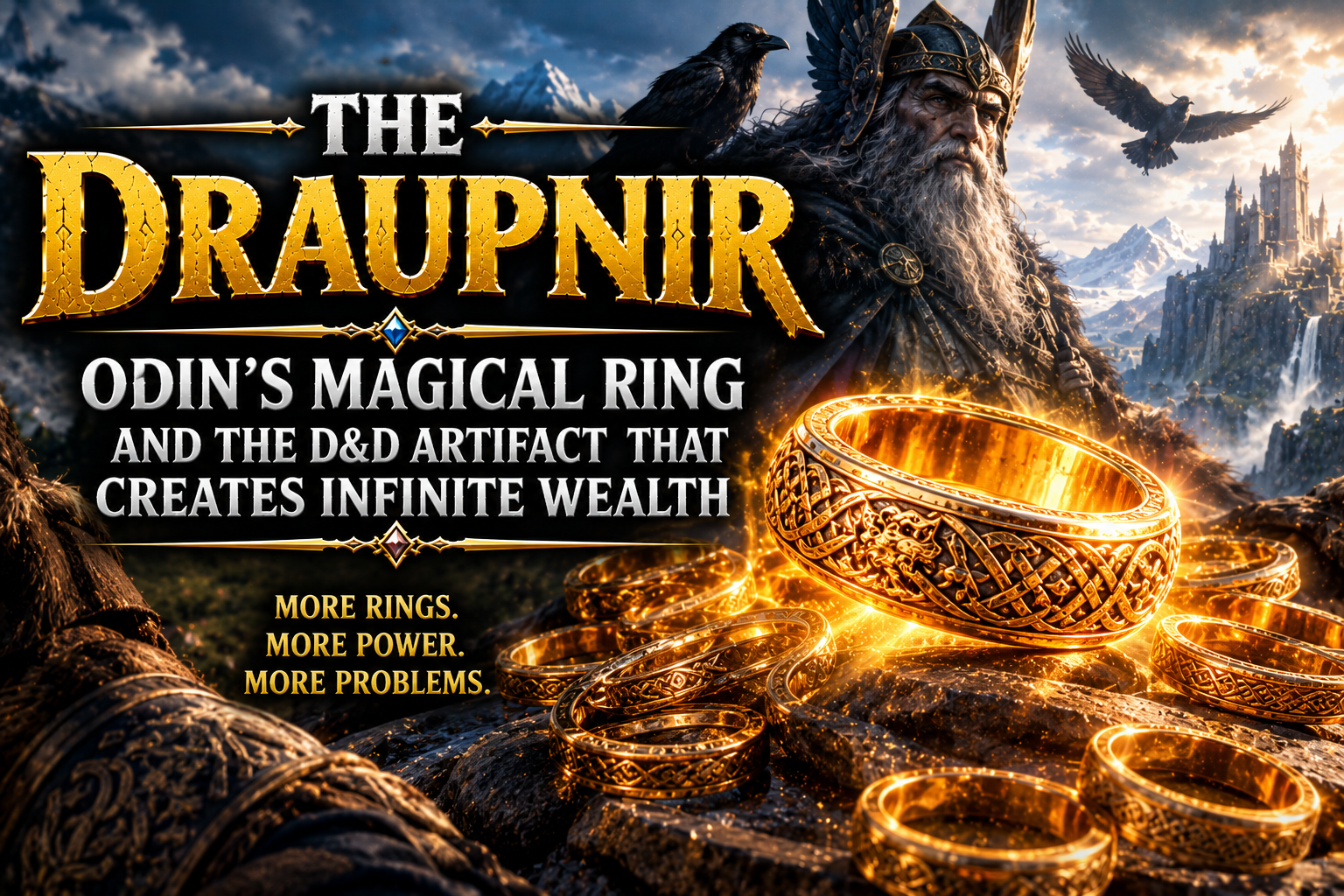
In our last installment of Legendary Artifacts Reimagined, we explored Draupnir, Odin’s magical ring, an extraordinary treasure that creates eight new rings every ninth night. What begins as a seemingly simple source of endless wealth can quickly become a force capable of reshaping kingdoms, destabilizing economies, and attracting the attention of gods and mortals alike. Draupnir reminded us that an artifact doesn’t need to destroy a city to change the world. Sometimes all it takes is a steady supply of gold and enough  people willing to fight over it.
This time, we’re turning from wealth to protection, from a ring that creates more treasure to a divine object associated with one of the most formidable figures in Greek mythology. The Aegis is the legendary shield of the gods, most famously associated with Athena, goddess of wisdom and warfare. It is an object that offers protection, inspires terror, and represents divine authority. In the hands of a D&D character, the Aegis could make its wielder nearly impossible to intimidate or defeat. However, carrying the symbol of a goddess into a world full of ambitious kings, jealous deities, and monsters that fear nothing could make that protection come at a considerable price.
The Mythology Behind the Aegis
The Aegis has a fascinating history in Greek mythology, in part because its description and associations vary between ancient sources. It is commonly imagined as a magnificent shield, but it is also described as a protective garment or breastplate. The object is associated with Zeus and Athena, with Athena particularly famous for bearing it into battle.
In Homer’s Iliad, Zeus possesses the Aegis and uses it as an instrument of divine power. When he shakes it, armies tremble, courage falters, and the battlefield itself seems to respond to the will of the king of the gods. Athena also bears the Aegis, which is described with a fearsome fringe and the image of the Gorgon’s head. That terrifying visage connects the artifact to Medusa and the supernatural dread her appearance inspires.
The Gorgon image is one of the most recognizable features associated with the Aegis. Rather than simply offering physical protection, the object becomes a weapon of psychological and supernatural intimidation. It is a divine warning made visible: the person carrying this object is not an ordinary warrior, and those who stand against its bearer may be challenging the authority of a god.
Some later traditions connect the Aegis with the hide of a divine goat, often identified with Amalthea, the creature associated with nurturing the infant Zeus. Other versions connect it with the slaying of a monstrous figure named Pallas. These variations offer a Dungeon Master several ways to establish the artifact’s origin without needing to force every mythological tradition into one definitive explanation.
For a D&D campaign, the Aegis is particularly useful because it combines several ideas that work wonderfully at the gaming table. It is a shield, but it is also a symbol of authority. It protects its bearer, but it can frighten enemies. It is associated with a goddess of wisdom and warfare, meaning its power might depend as much on the judgment of its wielder as on their ability to survive a sword strike.
Reimagining the Aegis as a D&D Artifact
A legendary shield should certainly offer extraordinary protection, but simply granting an enormous bonus to Armor Class would miss much of what makes the Aegis interesting. Its mythological identity suggests something more substantial: an artifact that protects its bearer while projecting divine authority onto the battlefield.
Imagine a shield crafted from divine hide, reinforced with celestial metal and decorated with the terrifying visage of a Gorgon. Its surface shifts subtly as though alive, and its edges shimmer with a faint golden light. When raised in defense, the Aegis creates a protective aura that can shield allies nearby. When presented against an enemy, the Gorgon’s face seems to move, its expression changing into something uniquely horrifying to whoever looks upon it.
The Aegis might provide its wielder with powerful defensive benefits, granting resistance to damage, protection against spells, or the ability to interpose its divine force between an ally and an incoming attack. Once per day, the bearer could invoke its full power to create a temporary sanctuary around nearby companions, turning aside attacks and disrupting hostile magic. The shield would not make its wielder invulnerable, but it could give an entire adventuring party a chance to survive encounters that would otherwise overwhelm them.
Its offensive power should be just as distinctive. The bearer might raise the shield and unleash a wave of divine terror, forcing enemies to resist magical fear or become unable to approach. Particularly powerful creatures might withstand the effect, but even they could recognize the Aegis as something beyond mortal craftsmanship.
Another possibility is that the shield can reveal the true nature of threats. Its Gorgon image might react to shapeshifters, illusions, hidden supernatural creatures, or enemies concealing their intentions. This would connect the artifact to Athena’s association with wisdom, making it useful outside combat as well as during it.
There is an important distinction between the Aegis and an ordinary magical shield. It should not simply make its owner harder to hit. It should change how enemies approach a confrontation. Opponents might hesitate before attacking, armies might lose their nerve, and powerful villains might reconsider whether their plans are worth the cost of challenging the artifact’s bearer.
The Challenge for Players: Carrying the Authority of a Goddess

The titular enemy in Enemy at the Gate conceals what’s going on in their cortex with a magic ring. It’s a stretch, I know. [Art by Kim Van Deun]
But the Aegis is not just another piece of equipment. It carries a history and an identity that could make its possession complicated.
A character who carries the shield might find that people recognize it. Priests could treat the bearer as an agent of Athena, while warriors might challenge them to prove they are worthy of such a legendary object. Enemies of the goddess could see the character as a target, regardless of whether they have any connection to her worship. Even allies might begin expecting the bearer to behave like a champion of divine wisdom and warfare.
That creates an interesting roleplaying challenge. What happens when a character who values mercy carries an artifact associated with terrifying divine power? What if the bearer is a reckless fighter who prefers solving problems with violence? Does the Aegis respond to the character’s intentions, or does it judge them according to standards they do not understand?
The shield might also create difficult tactical decisions. Its greatest power could be protecting others, forcing the bearer to choose between defending themselves and stepping into danger for an ally. A character who normally charges into combat might need to rethink their approach when the Aegis can protect an entire group by holding a particular position. The artifact could reward teamwork and thoughtful positioning rather than simply making its owner tougher.
Perhaps the most interesting challenge comes when the characters encounter someone who has a legitimate claim to the Aegis. A temple might demand its return, a divine champion could challenge the party, or a desperate city might beg the adventurers to leave the shield behind as its only hope against an approaching army. The characters must decide whether possession is the same thing as ownership, and whether being powerful enough to carry an artifact means they are entitled to keep it.
Challenges for Dungeon Masters: Protection Without Invulnerability
The Aegis presents a familiar design challenge for Dungeon Masters. How do you give characters an artifact that provides tremendous defensive power without making combat meaningless?
The answer lies in understanding what protection actually accomplishes. A shield that prevents damage does not necessarily prevent a character from being trapped, deceived, separated from their allies, or forced to make difficult decisions. The Aegis might protect its bearer from a dragon’s breath, but it cannot guarantee that the village behind them survives the attack. It might repel a magical assault, but it cannot prevent an enemy from collapsing the bridge beneath the party or taking hostages while the characters are distracted.
This is where the artifact becomes especially useful for encounter design. Rather than simply increasing the damage dealt by enemies, introduce situations in which the Aegis cannot solve every problem at once. The party might need to defend several locations simultaneously, protect civilians while fighting an overwhelming force, or decide which ally needs the shield’s protection most urgently.
The artifact’s fear effect also deserves consideration. If it can frighten every enemy on a battlefield without restriction, many encounters could become trivial. A more manageable approach would limit its strongest effect to a certain number of creatures, require a saving throw, and establish that particularly powerful beings can resist or overcome its influence. Some creatures might even be immune to fear, creating interesting exceptions without diminishing the shield’s overall importance.
There is also an opportunity to make the Aegis a source of adventure rather than simply a reward. Perhaps its power attracts creatures that oppose Athena, or its presence awakens ancient guardians sworn to protect it. A villain might seek the shield not because they need better protection, but because possessing the Aegis would allow them to claim divine legitimacy. A ruler who displays it before an army could convince thousands of soldiers that the gods have chosen their side.
The most important consideration is that the Aegis should feel powerful. Players who obtain a legendary artifact expect something extraordinary, and the Dungeon Master should give them opportunities to experience that power. The challenge is not to find excuses for the shield to fail, but to create situations where even divine protection cannot make every decision easy.
The Aegis as a Symbol of Divine Authority
One of the most compelling ways to use the Aegis in a D&D campaign is to make its reputation just as important as its magical abilities.
Imagine a kingdom where the Aegis has been missing for centuries. Its absence has become part of the nation’s mythology, with generations of rulers claiming that its return will signal the restoration of divine favor. When the adventurers recover it, they suddenly become central figures in a political and religious struggle. Different factions might insist the shield belongs to the crown, the temple, a particular bloodline, or the person who proves worthy of Athena’s blessing.
The characters could find themselves deciding who should wield it, even if they never intended to surrender it. A young ruler might be a genuinely good person but lack the experience to understand the responsibility. A powerful general might be the best military choice but have little interest in wisdom or restraint. A priest might argue that the shield belongs in a temple rather than on a battlefield.
This conflict becomes even more interesting if the Aegis responds to its bearer. Perhaps the shield’s full power only awakens when its wielder acts with wisdom, protects those who cannot protect themselves, or demonstrates courage in the face of overwhelming danger. Someone who uses it to intimidate innocent people might find its power fading, while a character who risks everything to defend others might discover abilities they never knew it possessed.
You could also introduce an antagonist who has created a false Aegis, using a replica to convince the public that they have divine approval. The characters must expose the deception, but doing so could destabilize a kingdom that has built its entire political identity around the supposed return of the sacred shield.
For a campaign involving gods and divine politics, the Aegis could even become a bargaining piece between the gods themselves. Perhaps Zeus wants it returned to Olympus, Athena believes it belongs in the mortal world, and another deity sees an opportunity to claim its power. The adventurers might discover that the shield’s absence is not an accident but the result of a disagreement among beings whose arguments can reshape the world.
Adventure Hooks for the Aegis
The Aegis can drive an adventure in several different directions. It might be hidden inside a ruined temple guarded by creatures that were once its protectors, or it could be carried by a legendary warrior who has spent centuries defending a city that no longer remembers why it needs protection.
Another possibility is that the shield has been stolen from a temple dedicated to Athena. The characters are hired to retrieve it, only to discover that the thief is using its power to defend a community from a tyrannical ruler. Returning the Aegis might satisfy the temple, but doing so could leave innocent people without their only protection. The party must decide whether the artifact’s rightful ownership matters more than the lives currently depending on it.
The shield could also appear during a war. One army believes its return guarantees victory, while the opposing side is convinced that the artifact must be destroyed before it can be used against them. The characters might be hired to recover it, protect its bearer, or prevent either side from gaining control. Once the Aegis enters the conflict, the party may discover that the war itself was engineered to bring the artifact into the open.
For a more personal story, the shield could choose a character who has repeatedly put themselves in danger to protect others. Its appearance might be a blessing from Athena, but it could also be a test. The character is now expected to defend people who might not deserve it, stand against threats they cannot defeat, and make decisions that affect far more than their adventuring companions.
The Aegis becomes especially memorable when its protection creates responsibility rather than simply removing danger.
The Aegis and the Other Legendary Artifacts

A ring of mind shielding as seen in the fifth edition Dungeons & Dragons Dungeon Master’s Guide. [Image courtesy Wizards of the Coast]
Draupnir offers another interesting contrast. Odin’s ring creates wealth that can attract entire kingdoms, while the Aegis represents the authority that might be used to protect or control those kingdoms. A ruler who possesses both could finance an army and defend it with divine power, potentially becoming a threat to the balance of the world.
The Ark of the Covenant and the Aegis also share a connection through divine presence. Both are sacred objects whose significance extends beyond their physical construction. Their possession could create conflicts involving temples, rulers, champions, and gods. A campaign featuring both artifacts might explore what happens when two different divine traditions compete for influence in the same world.
Even the Ring of Gyges offers an intriguing contrast. One artifact allows someone to act without being seen, while the other makes its bearer an unmistakable symbol of divine power. A character carrying the Aegis cannot easily hide behind anonymity, and someone wearing the Ring of Gyges might discover that invisibility is not enough to escape the attention of a god.
Making the Aegis Matter in Your D&D Campaign
The Aegis is more than a magical shield. It is a symbol of protection, wisdom, warfare, and divine authority, all wrapped into one legendary object. Its power can change the outcome of a battle, but its reputation can change the course of kingdoms. A Dungeon Master can use it as a treasure, a quest objective, a political bargaining piece, or a test of character.
For players, the Aegis offers an opportunity to become something more than a powerful adventurer. Its bearer might become a champion, a protector, or an unwilling symbol of a goddess’s influence in the mortal world. That responsibility can create just as many memorable moments as the shield’s defensive abilities.
The best part is that the Aegis does not need to make its wielder invincible. It only needs to make them believe that protecting others is worth standing against something far more powerful than themselves.
We’ve now explored artifacts that create wealth, alter destiny, inspire fear, and challenge the very nature of power. The Aegis adds another question to the collection: what does it mean to be worthy of the protection of the gods, and what responsibilities come with carrying that protection into the world?
In our next installment of Legendary Artifacts Reimagined, we’ll turn to another legendary object from the ancient world: the Gáe Bulg, the fearsome spear associated with the Irish hero Cú Chulainn. Its reputation is built not around defense or divine authority, but around a horrifying method of attack that makes surviving a wound from the weapon a challenge all its own. What happens when a D&D artifact is designed not merely to defeat an enemy, but to make escaping its consequences almost impossible?
Thanks for reading. Until Next Turn, Stay Nerdy!!



No Comments