




The Vampire Sommelier: What Does a Vampire Do When Adventurers Aren’t Around?
There are few creatures in Dungeons & Dragons with a more complicated relationship with blood than vampires. For most vampires, blood is food. It is sustenance. It is power. It is survival.
But after several centuries, perhaps one vampire has decided that simply drinking blood isn’t enough.
Perhaps blood deserves to be appreciated.
Welcome back to our series exploring what monsters do when they aren’t being encounters for adventurers. Last time, we visited the Mimic Furniture Maker, proving that not every mimic spends its existence pretending to be a treasure chest. This time, we’re raising a glass.
Or rather, we’re raising a goblet.
Because somewhere in a very expensive castle, a vampire is swirling a crystal goblet filled with blood and quietly judging its vintage.
Blood Is More Than Food
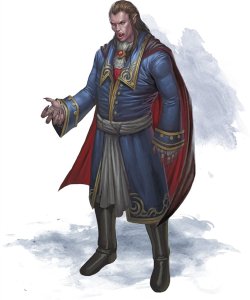
A vampire as seen in the fifth edition Dungeons & Dragons Basic Rules. [Image courtesy Wizards of the Coast]
Most people taste wine and talk about tannins, acidity, body, and finish.
The Vampire Sommelier does essentially the same thing with blood.
“Interesting. Very bold. A little metallic on the finish. Notes of iron, dark berries, and unresolved childhood trauma.”
The person sitting across the table is understandably uncomfortable.
The vampire is taking notes.
It has dedicated centuries to understanding what makes one blood better than another.
And it has discovered that the answer is surprisingly complicated.
Every Blood Has a Story
The Vampire Sommelier knows that blood isn’t simply blood.
Diet matters.
A vegetarian elf has a different flavor profile than an orc who eats nothing but roasted meat.
A dwarf who spends every day working underground produces something entirely different from a noble who has spent their life eating extravagant meals.
A wizard’s blood might contain subtle traces of magical energy.
A cleric’s blood could have an entirely different character depending on their connection to the divine.
A barbarian’s blood might be described as “aggressive.”
The vampire has tasting notes for all of them.
It has spent centuries compiling them.
The Wine Cellar Is Actually a Blood Cellar
The vampire has a cellar.
Of course it does.
At first glance, visitors might assume the shelves contain wine.
They don’t.
There are hundreds of carefully labeled bottles containing preserved blood from different creatures, regions, eras, and circumstances.
The oldest bottles are treated like priceless treasures.
A bottle of blood taken from a long-dead king might be worth a fortune.
Blood from an ancient dragon is considered a legendary vintage.
Blood from a creature exposed to powerful magic is classified as an experimental reserve.
And somewhere in the back is a bottle labeled simply:
“Adventurer. 37 years old. Bard. Excellent finish.”
Nobody wants to know how the vampire acquired it.
The Noble Clientele

The Vampire Sommelier has become something of a legend among the wealthy.
Nobles secretly travel to the vampire’s castle for private tastings.
Not because they want to be bitten.
At least, that’s what they tell themselves.
The experience has become fashionable among the most decadent members of high society.
A noble arrives at the castle wearing their finest clothes.
They sit at an elegant table.
A candle burns nearby.
The vampire enters carrying a silver tray.
On it is a selection of small crystal glasses.
The noble takes a sip.
The vampire watches carefully.
“Your blood has changed.”
The noble freezes.
“You haven’t been sleeping properly.”
The vampire takes another sip.
“And you’ve recently started drinking much more coffee.”
The noble suddenly realizes that perhaps this wasn’t such a good idea.
The Problem With Adventurers
Adventurers are fascinating to the Vampire Sommelier.
They’re unpredictable.
They travel constantly.
They eat strange things.
They encounter magical creatures.
They get cursed.
They are exposed to ancient artifacts.
They fight dragons.
They drink potions.
They get poisoned.
They spend weeks in dungeons and then suddenly emerge with completely different diets.
Their blood is a mess.
And the vampire absolutely loves it.
To the Vampire Sommelier, an adventuring party is the equivalent of discovering a completely new wine region.
The Fighter
The fighter is straightforward.
Reliable.
Strong.
Consistent.
The vampire describes the experience as having “excellent structure.”
There aren’t many surprises.
The fighter takes this as a compliment.
It isn’t entirely clear whether the vampire is talking about their personality or their blood.
The fighter decides not to ask.
The Wizard

The wizard is much more complicated.
There are hints of magical residue.
Subtle changes caused by years of spellcasting.
Perhaps traces of the components used in certain rituals.
The vampire takes several samples.
Then several more.
Then starts asking questions.
“What school of magic do you specialize in?”
“Why?”
“Academic curiosity.”
The wizard does not believe this for a second.
The Barbarian
The barbarian is described as having a powerful and aggressive character.
“Very bold,” the vampire says.
“Almost violent.”
The barbarian smiles.
“Thanks.”
The vampire realizes that the barbarian thinks this is a compliment.
It decides not to correct them.
The Rogue
The rogue’s blood is difficult to categorize.
Subtle.
Complex.
Unexpected.
The vampire spends nearly an hour discussing the finish.
The rogue eventually asks what the vampire means.
The vampire simply smiles.
“You’d understand if you were a sommelier.”
The rogue immediately suspects they’re being insulted.
They’re probably right.
The Cleric
The cleric is where things get interesting.
The vampire notices something unusual.
Divine influence.
The exact nature depends on the cleric’s deity, but there is something undeniably different about the blood of someone who has spent years channeling divine power.
The vampire is fascinated.
The cleric is horrified.
The vampire wants another sample.
The cleric reaches for their holy symbol.
The tasting ends.
The Dragon Vintage

Classic Vampire: The Masquerade T-shirt
The Vampire Sommelier’s greatest obsession is dragon blood.
Dragon blood is extraordinarily rare and difficult to acquire.
It is also incredibly complex.
Chromatic and metallic dragons have completely different profiles.
Ancient dragons are considered exceptional vintages.
A great wyrm could be worth more to the Vampire Sommelier than an entire kingdom’s wine collection.
The vampire has spent centuries trying to acquire a bottle from every known dragon lineage.
Unfortunately, dragons tend to object when someone asks them for a sample.
This has resulted in several unfortunate misunderstandings.
The Tasting Menu
Eventually, the Vampire Sommelier opens a private tasting room.
The menu is extravagant.
There are carefully selected samples from different humanoid cultures.
There are exotic monster vintages.
There are magical bloods.
There are historical samples.
There are rare creatures that haven’t been seen in generations.
And there is always one mystery vintage.
The vampire pours it into a crystal glass.
The guests taste it.
Then the vampire asks the question that makes everyone nervous.
“What do you think?”
Nobody wants to answer incorrectly.
The Vampire Actually Knows Wine
Here’s the strange part.
The Vampire Sommelier doesn’t only understand blood.
It knows wine too.
Exceptionally well.
After all, if you’re going to develop a sophisticated palate, why stop at blood?
The vampire maintains an enormous wine cellar alongside its blood collection.
It knows the difference between an excellent vintage and an overpriced bottle.
It hosts elaborate dinners.
It discusses pairings.
It has very strong opinions about which wines complement particular blood types.
Nobody asked for that last part.
What Does the Vampire Do When Adventurers Aren’t Around?
The Vampire Sommelier travels.
It visits vineyards.
It meets brewers.
It attends noble banquets.
It studies alchemy.
It searches for rare creatures.
It negotiates with monster hunters for samples.
It maintains its cellar.
It writes books.
In fact, the vampire has published the definitive guide to supernatural blood.
It is widely considered one of the greatest works of culinary scholarship ever produced.
The author is listed under a pseudonym.
The book is banned in several kingdoms.
It is also a bestseller.
Using the Vampire Sommelier in Your D&D Campaign
For Dungeon Masters, the Vampire Sommelier offers something different from the traditional vampire encounter.
The characters don’t have to meet the vampire in a crypt surrounded by undead servants.
They might meet it at a royal banquet.
They might encounter it at a prestigious food and wine festival.
They might discover that a wealthy noble has been secretly purchasing rare blood from adventurers.
They might even be approached by the vampire itself.
It has heard about their recent adventures.
It would like to purchase a sample.
Perhaps the characters are offered a ridiculous amount of gold for a vial of blood.

The rare and huge Tomb Tapper along with Flind Trapper, Night Hag and terrifying Tekeli-Li the Gnoll Vampire are just a handful of the awesome collection of Icewind Dale: Rime of the Frostmaiden miniatures from WizKids.
Perhaps the vampire wants something much stranger.
A sample from a dragon.
Blood from a creature touched by the Feywild.
A vial taken from someone who has been resurrected.
Blood from an adventurer who survived a powerful curse.
Suddenly the strange vampire isn’t simply a villain.
It’s an employer.
And the characters have a very unusual fetch quest.
The Vampire’s Greatest Collection
The most interesting part of the Vampire Sommelier’s castle might not be the treasure.
It might be the library.
Every bottle has a story.
Every sample has a history.
The vampire has recorded where it came from, who provided it, what circumstances surrounded its acquisition, and what makes it unique.
That means the collection is actually an enormous historical archive.
A bottle might contain the blood of someone who witnessed the fall of an ancient empire.
Another might belong to a forgotten hero.
Another could have come from a creature thought extinct.
The Vampire Sommelier has been collecting history one bottle at a time.
And it may know things that nobody else alive remembers.
Final Thoughts
The Vampire Sommelier is ridiculous.
It’s also exactly the sort of ridiculous that makes D&D memorable.
Because underneath the joke is a simple idea that can make your monsters feel like actual inhabitants of the world.
The vampire has a passion.
It has spent centuries developing a skill.
It has relationships, clients, rivals, ambitions, and a collection that tells a story.
It doesn’t sit in its castle waiting for adventurers to kick down the door.
It has a reservation at eight.
And the next time your players encounter a vampire who starts talking about the “vintage” of their blood, don’t immediately reach for initiative.
The vampire might simply be curious.
Of course, if it starts describing the paladin as having “a surprisingly divine finish,” maybe start worrying.
Because the monsters have lives when adventurers aren’t around.
And apparently, some of them have excellent taste.
Thanks for reading. Until Next Time, Stay Nerdy!!




No Comments