




The Philosopher’s Stone: D&D’s Most Dangerous Alchemical Secret
In our last installment of Legendary Artifacts Reimagined, we explored the Mirror of Narcissus, a legendary relic capable of showing someone the person they could become. The Mirror wasn’t dangerous because it lied. It was dangerous because it told the truth—or at least showed one possible truth—and forced the person staring into it to confront their own ambitions.
This week, we’re moving from self-discovery to something potentially far more dangerous.
Transformation.
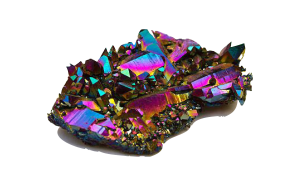
For centuries, alchemists have searched for the legendary Philosopher’s Stone, a substance said to possess incredible powers. Depending on the tradition, the Stone could transform base metals into gold, create the Elixir of Life, purify matter, and unlock the deepest secrets of alchemy.
In a D&D campaign, those legends make the Philosopher’s Stone much more than an incredibly valuable magic item.
It could be one of the most dangerous artifacts in the world.
Because the Philosopher’s Stone doesn’t simply give someone power.
It gives them the ability to change what something fundamentally is.
The Legend of the Philosopher’s Stone

The Philosopher’s Stone comes from the traditions of alchemy, a collection of philosophical and proto-scientific practices that developed across cultures and centuries. European alchemy was heavily influenced by earlier Greek, Egyptian, Islamic, and other intellectual traditions.
The Stone became associated with the ultimate goals of the alchemist: transformation, purification, perfection, and the discovery of hidden truths.
The most famous legend surrounding it is the ability to transmute base metals into gold. But gold wasn’t necessarily the only—or even the most important—goal.
The Stone was also associated with the creation of an Elixir of Life, a substance capable of extending or restoring life.
That distinction is incredibly important for D&D.
An object that creates gold is valuable.
An object that can potentially overcome death is something entirely different.
A Dungeon Master can turn the Philosopher’s Stone into an artifact that every king, archmage, lich, merchant prince, church, dragon, and desperate adventurer wants to possess.
And suddenly the party isn’t carrying treasure.
They’re carrying the future.
What Does the Philosopher’s Stone Actually Do?
The Philosopher’s Stone should feel fundamentally different from a normal magic item.
It shouldn’t simply provide a collection of bonuses.
It should allow transformation.
Perhaps the Stone can transmute one material into another. Lead becomes gold. Iron becomes silver. Stone becomes crystal. Poison becomes medicine.
But eventually the players discover that the Stone can transform much more than metals.
A damaged sword can become flawless.
A common gemstone can become a magical one.
A mundane object can become something extraordinary.
A dying body can potentially be restored.
A creature might even be transformed into something else entirely.
The exact limits should depend on the campaign, but one important principle can make the artifact far more interesting:
The Philosopher’s Stone can change the nature of things, but doing so is never trivial.
The Stone isn’t a vending machine for miracles.
It is a tool for alchemical transformation.
That means the characters need to understand what they’re attempting before they start experimenting.
And adventurers experimenting with reality is rarely a recipe for a quiet afternoon.
The Gold Problem

The most obvious use of the Philosopher’s Stone is also one of the most dangerous for a D&D campaign.
Gold.
If the Stone can turn almost anything into gold, the characters have effectively broken the economy.
At first, this sounds fantastic.
The party can become incredibly wealthy.
They can buy castles.
They can hire armies.
They can commission magical items.
They can probably afford the tavern instead of merely drinking in it.
But there is a problem.
If the characters can create unlimited gold, gold stops being valuable.
A Dungeon Master doesn’t necessarily need to prevent this by declaring that the Stone cannot create gold. Instead, the consequences can become part of the story.
Perhaps the Stone can only create a limited amount of gold before needing to be recharged.
Perhaps its transformations require rare reagents.
Perhaps magically created gold slowly decays back into its original substance.
Or perhaps the Stone works perfectly.
That last option might be the most interesting.
Because if the characters can create unlimited gold, eventually someone notices.
Merchants notice.
Nobles notice.
The thieves’ guild notices.
The kingdom’s treasury notices.
And eventually, every major power in the region wants to know where the impossible gold is coming from.
The players have created their own adventure.
The Elixir of Life
The Elixir of Life is where the Philosopher’s Stone becomes truly terrifying.
Imagine the party discovers that the Stone can produce a substance capable of restoring youth or extending life.
Suddenly, the artifact isn’t merely valuable.
It is priceless.
A dying monarch wants it.
A powerful wizard wants it.
An ancient dragon wants it.
A vampire wants it.
A lich might want it for reasons that are considerably worse.
Even ordinary people could become involved.
Imagine a mother whose child is dying.
Imagine an old warrior who has one final quest.
Imagine a king who refuses to accept that his reign must end.
Imagine a powerful NPC who has already lived for three hundred years and intends to live for three hundred more.
The Philosopher’s Stone forces the players to answer an uncomfortable question.
Who deserves to live forever?
And perhaps the more important question is:
Who gets to decide?
Challenges for Players
The greatest challenge with the Philosopher’s Stone isn’t figuring out how to use it.
It’s deciding whether they should.
Players who acquire the artifact are going to immediately start thinking about possibilities. That’s part of the fun. D&D players are natural problem solvers, and giving them an object capable of transforming reality practically begs them to experiment.
The challenge comes when every solution creates another problem.
If they use the Stone to create gold, powerful organizations may come looking for them.
If they use it to heal someone, other desperate people may demand the same miracle.
If they use it to restore a dead character, they may attract the attention of supernatural forces that consider death an important boundary.
If they use it to transform a monster, perhaps they accidentally create something even more dangerous.
And if they use it to extend their own lives, what happens when centuries begin passing?
The Stone doesn’t need to punish the players for using it.
Instead, it should force them to deal with the consequences of their choices.
How Players Can Overcome These Challenges
The best way to handle the Philosopher’s Stone is to think like an alchemist.
Experiment carefully.
Understand the materials involved.
Research before transforming something important.
Work with sages, wizards, artificers, clerics, and other experts.
Most importantly, establish what the Stone can and cannot do before attempting something campaign-breaking.
Players can also learn that transformation doesn’t have to mean destruction.
The Stone could become a tool for solving problems in creative ways.
A collapsed bridge might be transformed into a permanent structure.
A deadly poison might become a healing substance.
A mundane weapon might become something capable of harming a supernatural enemy.
A cursed object might be purified.
A rare material could be transformed into something needed for an important ritual.
Suddenly, the Philosopher’s Stone becomes a source of creative problem solving rather than an excuse to print infinite money.
And that’s where it becomes really fun.
Challenges for Dungeon Masters
The Philosopher’s Stone is a nightmare to run if its capabilities aren’t established.
The easiest mistake is making the artifact so powerful that it destroys the campaign.
The second easiest mistake is making it so restrictive that the players feel like they’ve been handed a legendary artifact that doesn’t actually do anything.
Neither is particularly satisfying.
The trick is to establish rules without eliminating possibilities.
The Stone should feel powerful.
It should feel mysterious.
And it should make the players wonder what else might be possible.
One useful approach is to make the Stone’s power dependent on understanding.
A character might know that the Stone can transform lead into gold but not understand how to create the Elixir of Life.
They may discover fragments of an ancient alchemical formula.
They may need rare ingredients.
They may need to visit a ruined laboratory.
They may have to consult the journals of an alchemist who disappeared centuries ago.
This turns the artifact into a campaign engine.
The players don’t simply find the Philosopher’s Stone.
They gradually learn what it can do.
How to Balance the Philosopher’s Stone Without Weakening It

The Philosopher’s Stone shouldn’t be balanced by making it mediocre.
If the artifact is legendary, let it be legendary.
Instead, balance it through circumstances.
Maybe transformations require time.
Maybe complex transformations require rare reagents.
Maybe the Stone can only perform a certain number of major transformations before needing to rest.
Maybe its greatest powers require specialized knowledge.
Maybe using it creates magical disturbances that can be detected from enormous distances.
Or perhaps the Stone itself is completely reliable.
The limitations come from the world.
If the characters use the Stone to create something impossible, powerful people will notice.
If they resurrect someone, supernatural entities may take an interest.
If they create enormous quantities of precious materials, economies can change.
If they discover a way to extend life indefinitely, every immortal creature in the world suddenly has a reason to find them.
The Stone remains incredibly powerful.
The campaign simply reacts appropriately to that power.
The Philosopher’s Stone and the Pursuit of Perfection
There is another way to connect the Stone to the previous artifact in this series.
The Mirror of Narcissus showed characters the person they might become.
The Philosopher’s Stone gives them a way to try to become that person.
That’s a dangerous combination.
Imagine a character looking into the Mirror and seeing themselves as a legendary warrior.
Then they acquire the Philosopher’s Stone.
Now they have the means to begin transforming themselves into the person they saw.
Maybe they enhance their body.
Maybe they eliminate weaknesses.
Maybe they alter their appearance.
Maybe they attempt to remove everything they consider imperfect.
Eventually, the character may discover something unsettling.
The perfect version of themselves may not actually be the happiest version.
The Stone can change the body.
It can change materials.
It can potentially change life itself.
But it can’t necessarily tell someone what they should become.
That remains their choice.
The Philosopher’s Stone as a Campaign MacGuffin

The Stone doesn’t even need to belong to the players.
In fact, it may be more interesting if it doesn’t.
Perhaps an ancient alchemist created the Stone and vanished.
Perhaps it is locked beneath a ruined city.
Perhaps a dragon has been guarding it for centuries.
Perhaps a kingdom secretly possesses it and uses its power to maintain prosperity.
Perhaps the players discover that someone else has already found it.
That person has been quietly transforming the world.
Gold is appearing in places where it shouldn’t exist.
Ancient diseases are disappearing.
People who should be dead are returning.
Monsters are changing.
Old creatures are becoming young again.
Entire ecosystems are being altered.
The party eventually discovers the cause.
Someone is using the Philosopher’s Stone.
And they have no intention of stopping.
Now the players have a choice.
Take the Stone.
Destroy the Stone.
Protect the person using it.
Convince them to stop.
Or perhaps find a way to use its power without allowing anyone to control it.
What Happens If Someone Tries to Destroy It?
Destroying the Philosopher’s Stone should be possible.
But it shouldn’t be easy.
Maybe the Stone cannot be destroyed through conventional means.
Perhaps it can only be destroyed by undoing its own creation.
Maybe it must be placed inside a furnace fueled by something that cannot be transformed.
Perhaps the Stone must be willingly sacrificed by its owner.
Or perhaps the most interesting possibility is that destroying the Stone creates one final transformation.
The Stone transforms itself.
Into what?
That’s where the Dungeon Master gets to have some fun.
Maybe it becomes an ordinary stone.
Maybe it becomes a new artifact.
Maybe it becomes a seed containing the potential for an entirely new form of life.
Maybe it disappears entirely.
Or perhaps the Stone cannot truly be destroyed.
Perhaps it simply becomes something else.
After all, transformation is what it does.
The Real Power of the Philosopher’s Stone

The Philosopher’s Stone is often remembered as the substance that turns lead into gold.
That’s impressive.
But for D&D, that should be the least interesting thing about it.
The real power of the Philosopher’s Stone is the question it asks.
What would you change if you could change anything?
Would you become stronger?
Younger?
Wealthier?
Healthier?
More beautiful?
More powerful?
Would you bring someone back?
Would you eliminate a curse?
Would you transform an enemy?
Would you change yourself?
And if you had the ability to change something once, would you eventually convince yourself that you should change everything?
That’s what makes the Philosopher’s Stone such a powerful legendary artifact.
It doesn’t have to corrupt the people who use it.
It doesn’t have to whisper to them.
It doesn’t have to secretly contain an evil entity.
It simply gives them the power to pursue their desires.
And sometimes, that’s much more dangerous.
The greatest danger of the Philosopher’s Stone isn’t that it can turn lead into gold.
It’s that it can make people believe nothing should remain unchanged.
The Philosopher’s Stone in Your D&D Campaign
A legendary artifact should change the way a campaign is played.
The Hand of Midas asks what happens when everything becomes valuable.
The Spear of Destiny asks what happens when nothing can stand against you.
Pandora’s Box asks whether some things should remain unopened.
The Ring of Gyges asks what you would do if no one could hold you accountable.
The Apple of Discord turns desire and ambition against the people around you.
The Horn of Roland calls something from beyond the horizon.
The Cintamani gives you what you desire.
The Mirror of Narcissus shows you what you might become.
And the Philosopher’s Stone gives you the power to change reality to pursue it.
That makes it an incredible artifact for a D&D campaign.
Not because it gives characters another powerful weapon.
But because it gives them a choice.
And the most dangerous magic in any campaign isn’t necessarily the magic that destroys worlds.
Sometimes it’s the magic that convinces someone they can make the world better.
The only question is whether their definition of “better” matches everyone else’s.
Next time in Legendary Artifacts Reimagined, we’re going to step away from alchemy and look toward another legendary object whose history and mythology have made it one of the most recognizable relics ever imagined: the Holy Grail. And while finding a cup associated with miraculous power sounds like an excellent quest for a group of adventurers, the real challenge might be figuring out exactly what makes the Grail holy—and what happens when someone who isn’t worthy tries to drink from it.
Thanks for reading. Until Next Time, Stay Nerdy!!




No Comments