




Protection Rackets and Predators: Who Really Keeps the Zoo Safe in Zoo Mafia?
Last time in Zoo Mafia, we explored smuggling across territory lines and the dangerous business of moving contraband through territory controlled by rival crime families. A successful smuggling operation requires more than a hidden route and a reliable courier. It  takes connections, favors, and sometimes the willingness to pay someone powerful enough to make trouble disappear. But what happens when the animals demanding payment for safe passage claim they’re protecting everyone? Welcome to protection rackets and predators, where the line between keeping the peace and running a criminal empire gets thinner with every passing day. In the animal underworld, some families offer protection because they genuinely keep dangerous trouble away. Others create the danger themselves, then charge everyone else for the privilege of surviving it. And the most successful predators have learned that fear is a business model.
Protection Is a Business
Every territory in the zoo has something worth protecting. Food stores, smuggling routes, secret meeting places, information networks, and carefully negotiated arrangements all have value. The animals who control these resources need ways to keep them safe, and that creates an opportunity for anyone strong enough to offer protection.
A protection racket begins with a simple proposition: pay us, and nothing bad will happen to you. The animals collecting payment might promise to keep rival gangs away, prevent theft, settle disputes, or make sure smugglers can move through the territory without trouble. Sometimes they deliver on those promises. Sometimes they even provide a genuine service. The problem begins when protection stops being voluntary.
A family might demand payment from every animal living in its territory, regardless of whether those animals need help. A shopkeeper who refuses to pay might discover that their food stores are suddenly vulnerable to theft. A courier who questions the fee might find themselves harassed by local enforcers. An animal who asks for help from another family could be accused of betrayal.
The racket works because everyone understands the consequences of refusing. The family doesn’t need to attack every animal who won’t pay. It only needs to make one example of someone who does.
The Predators Who Sell Safety
Predators make natural figures of authority in the animal underworld, but being a predator doesn’t automatically make an animal a criminal. A lion might protect a neighborhood because the local animals trust them. A tiger could enforce the rules of a territory without demanding anything beyond respect. A wolf might organize a network of guards who genuinely keep dangerous outsiders away.
The trouble begins when physical power becomes political power.
A large predator can intimidate animals who would never stand up to them individually. Their reputation may be enough to settle disputes before violence begins. That makes them useful as enforcers, but it also makes them dangerous when they decide that everyone owes them something.
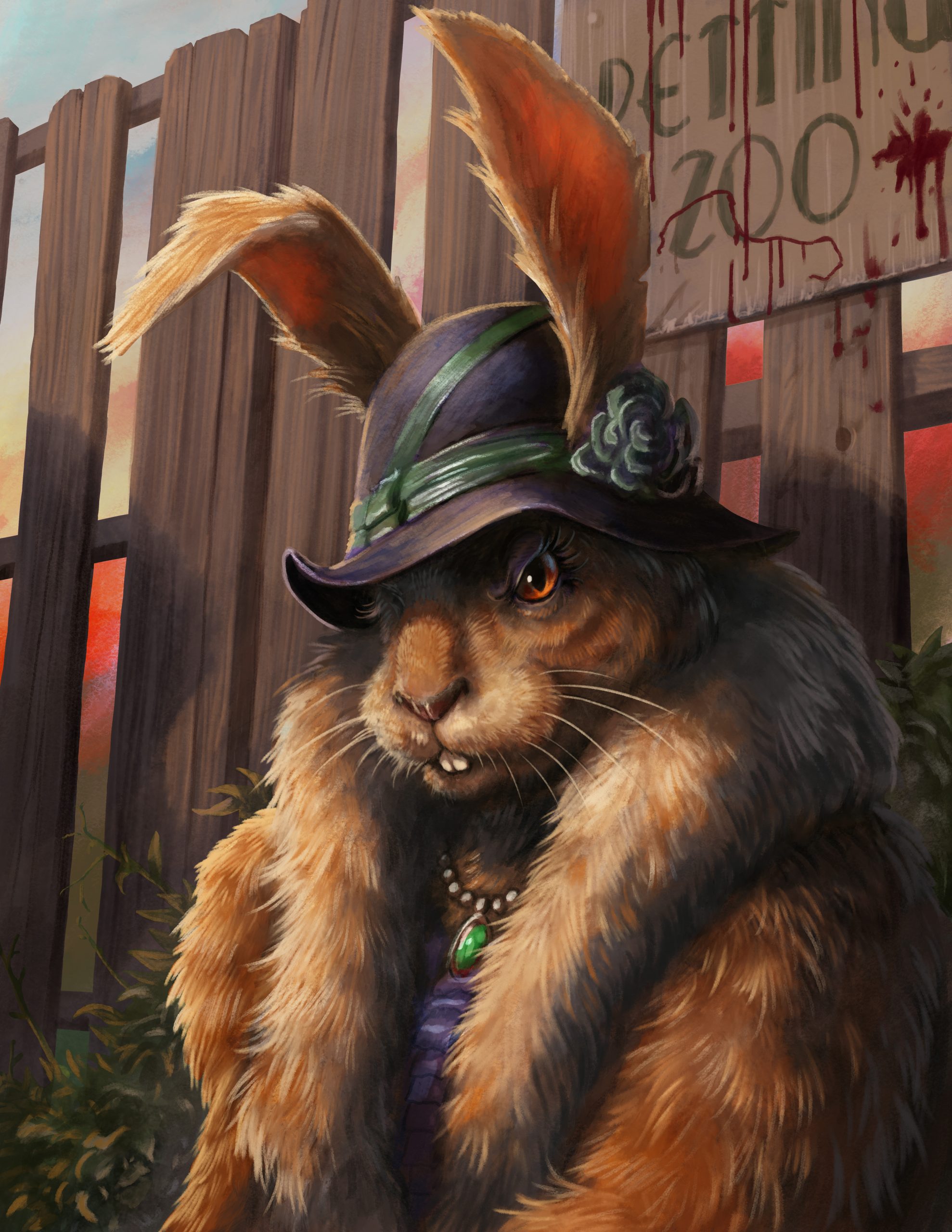
Imagine a group of rabbits who live near the edge of Big Cat territory. A lion’s crew offers to keep foxes and other threats away in exchange for regular payments of food. The rabbits agree because the arrangement genuinely makes their lives safer. Over time, the payments increase. The lions begin demanding information about visiting strangers. Eventually, they insist that the rabbits report any dealings with rival families.
The rabbits are no longer simply paying for protection. They are supporting an organization that controls their lives.
That is the heart of a protection racket. It doesn’t need to begin with cruelty. Sometimes it begins with a reasonable offer that becomes impossible to refuse.
The Zoo Keeper’s Guide: Build a Racket That Makes Sense
For the Zoo Keeper, the most interesting protection rackets have a reason to exist. A criminal family shouldn’t demand payment simply because the story needs another obstacle. Give the family a territory, a resource, or a threat that makes its offer believable.
Perhaps a group of weasels has been stealing food from smaller animals, and a powerful badger offers to stop them. Maybe the Aviary controls a network of messengers and charges other families for safe passage. A crocodile crew could control access to a waterway, insisting that every shipment pay a toll. The Little Creatures might maintain a network of hidden tunnels and charge for access to routes that larger animals cannot reach.
The key is to decide whether the protection is genuine, exaggerated, or entirely manufactured. A family that genuinely keeps its territory safe can be an uneasy ally. One that exaggerates the danger might be open to negotiation. One that creates the danger itself becomes a much more sinister opponent.
Give the players clues about how the racket operates. They might discover that thefts stop whenever payments are made, only to resume when someone falls behind. They could learn that a supposed rival gang is actually working for the protectors. Or they might find that the family is the only thing preventing an even worse criminal organization from taking over.
Now the players have a real dilemma. Removing the racket might free the territory, but it could also leave vulnerable animals exposed to a genuine threat.
Player Tip: Ask What Protection Actually Buys

When the players encounter a protection racket, they shouldn’t assume that paying is the only option. They can investigate what the payment provides and whether the family is delivering on its promises.
Who is being kept away? How often does trouble occur? Does the family respond when someone is threatened? Are payments consistent, or do they change depending on who is asking? Can the animals in the territory refuse the arrangement? What happens to someone who stops paying?
These questions can turn a simple confrontation into an investigation. The players might discover that the protection is worth the cost, that the family is exploiting everyone, or that the truth lies somewhere in between.
They could negotiate a lower payment, expose the racket, establish their own protection network, or offer to deal with the threat directly. If they decide to take over the racket themselves, they may discover that running a criminal territory is much more complicated than defeating the animals who previously controlled it.
When the Predators Create the Danger
The darkest protection rackets are built around manufactured threats. A family might secretly encourage thefts, provoke disputes, or pay smaller gangs to harass local animals. Once the territory becomes frightened, the family arrives with an offer of protection.
The animals believe they are paying to keep the criminals away. In reality, they are funding the very organization responsible for their problems.
This arrangement can be difficult to uncover because the family has every reason to keep the truth hidden. Its enforcers might genuinely chase away the thieves after each incident. They may even punish criminals who steal too much or attack the wrong targets. From the perspective of the local animals, the family appears to be doing exactly what it promised.
The deception only becomes clear when the players begin connecting the incidents. Perhaps a witness recognizes the same animal at two separate attacks. Maybe a stolen package contains instructions revealing that a robbery was arranged in advance. A member of the racket might approach the players, frightened that their employer is preparing to eliminate anyone who knows too much.
The players now have evidence of a criminal conspiracy, but exposing it could put an entire neighborhood at risk.
Fear Is a Currency
Protection rackets thrive on reputation. An organization that is feared doesn’t need to use violence every time someone refuses to pay. The threat is already understood.
This connects directly to the power of reputation we explored in The Big Cats Rule Through Fear. A feared predator can make an entire territory behave differently simply by appearing in public. Animals lower their voices. Couriers change routes. Shopkeepers prepare payments before the enforcers arrive. Nobody wants to be the one who tests whether the stories are true.
But fear has limits.
A family that relies entirely on intimidation may find that its victims eventually have nothing left to lose. A particularly brutal enforcement action might unite several smaller groups that previously couldn’t cooperate. A rival family might offer better terms and win the territory through influence rather than violence.
The players can exploit these weaknesses. They might expose the fact that a supposedly unstoppable enforcer is actually afraid of the boss above them. They could help a small group stand together rather than face the racket individually. Or they might undermine the family’s reputation by demonstrating that its threats are empty.
In Zoo Mafia, power often depends on what everyone believes. Change that belief, and the balance of power can shift.
The Protection Tax
Not every racket needs to involve direct threats. Some families build elaborate systems of fees, favors, and obligations that make it difficult to tell where legitimate business ends and criminal exploitation begins.
A courier might pay for passage through a territory. A food vendor could owe a percentage of every sale. A smuggler might be required to hire local guides. A family might insist that every dispute in its territory be brought before its own representatives, who charge a fee for settling the matter.
These arrangements can become part of everyday life. Animals may even defend them because the system provides stability. The family keeps the peace, settles disagreements, and maintains routes that everyone depends on. The cost is that the family gradually becomes the authority in a place where it has no legitimate right to rule.
This creates an interesting kind of criminal power. The family doesn’t simply take money. It becomes necessary.
The players might find themselves dealing with a racket that is genuinely efficient. Removing it could disrupt trade, expose vulnerable animals to violence, and create a power vacuum. The challenge isn’t merely defeating the criminals. It’s deciding what should replace them.
Protection Rackets Across the Zoo
Different territories should have different ideas about protection.
In the Big Cats’ territory, protection might be built around physical intimidation. The lions or tigers who control the area demand payment in exchange for keeping rival predators and hostile gangs away. Their reputation does much of the work, but their system can become unstable if another predator challenges their authority.
In the Reptile House, protection might be an arrangement built on old agreements and carefully recorded debts. A crocodile family could claim that a particular passage has been under its protection for generations. A snake might enforce payment through secrets, blackmail, and promises rather than direct violence. Anyone who breaks the agreement risks more than an attack; they risk having every old debt brought back into the open.
In the Aviary, protection might mean safe passage through the skies. Birds control the information that makes aerial travel possible, and they may charge for warnings about dangerous routes, patrols, or rival couriers. A flock that stops sharing information can make an otherwise safe route nearly impossible to use.
Among the Little Creatures, protection could take the form of access to hidden tunnels, warnings about approaching humans, and information about criminal activity. Their services may seem inexpensive until a family realizes how completely it depends on them. A rat network that withdraws its support can leave even the most powerful predators blind.
Each version gives the Zoo Keeper a different way to explore the relationship between power, safety, and control.
Player Tip: Protection Can Be a Favor

Players don’t always have to respond to a racket with money or violence. In Zoo Mafia, favors can be just as valuable as currency.
A family might agree to reduce its demands if the players retrieve something stolen from its territory. Another might offer safe passage in exchange for information about a rival. A smaller group could ask the players to deal with a genuine threat in return for access to its network of routes.
These arrangements can become the foundation of a larger campaign. The players might begin by doing a single favor and gradually discover that they are building relationships across the zoo. Eventually, they could have enough influence to negotiate between families that would otherwise be at each other’s throats.
Of course, favors create obligations. A family that helps the players today might expect assistance during a future conflict. The favor they owe could arrive at the worst possible moment, when the players are already committed to another job.
That is the nature of the animal underworld. Nobody does anything for free, even when the payment comes later.
When the Players Become the Protectors
One of the most interesting directions for a Zoo Mafia campaign begins when the players decide to run a protection operation themselves.
Perhaps they have defeated a local racket and the animals in the territory ask them to keep the peace. Maybe they establish a network of safe routes for smugglers. They could protect vulnerable enclosures from predatory gangs, or organize a system where smaller animals contribute resources in exchange for security.
At first, the arrangement might be entirely honorable. The players collect reasonable payments and use them to keep the territory safe. They settle disputes, investigate thefts, and prevent rival families from taking advantage of the animals under their protection.
Then the complications begin.
One family refuses to pay but expects protection anyway. Another demands that the players intervene in a dispute that has nothing to do with their territory. An enforcer begins taking extra payments without permission. A rival organization offers to pay more for access to the route the players promised to keep neutral.
The players must decide what kind of organization they are building. Will they remain protectors, become another criminal family, or discover that the distinction is harder to maintain than they expected?
This is an excellent way to turn a series of street-level jobs into a campaign about territory, reputation, and the responsibilities that come with power.
The Zoo Keeper’s Challenge: Make Protection Complicated

The strongest protection racket isn’t simply a group of bullies demanding money. It should create choices that matter.
Give the players a territory where the racket genuinely prevents certain crimes. Show them animals who are frightened of the family but also grateful for the safety it provides. Let them discover that some members of the organization are cruel while others sincerely believe they are keeping order. Perhaps the family even protects the territory from a much more dangerous threat.
Then introduce a problem the existing arrangement cannot solve. A payment dispute escalates. An innocent animal is punished. A rival gang offers to take over. Someone reveals that the protectors have been manufacturing the danger all along.
The players should have several possible responses, each with consequences. They might expose the racket, negotiate reforms, replace the family, or exploit the arrangement for their own benefit. The outcome should depend on what they value and whom they choose to trust.
The goal isn’t to force the players into a moral lesson. It’s to create a situation where the choices reveal who their characters are becoming.
The Price of Safety
If you’re enjoying these deep dives into Zoo Mafia and want to know when we go live on Kickstarter, make sure to follow the project so you don’t miss it. If you want behind-the-scenes updates, design insights, and early reveals, sign up for the newsletter to stay in the loop.
Protection rackets are a natural fit for Zoo Mafia because they sit at the intersection of crime, territory, reputation, and relationships. They can be an obstacle during a smuggling run, the center of a political conflict, or the beginning of a campaign in which the players build their own criminal organization.
They also offer a useful reminder about the animal underworld: the most powerful family isn’t necessarily the one with the sharpest claws or the biggest teeth. It might be the family that controls the routes everyone needs, the information everyone fears, or the protection everyone believes they cannot live without.
A predator can demand payment through fear.
A clever criminal can make that fear profitable.
But the most dangerous criminal of all might be the one who convinces an entire territory that they are the only thing standing between its residents and disaster.
Because when everyone pays for protection, someone eventually has to ask the obvious question.
Who are they really being protected from?
Until next time, stay nerdy and keep building unforgettable stories.



No Comments