




Mimics & Doppelgangers: A Shared Heritage of Deceit in D&D
What if mimics and doppelgangers weren’t separate monsters at all—but distant relatives born from the same terrible origin?
Both creatures are iconic Dungeons & Dragons shapeshifters. Both thrive on deception. Both weaponize trust. And both leave players permanently suspicious of doors, allies, and furniture.
By linking mimics and doppelgangers through a shared lineage, DMs unlock a terrifying new monster ecology—one that expands far beyond “fake treasure chests” and into animal mimics, environmental predators, and identity-stealing horrors.
This article explores how to connect mimics and doppelgangers in D&D lore, why the connection makes sense, and how it opens the door to an entirely new family of monsters.
The Core Similarity: Predators of Trust

At their heart, mimics and doppelgangers aren’t just shapeshifters—they are predators of reliance.
| Creature | What They Exploit |
|---|---|
| Mimics | Familiar objects and environments |
| Doppelgangers | Familiar people and social bonds |
Both monsters:
-
Rely on ambush and deception
-
Possess alien intelligence
-
Imitate rather than transform perfectly
-
Have unsettling “true forms” that feel unfinished
-
Are patient, calculating, and opportunistic
These similarities suggest they are not coincidental designs—but divergent evolutions of the same primordial threat.
A Shared Origin: The First Mimetic Horror
The First Lie of Creation
In ancient ages, long before stable forms existed, there was a being that learned to copy reality imperfectly.
Scholars, cultists, and aberration-hunters refer to it by many names:
-
The First Lie
-
The Flesh That Was Not
-
The Forger of Forms
-
The Echo of Creation
This entity did not change shape—it remembered forms it consumed and attempted to wear them again. When it fractured—whether slain, sealed, or intentionally divided—its remnants adapted to survive in specific ecological niches.
Thus, the Mimetic Lineage was born.
The Mimetic Spectrum: One Lineage, Many Horrors

Rather than isolated monsters, mimics and doppelgangers exist on a mimetic spectrum—each adapted to prey on a different kind of victim.
1. Object Mimics (Classic Mimics)
The most familiar form.
-
Imitate doors, chests, weapons, furniture
-
Feed on physical interaction
-
Low mobility, extreme patience
-
Digest victims slowly
These creatures learned that objects are trusted without question.
2. Environmental Mimics
An evolved and underused concept that expands dungeon horror dramatically.
Examples:
-
Bridge Mimic – Collapses into teeth mid-crossing
-
Campfire Mimic – Provides warmth before striking at night
-
Shrine Mimic – Feeds on offerings, prayers, and kneeling victims
-
Wall Mimic – Waits until someone leans on it
These mimics prey on safety itself, not just curiosity.
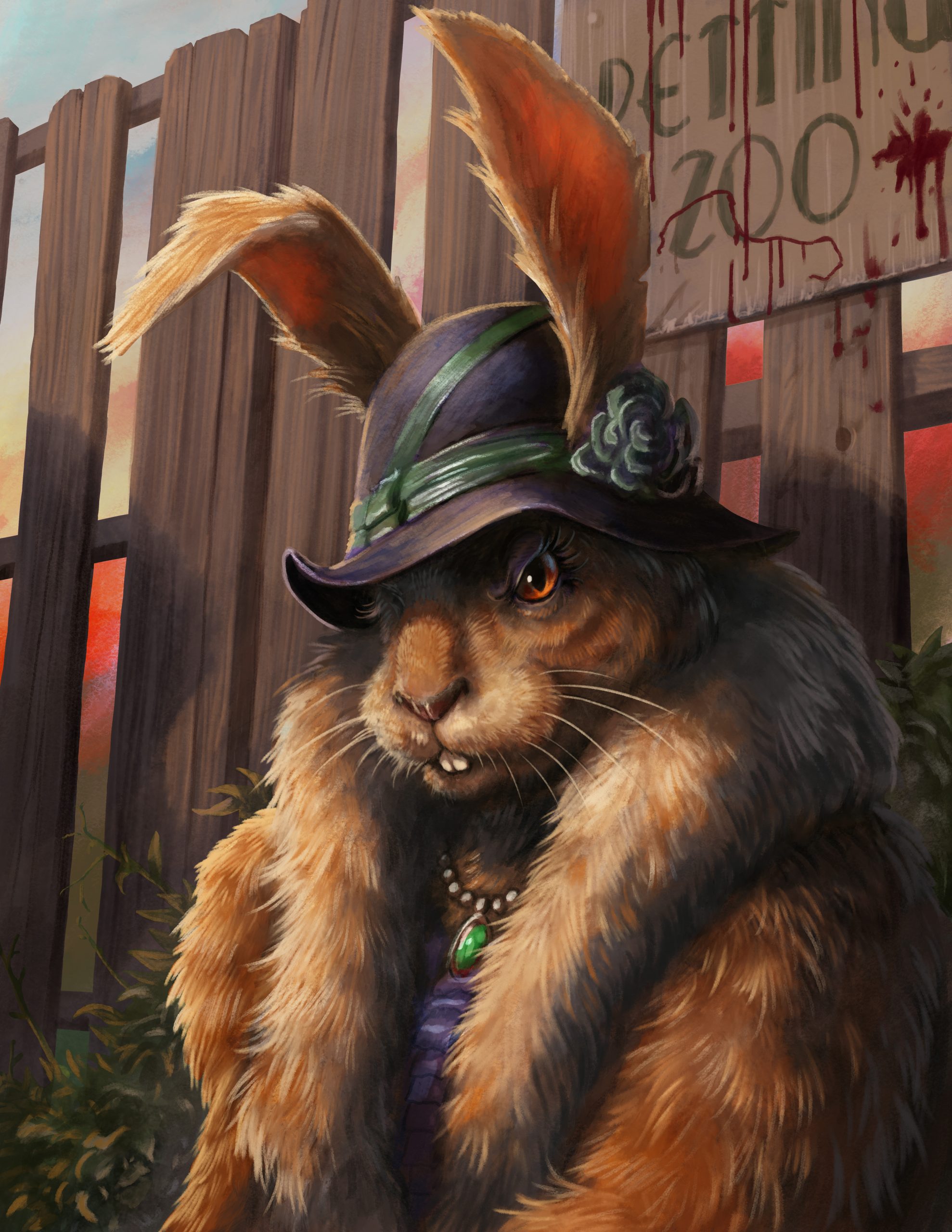
Bestial Mimics: The Missing Evolutionary Link
Before mimics learned to imitate humanoids, they learned to copy animals.
Bestial Mimics
These creatures imitate beasts with simple anatomy and behavior but lack true instinct.
Key Traits
-
Movements are almost right
-
Breathing pauses unnaturally
-
Eyes blink wrong—or not at all
-
Behavior mimics expectation, not biology
Examples for D&D
-
Hound Mimic – Appears loyal, attacks when prey sleeps
-
Horse Mimic – Allows riders, feeds during long journeys
-
Bird Mimic – Lures travelers toward larger predators
-
Pack Mimic – Several animals that are actually one organism
These creatures bridge the conceptual gap between mimics and doppelgangers and add paranoia to wilderness encounters.
Doppelgangers: Social Mimics Perfected

This mimic keg miniature from WizKids was painted terrifically by our very own Intern Jake!
Doppelgangers represent the apex of mimetic evolution.
Unlike mimics, they do not simply copy form—they copy:
-
Behavior
-
Speech patterns
-
Relationships
-
Social roles
In this framework:
-
Doppelgangers are not born, but emerge
-
A mimic that feeds long enough on identity, language, and emotion may cross the threshold
-
Failed transitions result in half-formed horrors: speaking mimics, furniture that begs, people-shaped things that don’t understand family
This explains why doppelgangers feel uncanny even when “perfect”—they understand patterns, not people.
Why Mimics and Doppelgangers Hate (or Fear) Each Other
In some worlds:
-
Doppelgangers see mimics as lesser cousins
-
Mimics view doppelgangers as dangerously unstable
-
Both instinctively recognize shared lineage
This creates fascinating narrative tension:
-
Doppelgangers hunting rogue mimics
-
Mimics sabotaging social infiltrators
-
Cult factions dedicated to “perfecting” the lineage
New Creature Concepts This Unlocks
Linking mimics and doppelgangers allows DMs to introduce entirely new monsters without breaking lore.
Advanced Mimetic Creatures
-
Caravan Mimic – Wagons, animals, and drivers as one organism
-
Symbiotic Mimic – Attaches to a creature, slowly replacing it
-
Urban Mimic – Alleyways, doors, and shop signs forming a hunting ground
-
Living Dungeon – A structure slowly learning from the party
Using Mimetic Lore at the Table (DM Advice)

Worldbuilding Hooks
-
Wizard colleges studying Mimetic Taxonomy
-
Religions declaring mimics a sin against creation
-
Ancient ruins that remember past explorers
Mechanical Tweaks
-
Mimics gain skill proficiencies from what they eat
-
Doppelgangers leave organic “object remnants” when slain
-
Detect Magic reveals incomplete or malformed auras, not illusions
Horror Payoff
The most unsettling truth?
Mimics aren’t copying reality.
They’re remembering it.
And something once wore everything.
Final Thoughts: Beyond the Fake Treasure Chest
By linking mimics and doppelgangers, DMs gain:
-
A unified monster ecology
-
New wilderness and social threats
-
A deeper sense of cosmic horror
-
Endless homebrew creature potential
Players may learn to stab every chest—but how do they defend against the horse they’ve been riding for three days?
If you’re looking to evolve classic D&D monsters into something truly unsettling, the mimetic lineage offers deception, paranoia, and unforgettable encounters in equal measure.
Thanks for reading. Until Next Time, Stay Nerdy!!



No Comments