




How Modern Gaming Culture Is Influencing Tabletop RPG Communities
Tabletop role-playing games (RPGs) have long been a medium for unleashing creativity, storytelling, and teamwork. Even though in their oldest forms these games were about rolling dice, getting through rulebooks, and depending purely on one’s  imagination, over the years, they have changed their appearances to a great extent. In fact, the video games, as a part of the modern gaming culture, have changed the ways in which tabletop RPG communities tell the stories, build the worlds and interact with the stages of their campaigns.
Moreover, many players of tabletop RPGs love to look at video games as a source of inspiration for only ideas between their sessions. The video games on consoles are the leading source of fresh storytelling techniques, different combat formats, and detailed and deep world-building. And the players, who are up-to-date and making use of PlayStation gift card deals to buy new games, can find an excellent source of new ideas for characters, missions, and settings of the campaigns in tabletop RPGs.
Hence, the boundary between digital and tabletop gaming becomes more and more indistinct, opening great and inspiring possibilities:
Check out how the current gaming culture is influencing the tabletop RPG communities:
Greater Emphasis on Character Customization
Today’s video games heavily focus on character customization. Besides simply defining a character’s appearance, players can also alter their outfits, abilities, and even a character’s personality via in-game mechanisms. This has motivated tabletop RPG gamers to focus more on the great appearance and story of their characters. Rather than just picking up a class and background, players are thinking about special clothes, signature weapons, and distinctive personalities. Consequently, characters in tabletop games are often more intimate, which allows players to enjoy the story on a deeper level.
Cinematic Style of Storytelling
Video games are generally considered one of the main media where cinematic storytelling is employed through stunning cutscenes, emotionally deep characters, and tangled stories. Tabletop Role-Playing Game (RPG) masters, who guide the actions of player characters, are very probably influenced by those ways of storytelling.
Sometimes the campaign features the villain being dramatically unveiled, cinematic descriptions of big battles, and story arcs that continue over the sessions. This effect will allow the players to be more engaged and feel like they are doing an interactive film.
Innovative Combat Mechanics
Lately, video games have been the leaders in experimenting with innovative combat systems, which include a mixture of strategy, timing, and skill-based mechanics. Tabletop RPG groups are one of the recipients of the inspiration that comes from such ideas, and they often change the existing combat rules with that. Certain Game Masters run scenes that involve effects coming from the environment, special combat abilities, or even battlefields that are changing throughout the encounters. Such modifications allow fights to be less monotonous and give room to players to come up with their own strategies.
Richer Worldbuilding

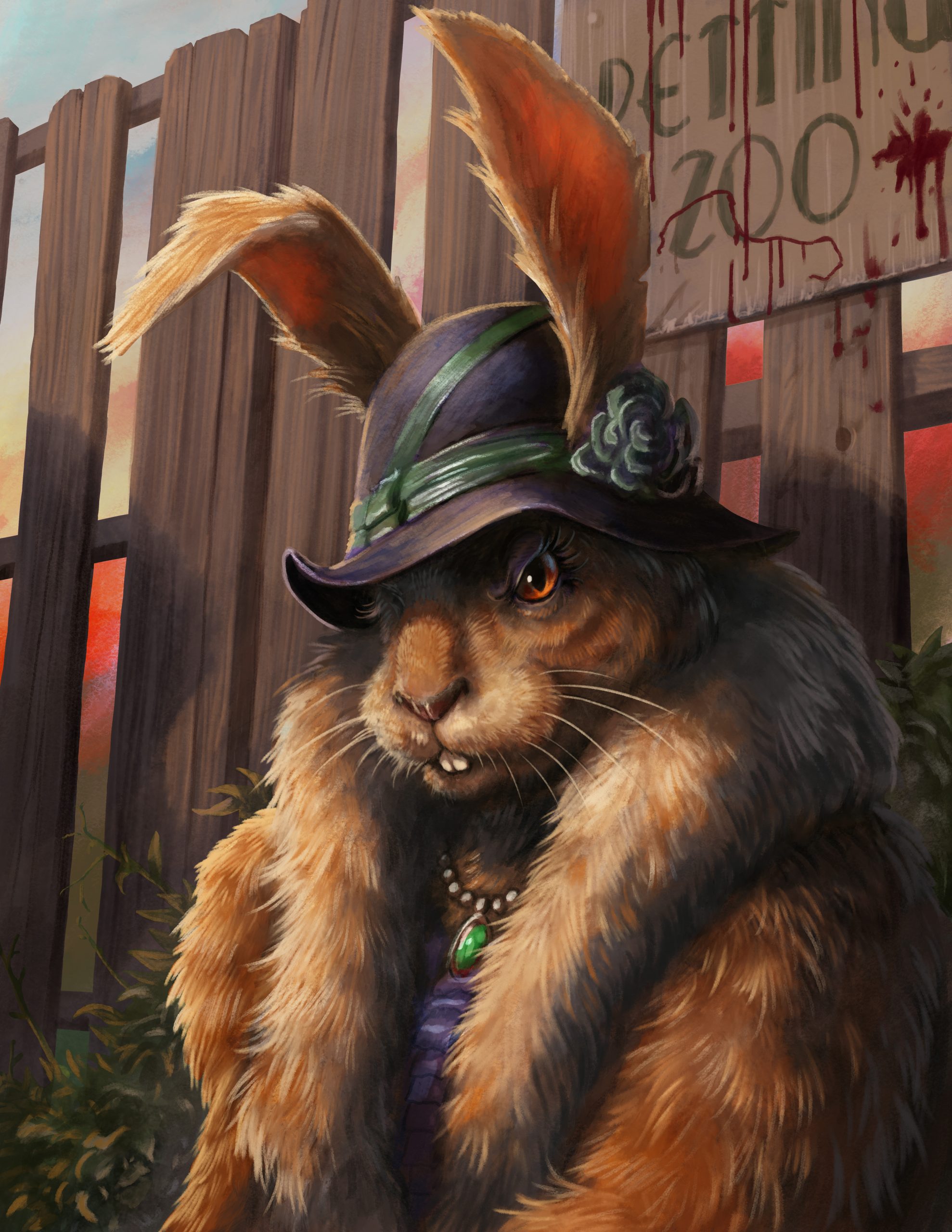
Zoo Mafia RPG
Open-world video games have set new standards for gorgeous scenery and rich storytelling that can engross players totally. Typically, these types of games feature vast landscapes, different factions, hidden places, and player-dependent stories. Tabletop RPG gamers love such complexity and consequently create highly elaborate game worlds for their stories.
These worlds might feature a whole political system, cultural elements, and the past struggles that even continue to influence the characters. Players also have a worldbuilding role when they develop the setting through their own stories, character relations, discoveries, etc.
Community-Driven Creativity
Nowadays, gamers spend a lot of time on the web playing with and against each other, leading to the establishment of gaming cultures that flourish thanks to the sharing of guides, theories about the gaming world, and very artistic content. Tabletop RPG communities have really embraced this joint spirit. Players often announce their homebrewed campaigns, character concepts, etc., through forums, social media groups, and other online platforms.
Besides, collaborative creativity of this kind is a very useful tool on several fronts: it is an excellent and rapid means for novice players to get acquainted with the game, and at the same time, it gives a new surge of pleasure and challenge to experienced players as they devise inventive new ideas.
Cross-Platform Inspiration
Recently, a wide number of game players like to combine digital and board games, and their choice of format depends on their mood or time availability. One might be a player who sees a video game’s quest structure or a character concept novel and then makes his/her adaptation to the tabletop campaign afterwards.
For instance, the side quest of the video game might result in the creation of a memorable dungeon adventure. Those who are always on the lookout for new games, sometimes by making use of PlayStation gift card deals, usually bring back those creative influences to their tabletop play sessions, thus enriching the whole experience of the group.
Greater Accessibility for New Players
Console games have taken the concept of RPGs and made it appealing to a wider range of people. Many players have gotten acquainted with character classes, leveling systems, and imaginary worlds through video games long before they even consider trying a tabletop RPG. Due to this prior knowledge, fresh players tend to get onboard tabletop campaigns without too much difficulty. Having grasped many of the basic concepts, the learning curve will thus be less formidable to them. This interaction between the two communities and gaming has resulted in the introduction of tabletop RPG communities, which are thriving nowadays. Moreover, these communities bring players who want to engage in storytelling as a team and in a collaborative format.
Conclusion
Gaming in its most recent form has been strongly influencing the tabletop RPGs in many different ways. The community of gamers who play RPGs on a table is constantly being re-shaped by the presence of video games, which is very inspiring for the players as well as the Game Masters. Video games have become a backbone of inspiration for all kinds of RPG-related ideas: from story narrations, world-building, combat systems to character development, and customization. Between two RPG sessions, many RPG Tabletop fans enjoy discovering new video games, which grant them ideas for mechanics and narratives for their own campaigns.
In fact, using PlayStation gift card deals, many such gamers are able to pay for new titles and thereby continuously renew themselves and the creativity necessary for their hobby. They do it by either testing new systems or looking for immersive experiences. As digital and tabletop gaming continue to grow as two distinct forms of gaming, the relationship between video games and tabletop RPGs seems to be getting closer, resulting in better stories, more inventive gaming, and unforgettable adventures around the table.



No Comments