




Pestilence Cult Creations: The Horror of Small Things in D&D
Most apocalypses don’t begin with dragons.
They begin with scratching in the walls.
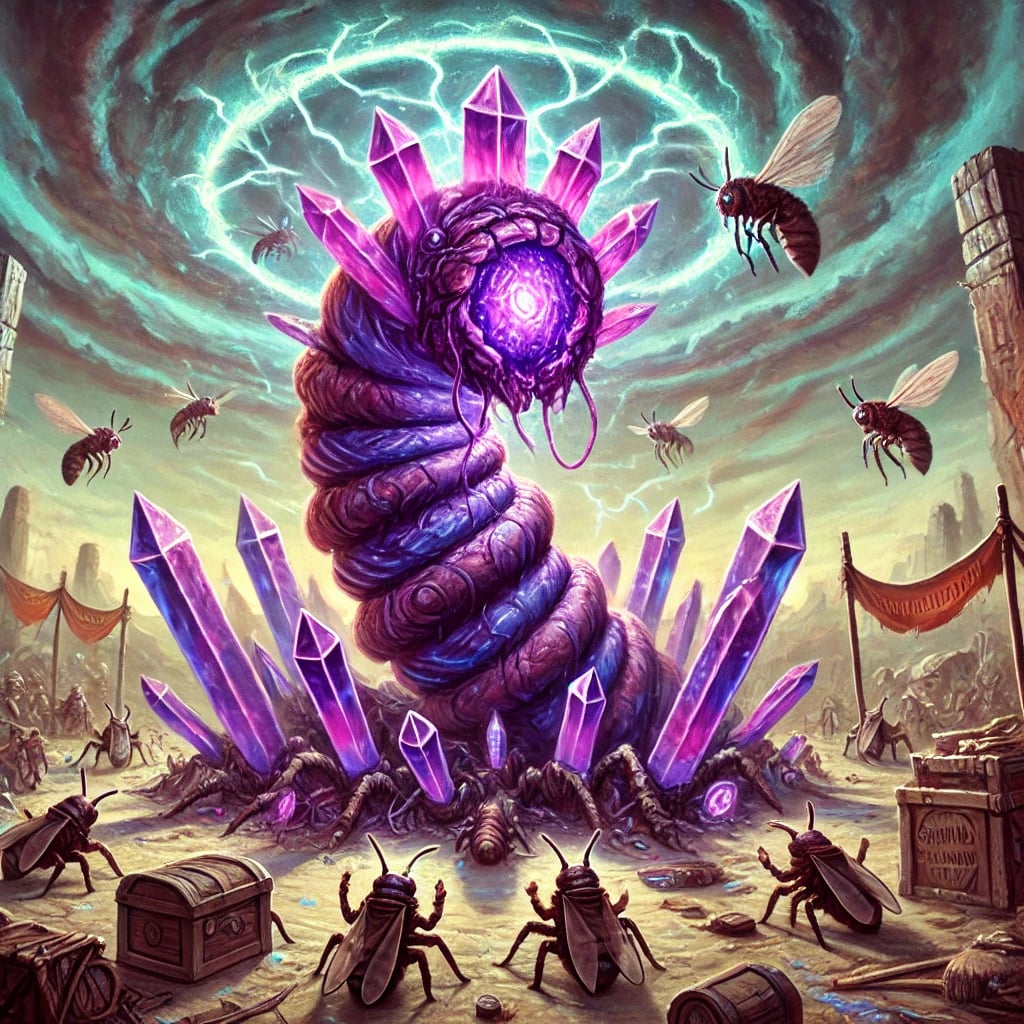
The Cockamaw—also called the Plague-Mouse, God-Rat, or Vermin Herald—is a cult-created hybrid of rodent and insect. Bred by devotees of pestilence gods, demon lords, or entropy- driven philosophies, these creatures are not meant to slay heroes.
They are meant to kill cities.
Individually, a Cockamaw is a nuisance.
In numbers, they rot civilization from the inside out.
The Cockamaw is a monster designed to bypass swords and spells entirely—attacking infrastructure, morale, and public health instead of hit points.
Origin: The Cult of Crawling Mercy
Pestilence cults rarely have the strength to conquer cities through force.
So they create vectors.
Cockamaws are bred in alchemical vats, necrotic sewer-chapels, or sanctified plague pits using combinations of:
-
Diseased rodents
-
Giant cockroach stock
-
Failed druidic experiments
-
Demonic ichor
-
Blasphemous runes of multiplication and decay
Rather than releasing them all at once, cults seed Cockamaws slowly—district by district—allowing famine, disease, panic, and paranoia to do the real work.
Why summon a demon when hunger will tear the city apart for you?
What Makes Cockamaws Dangerous?
Cockamaws are not threatening because of their damage output. They are dangerous because they attack systems, not heroes.
They are known for:
-
Rapid and uncontrollable breeding
-
Wall-climbing and short gliding movement
-
Aggressive disease transmission
-
Targeting infrastructure instead of combatants
-
Being impossible to eradicate without destroying their source
They contaminate places people rely on to survive:
-
Grain silos and food stores
-
Wells and cisterns
-
Healing wards and sanctuaries
-
Temples and refugee camps
-
Sewers beneath noble districts
Wherever people gather, Cockamaws follow.
Cockamaw (Plague-Bearer Vermin)

Small monstrosity, unaligned
Armor Class 13 (natural armor)
Hit Points 18 (4d6 + 4)
Speed 30 ft., climb 30 ft., glide 20 ft.
| STR | DEX | CON | INT | WIS | CHA |
|---|---|---|---|---|---|
| 8 (-1) | 15 (+2) | 12 (+1) | 3 (-4) | 10 (+0) | 5 (-3) |
Saving Throws Dex +4
Skills Stealth +4
Damage Resistances poison
Condition Immunities poisoned
Senses darkvision 60 ft., passive Perception 10
Languages —
Challenge 1/2 (100 XP)
Traits
Plague Vector.
A creature hit by the Cockamaw’s bite must succeed on a DC 11 Constitution saving throw or become infected with Filth Fever (see disease rules). Symptoms begin after 1d4 hours.
Wall Scuttler.
The Cockamaw can move across walls and ceilings without making an ability check.
Skitter Escape (Reaction).
When the Cockamaw takes damage, it may move up to half its movement without provoking opportunity attacks.
Actions
Bite. Melee Weapon Attack: +4 to hit, reach 5 ft., one target.
Hit: 5 (1d6 + 2) piercing damage plus 3 (1d6) poison damage.
Contaminate (Recharge 5–6).
The Cockamaw contaminates food, water, or a 5-foot area. Any creature that consumes or remains in the area within 24 hours must succeed on a DC 11 Constitution saving throw or contract Filth Fever.
Variant Cockamaws
Swarm of Cockamaws (CR 2)
-
Functions as a disease-delivering hazard
-
Creates difficult terrain
-
Forces multiple saving throws per round
-
Ideal for sewers and panicked evacuations
Cult-Bound Cockamaw
-
Bears a glowing rune of binding
-
Explodes in necrotic filth when slain
-
Often used to sabotage temples and hospitals
Blessed Vermin (High-Level Play)
-
Resistant to radiant damage
-
Immune to turning effects
-
Spread divine plagues tied to corrupted gods
Using Cockamaws in Your Campaign

1. The Slow-Burn Introduction
Do not reveal the monster immediately.
Instead, show the consequences:
-
Empty granaries
-
Overworked healers
-
Closed temples
-
Refugees coughing in the streets
-
“Ratcatchers” who never return
Only later do the players glimpse movement behind the walls.
2. Environmental Horror Encounters
Cockamaws excel in nontraditional encounters:
-
Chase sequences through collapsing districts
-
Swarm ambushes in narrow spaces
-
Skill challenges focused on containment and purification
-
Moral dilemmas (“Do we burn the infected block?”)
They turn safe spaces into threats.
3. The Cult Reveal
Eventually, the truth emerges:
-
The plague is engineered
-
Breeding sites are controlled
-
Killing Cockamaws is meaningless without destroying:
-
Sewer altars
-
Alchemical nurseries
-
Plague-priests
-
Corrupted druids
-
The real enemy is not the vermin.
It is the belief system that created them.
Why This Works (DM Advice)

Cockamaws are effective because they:
-
Scale from Tier 1 through Tier 4 play
-
Threaten society instead of hit points
-
Encourage investigation, prevention, and ethics
-
Make cities feel alive, fragile, and worth saving
They are ideal for:
-
Urban campaigns
-
Grimdark fantasy
-
Political intrigue
-
Post-apocalyptic settings
-
Pestilence or decay-themed villains
Final Thought
Heroes expect dragons.
They do not expect disease, hunger, and fear carried on tiny wings.
And that is why the Cockamaw works.
Thanks for reading. Until next time—stay nerdy!!



No Comments