




Badges in the Jungle: Running Zoo Mafia with Animal Cops (Zoo Mafia TTRPG)
Most Zoo Mafia games live in the shadows — back alleys, whispered deals, and silent signals passed between criminals who trust no one.
But what happens when your players aren’t the ones running the rackets?
What happens when they wear the badge?
Running a Zoo Mafia campaign with player characters as police officers — whether undercover operatives or active enforcers — flips the entire experience on its head. The same world of claws, feathers, and instincts becomes something sharper, more dangerous, and far more morally complex.
Because in the animal underworld, the law isn’t just outnumbered.
It’s outmatched.
Two Ways to Wear the Badge
There are two primary approaches to running a Zoo Mafia game from the law’s perspective, and each creates a very different tone.
Undercover Operatives: Predators in Disguise
In this style of game, the players embed themselves inside the criminal ecosystem. They are no longer just observers — they are participants.
They take jobs. They build trust. They lie.
And every step deeper into the Zoo Mafia risks becoming permanent.
Undercover games thrive on:
-
Tension — every interaction could expose them
-
Dual identity — balancing badge and persona
-
Moral erosion — how far will they go to maintain cover?
-
Slow-burn storytelling — building toward a takedown… or a betrayal
An undercover fox pretending to be a smuggler might need to actually run contraband. A wolf posing as an enforcer may be ordered to intimidate — or worse.
The question becomes unavoidable:
Are you pretending to be one of them… or becoming one of them?
Active Enforcement: Holding Back the Wild
In contrast, enforcement-focused campaigns put players on the front lines of stopping crime.
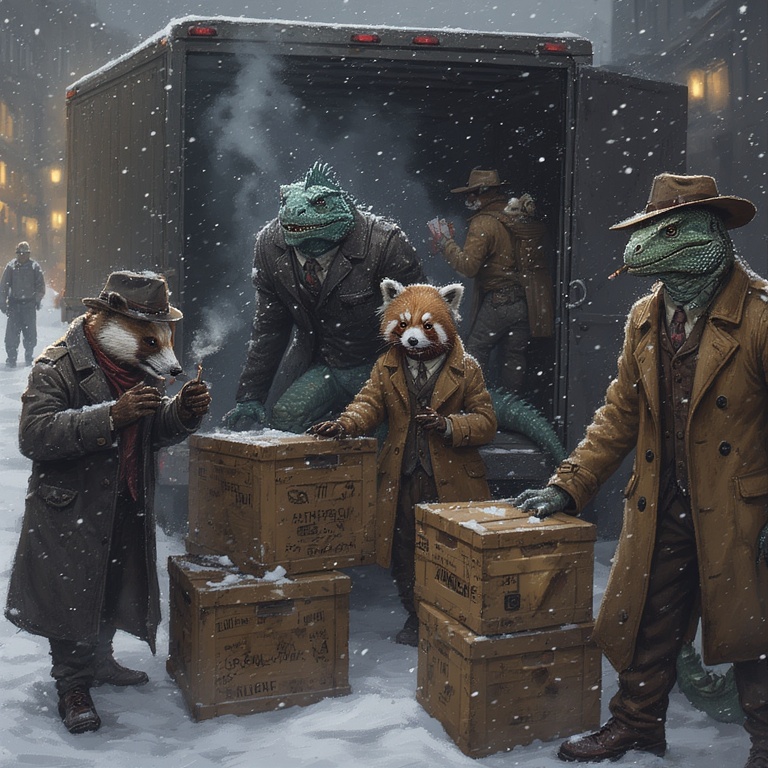
They investigate rackets. Break up deals. Track smugglers through alleyways and rooftops. Interrogate suspects who speak in half-truths and coded behavior.
This style emphasizes:
-
Investigation and deduction
-
Rapid response to evolving crimes
-
Resource management and jurisdiction limits
-
Conflict between order and instinct
Here, the players are constantly reacting to a living, breathing criminal world that adapts to their presence.
Shut down one operation, and another rises in its place.
Catch one rat, and a dozen scatter.
How Police Campaigns Change the Game

Shifting players from criminals to cops doesn’t just change perspective — it transforms the core experience of Zoo Mafia.
1. Information Flows Differently
Criminals operate on secrets. Police chase them.
In a traditional Zoo Mafia game, players create plans.
In a police game, they uncover them.
This creates a different rhythm:
-
Following trails instead of laying them
-
Interpreting behavior instead of controlling it
-
Reacting to crimes instead of initiating them
Even a simple scene — like watching a dockside exchange — becomes layered with uncertainty.
What looks like a routine delivery might be something far bigger.
2. Trust Becomes a Weapon
In criminal crews, trust is survival.
In police games, trust is… complicated.
Undercover officers weaponize it.
Detectives question it.
Informants exploit it.
No interaction is clean.
A nervous informant might be lying.
A loyal partner might be compromised.
A suspect might be telling the truth — but not the whole truth.
And in a world of animals, instinct muddies everything.
A prey species might fear a predator officer, even if they’re innocent.
A predator might challenge authority out of instinct, not guilt.
Reading intent becomes as important as finding evidence.
3. The World Pushes Back Harder
Zoo Mafia isn’t a passive setting.
Criminal organizations evolve. They communicate silently. They use territory, instinct, and species traits to their advantage.
When players are criminals, they benefit from this system.
When they are police, they are outsiders trying to break it.
That means:
-
Gangs adapt to enforcement patterns
-
Signals change when compromised
-
Territory becomes harder to penetrate
-
Operations go deeper underground
The world resists control.
And the more pressure the players apply, the smarter their opposition becomes.
4. Morality Moves to the Forefront

Zoo Mafia already lives in moral gray areas — but police campaigns drag those questions into the light.
Is it acceptable to let a crime happen to preserve a larger investigation?
How do you handle a criminal who protects their community?
What happens when the law conflicts with what feels right?
Undercover campaigns intensify this further.
Every compromise chips away at identity.
Every lie builds a new version of the character.
Eventually, the players must decide:
Do they serve justice… or define it?
5. Silence Becomes Suspicion
In standard Zoo Mafia play, silence is power.
In police campaigns, silence is suspicious.
Those same nonverbal signals — tail flicks, subtle movements, coded calls — become clues to decode rather than tools to use.
Players begin to notice patterns:
-
Repeated behaviors in certain locations
-
Signals exchanged during tense moments
-
Movement that doesn’t match the environment
What criminals use to stay hidden becomes the very thing that exposes them.
Building a Living Case File
One of the most satisfying elements of a Zoo Mafia police campaign is watching players build a case over time.
Instead of a single job or score, the campaign becomes a web of:
-
Known associates
-
Suspected safehouses
-
Unconfirmed rumors
-
Patterns of behavior
Every scene adds a piece.
Every failure leaves a gap.
And when everything finally comes together — when the players see the full shape of the organization they’ve been chasing — the payoff is immense.
Blurring the Line Between Hunter and Prey
At its core, Zoo Mafia is about instinct.
Predator and prey. Power and survival. Territory and control.
When players take on the role of police, those instincts don’t disappear — they become more complicated.
A predator officer may struggle to appear non-threatening.
A prey officer may overcompensate to assert authority.
An undercover character may forget which instincts are real.
The badge doesn’t erase what they are.
It just gives them a different reason to act.
Final Thoughts: Justice in a Lawless Ecosystem
Running Zoo Mafia with police characters transforms the game into something sharper and more introspective.
It’s no longer just about crime.
It’s about:
-
Understanding a system designed to resist control
-
Navigating trust in a world built on deception
-
Holding onto identity while living a lie
-
Defining justice in a place where survival often comes first
Because in the end, the question isn’t whether the players can take down the Zoo Mafia.
It’s whether they can do it…
…without becoming part of it.
Thanks for reading. Until Next Time, Stay Nerdy!!



No Comments