




Mutant: Year Zero — Late to the Zone, Still Eager to Explore
Some tabletop RPGs make a big splash when they release and then quietly settle into the background. Mutant: Year Zero is one of those games I somehow managed to miss at launch—but the more I read about it, the more convinced I am that it’s exactly the kind of experience I want at my table. Even if I’m late to the Zone, I’m hoping 2026 might finally be the year I get to play it.
A Brief Introduction to the Setting
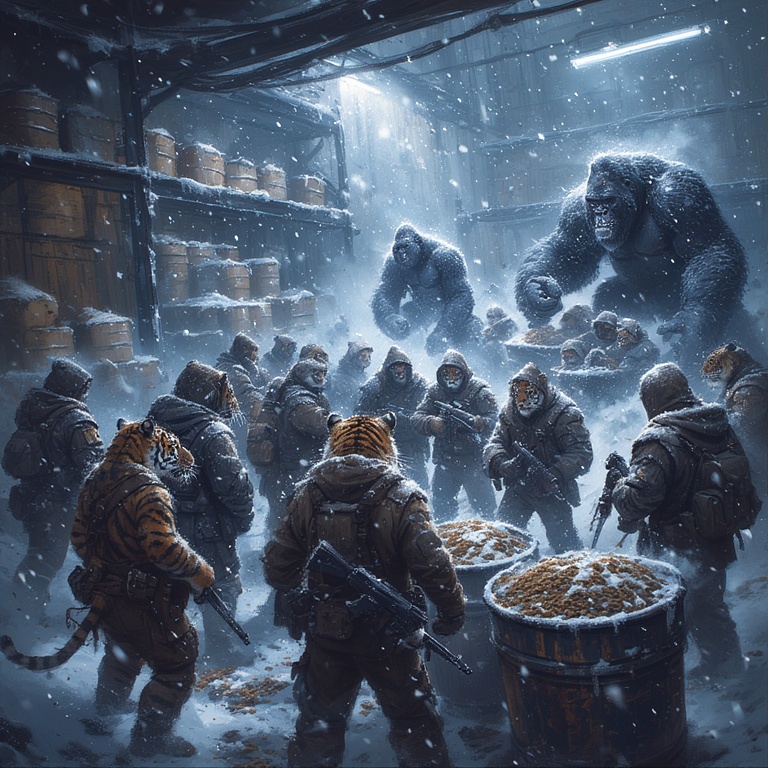
Mutant: Year Zero, published by Free League, is a post-apocalyptic tabletop RPG where humanity has already lost. The world is broken, poisoned, and crawling with the remnants of a  civilization that collapsed long ago. Players take on the roles of mutants—humans altered by radiation and genetic decay—who live in a fragile settlement known as the Ark.
Unlike many post-apocalyptic games that focus on lone wanderers, Mutant: Year Zero is fundamentally about community. The Ark is not just a backdrop; it’s a living, evolving home that the players must protect, improve, and sometimes make hard moral decisions for. Survival isn’t just personal—it’s collective.
Rules at a Glance
At its core, Mutant: Year Zero uses Free League’s Year Zero Engine, which emphasizes fast resolution and narrative momentum over heavy crunch.
-
Dice Pools: Most actions are resolved by rolling pools of six-sided dice based on attributes and skills. A single six is usually enough to succeed.
-
Pushing Rolls: Players can “push” a failed roll to try again, but this comes at a cost—usually damage, stress, or unwanted side effects. It’s a great risk-versus-reward mechanic that fits the tone of desperation.
-
Mutations: Characters have unique mutant powers, but using them risks mutation points that can eventually lead to permanent physical or mental changes.
-
Resource Scarcity: Bullets, food, water, and gear are intentionally scarce, reinforcing the harshness of the setting.
-
Ark Management: Between expeditions, the group collectively develops the Ark, improving defenses, infrastructure, and social projects—sometimes with unintended consequences.
The rules seem designed to stay out of the way once play begins, encouraging storytelling, tough choices, and emergent consequences rather than rules mastery.
Why It Still Appeals (Even Years Later)

What really draws me to Mutant: Year Zero is how it blends exploration, survival, and long-term worldbuilding. The game doesn’t just ask “Can you survive today?”—it asks “What kind of future are you building?” Every expedition into the Zone feeds back into the Ark, shaping the campaign in a way that feels organic and player-driven.
It also seems refreshingly honest about its tone. This isn’t a power fantasy. Mutants are flawed, the world is cruel, and progress often comes at a price. That bleakness, paired with moments of hope and dark humor, is exactly what makes the setting compelling.
Looking Ahead to 2026
While I may be late to discovering Mutant: Year Zero, my interest in it hasn’t dimmed—if anything, it’s grown. With life and schedules being what they are, I’m realistically hoping for an opportunity to finally play it sometime in 2026. Whether that’s as a player or a GM remains to be seen, but it’s firmly on my shortlist of “games I want to make happen.”
Better late than never—after all, in the apocalypse, time is already broken.
Thanks for reading. Until Next Time, Stay Nerdy!!


No Comments